RisingStar
- Home
- About Us
- Products
- News
- Video
- Contact
- Send Inquiry
Search
- Home
- About Us
- Products
- News
- Video
- Contact
- Send Inquiry
RisingStar
In the rapidly evolving landscape of industrial, military, and outdoor display technologies, high-brightness sunlight-readable LCD screens have become indispensable. These displays are not only required to deliver exceptional visibility under direct sunlight—often exceeding 5,000 nits—but must also operate reliably in extreme conditions including dust, moisture, and mechanical stress. One of the most critical design considerations for such displays is their ingress protection (IP) rating, particularly IP66. This standard ensures that the device is fully protected against dust ingress (6) and powerful water jets from any direction (6), making it suitable for demanding environments like offshore platforms, construction sites, and battlefield operations.
The IP66 rating is defined by the International Electrotechnical Commission (IEC) in IEC 60529, which establishes standardized testing methods for enclosures. To achieve an IP66 certification, a display undergoes rigorous laboratory testing. First, a dust-tightness test involves placing the unit in a chamber filled with fine powder (like talcum) for at least eight hours. No dust should enter the internal components. Second, a water jet test simulates heavy rain or hose-directed spray using a 6.3 mm nozzle at a pressure of 100 kPa (approximately 14.5 psi) from distances between 3 meters and 5 meters. The display must remain functional after this exposure without leakage or damage to electronics.
High-brightness sunlight-readable LCDs with IP66 waterproofing are widely used in applications where environmental resilience is non-negotiable. For example, in maritime navigation systems, IP66-rated displays ensure that critical GPS and radar data remains visible even during storms. In military field operations, such as on armored vehicles or command units, these displays maintain functionality despite being exposed to sandstorms, mud, and sudden downpours. Similarly, in agricultural machinery and mining equipment, IP66-rated panels survive dust-laden environments and frequent cleaning with high-pressure hoses—a common requirement in heavy industry settings.
From a manufacturing perspective, achieving IP66 requires more than just sealing the screen itself. It involves integrated design strategies such as sealed bezels, gasketed joints, conformal coatings on printed circuit boards (PCBs), and anti-condensation venting systems. Manufacturers like Sharp, LG, and Samsung have developed specialized backlight assemblies and polarizer layers that resist humidity and thermal cycling while maintaining optical performance. These advancements are crucial because traditional LCDs often fail in humid or dusty conditions due to oxidation, condensation, or physical contamination of the pixel matrix.
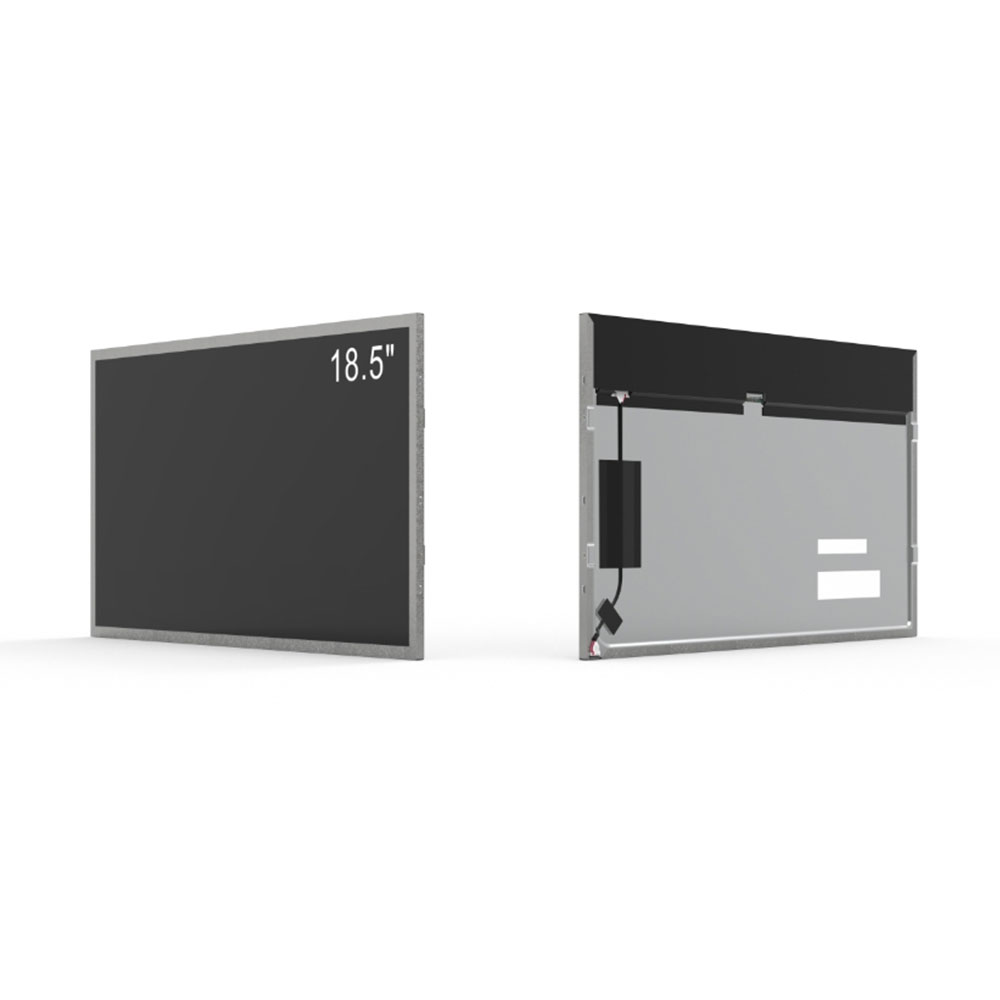
Case studies from real-world deployments support the necessity of IP66 ratings. A 2022 report by the U.S. Department of Defense highlighted that IP66-certified displays deployed in forward operating bases had a 78% lower failure rate compared to those rated IP54 over a 24-month period. Another study published in IEEE Transactions on Industrial Electronics (2023) found that IP66-rated industrial touchscreens experienced 92% less downtime in construction environments due to environmental factors, translating into significant cost savings for contractors.
Moreover, IP66 compliance is increasingly becoming a regulatory requirement in many industries. The European Union’s Machinery Directive and the U.S. ANSI/ISA-61010 standards now mandate IP65 or higher for control panels used in hazardous locations. As global supply chains demand more robust components, IP66 has emerged as the new baseline—not merely a feature but a fundamental specification for reliable operation in challenging conditions.
For engineers and procurement managers selecting high-brightness LCDs, understanding IP66 goes beyond checking a label. It means evaluating the entire system architecture—from materials selection to final assembly—and ensuring that all interfaces meet the strictest environmental requirements. When combined with high brightness (>5,000 nits), wide temperature tolerance (-20°C to +70°C), and sunlight readability algorithms, IP66 waterproofing transforms a display from a mere output device into a mission-critical component in safety-sensitive applications.