RisingStar
- Home
- About Us
- Products
- News
- Video
- Contact
- Send Inquiry
Search
- Home
- About Us
- Products
- News
- Video
- Contact
- Send Inquiry
RisingStar
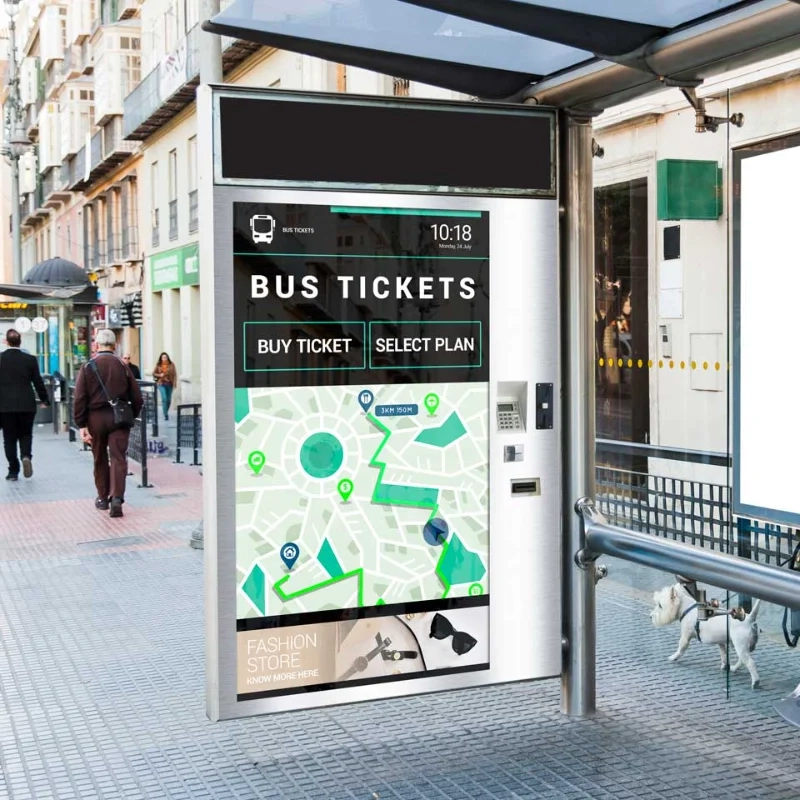
High-brightness sunlight-readable LCD screens are essential in outdoor environments where visibility under direct sunlight is critical. Whether used in military equipment, industrial control panels, transportation systems, or public information displays, these screens must maintain clarity and performance even under extreme lighting conditions. According to industry data from Display Supply Chain Consultants (DSCC), the global market for high-brightness LCDs exceeded $12 billion in 2023, with a projected CAGR of 6.8% through 2030—driven by demand in defense, automotive, and IoT sectors.
To select the right screen, start by understanding brightness requirements. Standard indoor LCDs typically operate at 250–400 nits, but sunlight-readable screens must exceed 1,000 nits. The U.S. Department of Defense (DoD) recommends a minimum of 1,500 nits for mission-critical applications. For example, a study by the Army Research Laboratory found that 1,500-nit displays significantly improved operator reaction time during field operations compared to lower-brightness alternatives.
Next, evaluate contrast ratio and ambient light rejection. A high contrast ratio—ideally above 1,000:1—enhances image clarity against bright backgrounds. Technologies like anti-glare coatings, polarized filters, and active backlighting (such as LED arrays with dynamic dimming) improve readability. Case studies from companies like LG Display and BOE Technology show that integrating local dimming zones in high-brightness panels reduces power consumption while increasing contrast—a key advantage for battery-powered devices in remote areas.
Another crucial factor is environmental durability. MIL-STD-810G standards define shock, vibration, temperature, and humidity resistance for military-grade displays. Industrial-grade screens often meet IP65 or higher ratings for dust and water protection. In one real-world application, a solar-powered weather monitoring system in the Sahara Desert relied on an IP67-rated, 3,000-nit LCD to ensure consistent operation despite 45°C daytime temperatures and sandstorms.
Color accuracy and viewing angles also matter. Wide-viewing-angle technologies such as IPS (In-Plane Switching) or VA (Vertical Alignment) panels provide consistent color across multiple angles—a necessity for multi-user setups. Additionally, modern sunlight-readable screens use advanced digital signal processing to boost gamma correction and reduce eye strain under prolonged exposure.
Finally, consider integration compatibility. Ensure the screen supports standard interfaces like LVDS, MIPI, or HDMI, and has software APIs for customization. Companies like Sharp and Innolux have released SDKs for developers to optimize content delivery based on ambient light sensors—enabling adaptive brightness control that extends battery life without compromising visibility.
By following these criteria—brightness, contrast, durability, color fidelity, and compatibility—you can confidently choose a high-brightness sunlight-readable LCD screen tailored to your outdoor application’s demands. These screens are not just about visibility—they’re about reliability, efficiency, and user safety in harsh environments.