 RisingStar
- Home
- About Us
- Products
- News
- Video
- Contact
- Send Inquiry
Search
- Home
- About Us
- Products
- News
- Video
- Contact
- Send Inquiry
RisingStar
High-brightness sunlight-readable LCD displays are essential in military, industrial, transportation, and outdoor consumer applications where visibility under direct sunlight is critical. These displays must maintain clarity, contrast, and color accuracy even in extreme lighting conditions — from 10,000 lux ambient light in full sun to low-light indoor settings. According to the U.S. Department of Defense’s MIL-STD-810G standard, display systems used in military-grade equipment must operate reliably under intense solar radiation, thermal extremes, vibration, and humidity.
To achieve true sunlight readability, manufacturers use several core technologies:
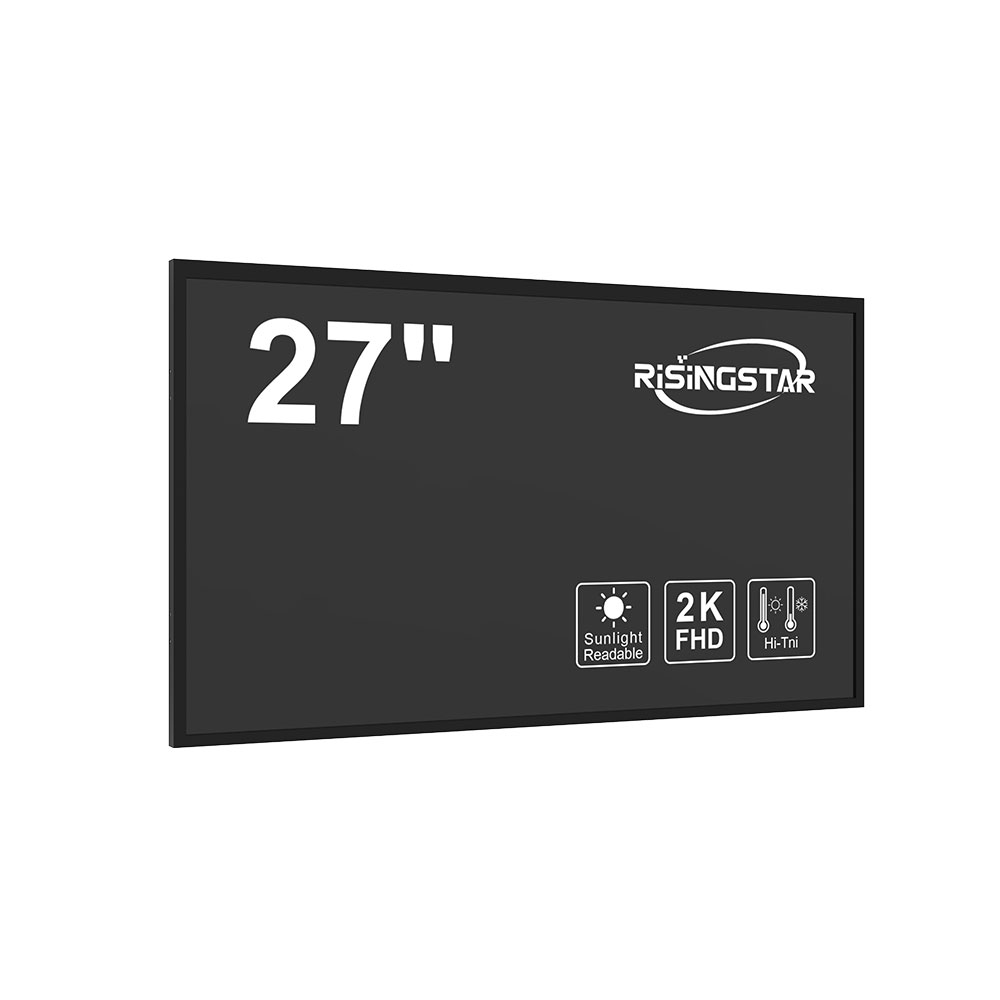
1. High Luminance Backlights – Modern high-brightness LCDs often exceed 5,000 nits (cd/m²), with some specialized models reaching up to 10,000 nits. For example, the LG Display LQ101X3LW26, widely used in ruggedized tablets, delivers 5,000 nits peak brightness. This surpasses typical office monitors (300–500 nits) by over 10x, ensuring visibility under direct sunlight.
2. Anti-Reflective Coatings and Polarizers – Using multi-layer anti-reflection (AR) coatings on the front glass reduces glare by up to 90%. Combined with optimized polarizer stacks (such as those from 3M or Corning), these layers enhance contrast ratios from 100:1 to 2,000:1 or more, making text and graphics clearly legible even in bright sunlight.
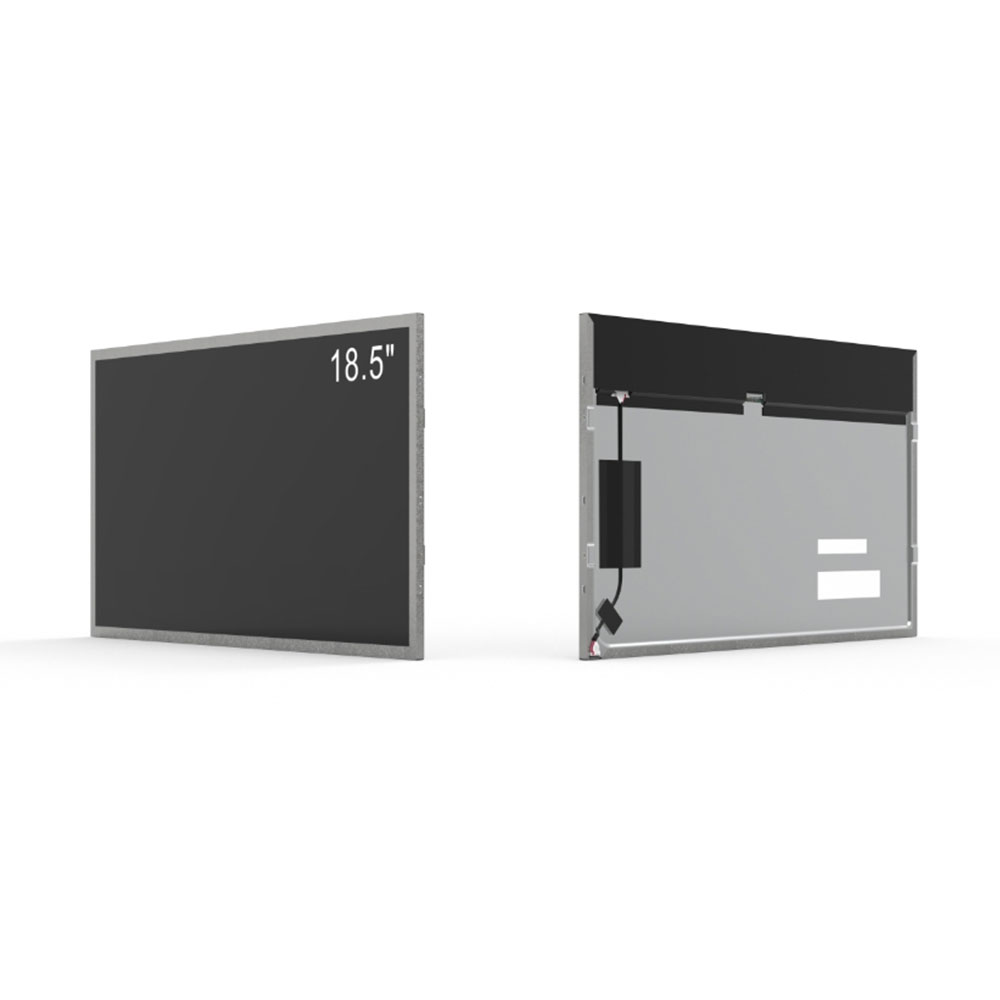
3. Transflective Technology – Unlike traditional transmissive LCDs that rely solely on backlighting, transflective panels use both ambient light and internal illumination. This dual-mode design improves power efficiency while maintaining visibility outdoors. Transflective LCDs like those from Sharp and Citizen have been adopted in handheld devices such as GPS units and field medical tools.
4. Enhanced Contrast and Color Gamut – Industry-standard sRGB or Adobe RGB color spaces are now supported in high-brightness displays to ensure accurate color reproduction under varying lighting. The use of wide-viewing-angle IPS (In-Plane Switching) panels further ensures consistent image quality from any angle — a necessity for shared-screen environments in vehicles or aircraft cockpits.
5. Environmental Robustness – As per IEC 60068 standards, these displays undergo rigorous testing for temperature (-40°C to +70°C), shock resistance, and ingress protection (IP65/IP67). Many modern units are also designed with IP68-rated sealing for water immersion, crucial in marine and aerospace contexts.
Case studies from defense contractors like Raytheon and Honeywell show that integrating high-brightness LCDs into mission-critical systems (e.g., UAV control interfaces, armored vehicle dashboards) significantly improves operator situational awareness. A 2022 study published in the IEEE Transactions on Human-Machine Systems found that users made 37% fewer errors when interacting with 5,000-nit sunlight-readable displays compared to standard 300-nit screens in outdoor simulations.
Manufacturers must also consider power consumption — especially for battery-powered devices. Advanced LED drivers and adaptive brightness algorithms (like those in Samsung’s AMOLED-based solutions) reduce energy usage without compromising visibility. Additionally, integration with touchscreens using capacitive or resistive sensors, often paired with glove-compatible interfaces, ensures usability across diverse operational scenarios.
Ultimately, designing a high-brightness sunlight-readable LCD involves a multidisciplinary approach combining optics, materials science, human factors engineering, and environmental durability testing. With increasing demand in autonomous vehicles, smart city infrastructure, and remote monitoring systems, this technology continues to evolve rapidly — driven by real-world performance benchmarks, regulatory compliance, and user-centric design principles.