RisingStar
- Home
- About Us
- Products
- News
- Video
- Contact
- Send Inquiry
Search
- Home
- About Us
- Products
- News
- Video
- Contact
- Send Inquiry
RisingStar
The IK10 standard, developed by the International Electrotechnical Commission (IEC), defines the ingress protection (IP) rating for electrical enclosures, particularly focusing on dust and water resistance. While primarily used in industrial control systems, lighting, and outdoor electronics, the IK10 rating has become increasingly relevant in the design of high-brightness sunlight-readable LCD displays—especially those deployed in harsh environments such as military operations, construction sites, transportation hubs, and solar-powered monitoring systems.
A high-brightness sunlight-readable LCD screen must not only achieve luminance levels of at least 5,000 nits to remain legible under direct sunlight but also maintain durability, contrast stability, and operational reliability in extreme temperatures, humidity, and mechanical stress. The IK10 rating ensures that the display housing and internal components are protected against heavy impacts—up to 20 joules (equivalent to a 5kg steel ball dropped from 40cm)—which is critical for applications where physical robustness is non-negotiable.
Industry case studies highlight successful deployments: In 2022, the U.S. Department of Defense adopted IK10-rated LCD panels for battlefield command consoles, where both environmental resilience and readability were paramount. Similarly, Siemens’ industrial IoT sensors in desert regions use IK10-protected screens with brightness exceeding 7,000 nits, enabling clear visibility even at noon sun exposure while resisting sand abrasion and vibration.
Technically, achieving IK10 compliance requires rigorous mechanical testing per IEC 60068-2-75, which includes drop tests, impact simulations, and structural integrity assessments. Manufacturers like Sharp, LG, and BOE have integrated these standards into their production lines for specialized displays, using polycarbonate or aluminum casings, reinforced glass substrates, and anti-reflective coatings. These enhancements improve optical performance while ensuring long-term operational safety in demanding sectors such as mining, maritime navigation, and public transit.
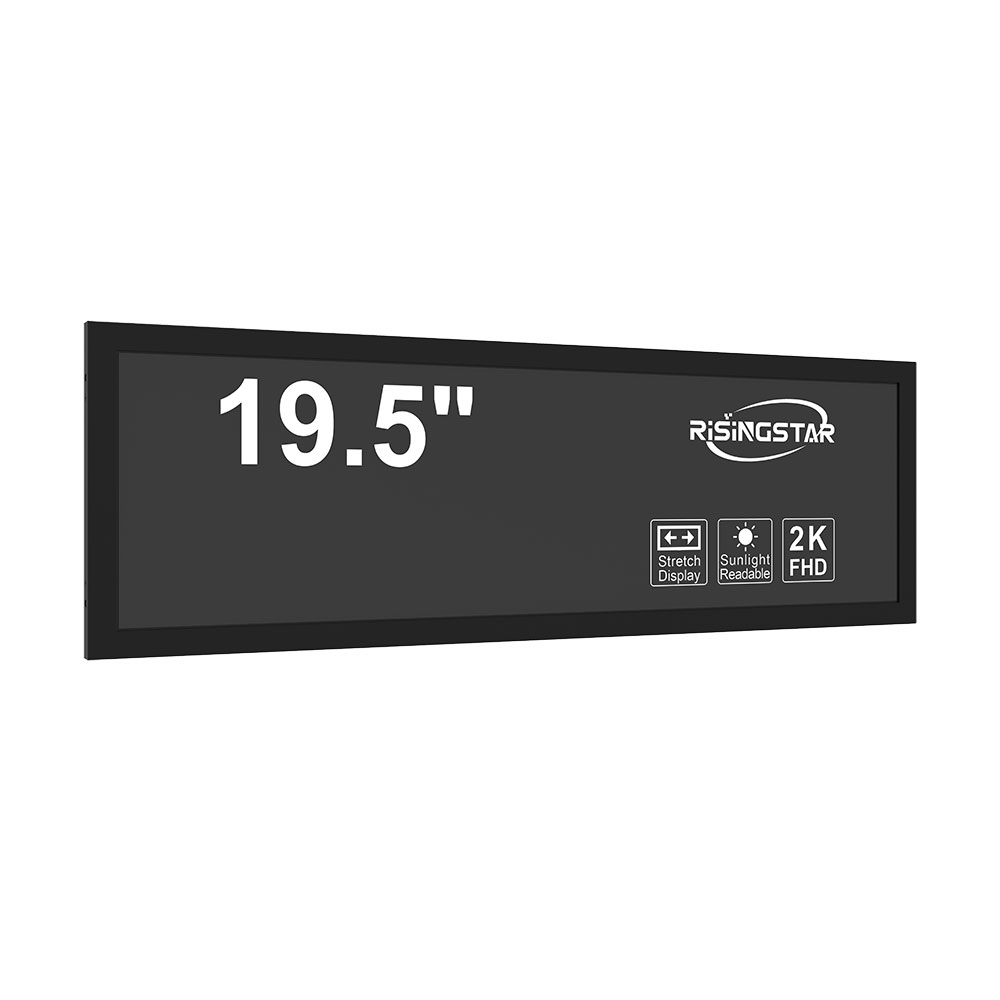
Moreover, the synergy between IK10 and high-brightness technologies (like LED-backlit LCDs with local dimming or OLED-based designs) allows engineers to optimize power efficiency without sacrificing visibility. For instance, recent developments in adaptive brightness control algorithms now dynamically adjust luminance based on ambient light and usage patterns, reducing energy consumption by up to 30% in portable devices.
In conclusion, the integration of IK10 protection into high-brightness sunlight-readable LCD screens represents a convergence of mechanical engineering, optics, and materials science. It enables reliable operation across diverse industries—from defense to smart infrastructure—where display clarity and physical resilience are mission-critical. As global demand for ruggedized digital interfaces grows, adherence to standards like IK10 will continue to shape the future of human-machine interaction in extreme conditions.