RisingStar
- Home
- About Us
- Products
- News
- Video
- Contact
- Send Inquiry
Search
- Home
- About Us
- Products
- News
- Video
- Contact
- Send Inquiry
RisingStar
High-brightness sunlight-readable LCD displays have become essential in modern outdoor electronic systems where visibility under direct sunlight is critical. These screens are engineered to maintain clarity and contrast even in extreme lighting conditions, making them indispensable in industries such as military, transportation, industrial automation, medical devices, and retail kiosks. The core technology behind these displays involves high peak brightness levels—typically 5,000 to 10,000 nits or more—combined with advanced anti-glare coatings, polarized filters, and optimized backlighting systems. Unlike standard LCDs that degrade significantly under sunlight (often dropping below 100 nits), sunlight-readable LCDs use a combination of hardware and software techniques to ensure readability at all times.
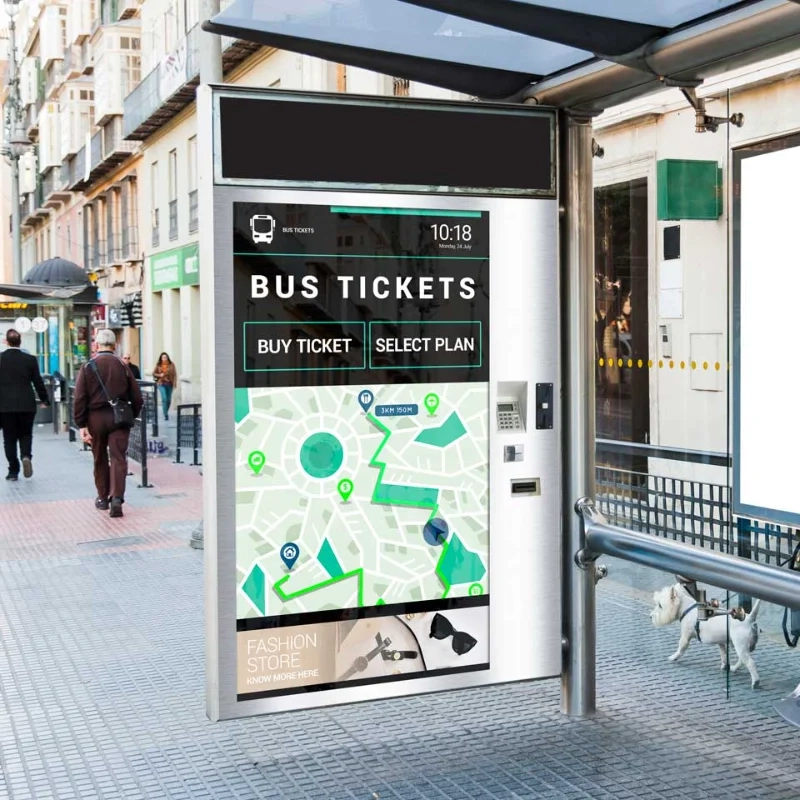
One of the most significant practical applications is in military field operations. For example, the U.S. Army’s Integrated Visual Augmentation System (IVAS) uses high-brightness LCDs to provide soldiers with real-time data, targeting overlays, and navigation in full sunlight. Similarly, in commercial settings like highway toll booths, bus terminals, and airport check-in kiosks, these displays remain legible even under intense solar exposure, reducing user errors and increasing operational efficiency.
Advantages of high-brightness sunlight-readable LCDs include superior contrast ratios (up to 10,000:1), reduced eye strain due to minimized glare, and compatibility with both indoor and outdoor environments without performance degradation. They also support wide viewing angles (up to 178°), which enhances usability in dynamic environments. Additionally, recent advancements in LED backlighting, such as mini-LED and micro-LED arrays, have enabled localized dimming control, improving energy efficiency while maintaining high brightness.
However, common problems persist. One issue is thermal management—high brightness generates more heat, potentially shortening component lifespan if not properly managed. Another challenge is power consumption; achieving 10,000 nits often requires significant electrical input, which can be problematic in battery-powered devices. Manufacturers address this by integrating intelligent brightness control algorithms that dynamically adjust luminance based on ambient light sensors.
Latest trends include the adoption of OLED-based sunlight-readable displays, which offer better contrast and lower power draw than traditional LCDs. Companies like Sony and LG are pioneering flexible, high-brightness OLED panels suitable for ruggedized mobile devices. Moreover, the integration of AI-driven adaptive display technologies—such as real-time image enhancement and automatic color correction—is becoming standard in premium outdoor displays. According to market research from Grand View Research (2023), the global sunlight-readable display market is projected to grow at a CAGR of 6.8% through 2030, driven by demand in autonomous vehicles and smart city infrastructure.
In conclusion, high-brightness sunlight-readable LCDs are no longer niche components—they are foundational elements in today’s connected, mobile-first world. Their continued evolution through innovations in materials science, power efficiency, and intelligent control systems ensures they will remain at the forefront of outdoor display technology for years to come.