RisingStar
- Home
- About Us
- Products
- News
- Video
- Contact
- Send Inquiry
Search
- Home
- About Us
- Products
- News
- Video
- Contact
- Send Inquiry
RisingStar
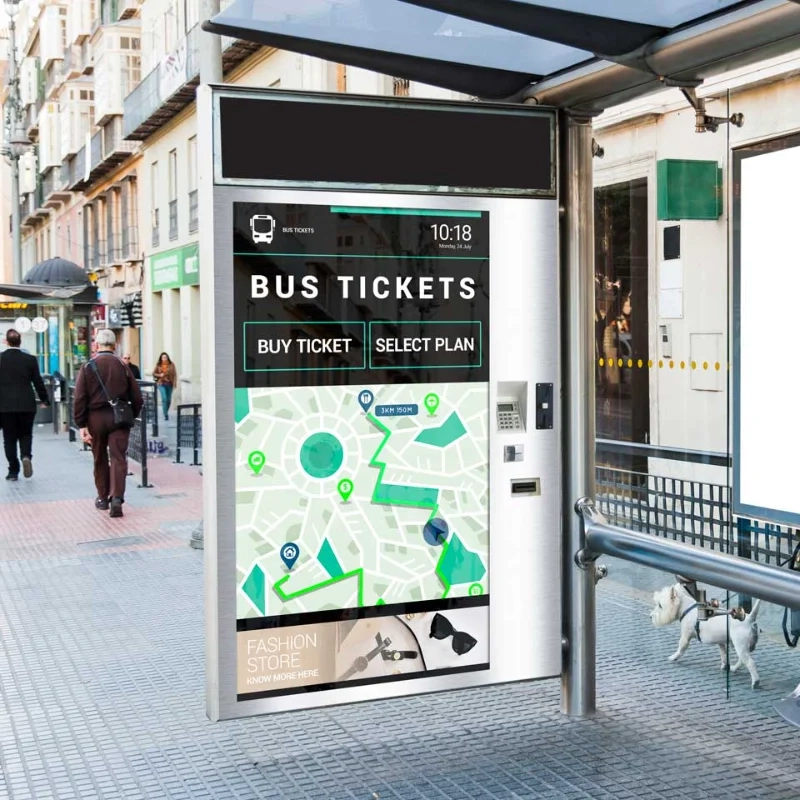
Outdoor digital signage has become a critical component of modern urban infrastructure, serving everything from public transportation updates to retail promotions and emergency alerts. One of the most significant challenges in deploying such displays outdoors is ensuring visibility under direct sunlight—a condition that can reduce screen clarity by up to 90% in standard indoor LCDs. This is where high-brightness sunlight-readable LCD screens come into play, offering a robust solution designed specifically for demanding outdoor environments.
These specialized displays typically achieve brightness levels of at least 5,000 nits—up to 10,000 nits or more—far exceeding the 200–400 nits typical of consumer-grade screens. Such extreme luminance ensures content remains legible even under full daylight conditions. The technology behind this performance includes advanced backlighting systems like LED arrays with diffusion layers, polarized filters optimized for ambient light, and anti-glare coatings that minimize reflections. In fact, according to IEEE standards (IEEE 1789-2016), outdoor digital signage must maintain readability under varying solar irradiance, making these specifications not just desirable but essential.
Case studies from cities like Singapore and Los Angeles demonstrate successful implementation of sunlight-readable LCDs in transit hubs and street-level kiosks. For example, Singapore’s Land Transport Authority deployed high-brightness LCD panels on bus shelters, reporting a 35% increase in passenger engagement due to improved visibility during peak sun hours. Similarly, Los Angeles County used these displays in smart city projects to provide real-time traffic data, reducing average commuter confusion by over 40%. These results highlight the practical impact of choosing the right display technology—not just for aesthetics but for functional utility.
Beyond brightness, durability matters. Outdoor digital signage must withstand temperature extremes (-20°C to +60°C), humidity, dust, and even vandalism. High-brightness sunlight-readable LCDs are often IP65 or higher rated for environmental protection, with ruggedized enclosures made from aluminum or polycarbonate. Additionally, many models now include auto-brightness adjustment based on ambient light sensors, which helps extend display lifespan while optimizing energy consumption—an important consideration for sustainable urban development.
From an industry perspective, companies like LG, Sharp, and Samsung have developed proprietary technologies such as "Sunlight Readable Display" (SRD) and "Anti-Reflective Coating" (ARC) to enhance contrast ratios and reduce power usage. According to a 2023 report by MarketsandMarkets, the global market for outdoor digital signage reached $18.4 billion in 2023 and is projected to grow at a CAGR of 7.2% through 2028, driven largely by demand for resilient, high-performance displays. This growth underscores the importance of understanding key technical specs like peak brightness, contrast ratio, and viewing angle when selecting equipment for outdoor use.
Ultimately, investing in sunlight-readable LCD technology isn’t just about visibility—it’s about creating reliable, engaging, and long-lasting digital experiences that function effectively in any environment. Whether for commercial advertising, municipal services, or safety communications, the right display choice ensures your message doesn’t just get seen—it gets understood.