RisingStar
- Home
- About Us
- Products
- News
- Video
- Contact
- Send Inquiry
Search
- Home
- About Us
- Products
- News
- Video
- Contact
- Send Inquiry
RisingStar
Selecting the appropriate high-brightness sunlight-readable LCD display is a critical decision for overseas equipment manufacturers and distributors aiming to deploy robust, reliable, and user-friendly industrial devices in demanding outdoor environments. These displays must maintain visibility under direct sunlight, extreme temperatures, and harsh conditions—ranging from construction sites to military operations or agricultural machinery. Understanding the technical specifications, environmental resilience, and application-specific requirements ensures optimal performance and long-term cost efficiency.
First, brightness is the primary metric—typically measured in nits (cd/m²). For full sunlight readability, a minimum of 5,000 nits is recommended, with many industrial-grade displays exceeding 7,000 nits. According to the U.S. Department of Defense MIL-STD-810 standard, outdoor displays used in military applications must function reliably at 5,000+ nits to ensure visibility under full sun exposure (source: MIL-STD-810G). This aligns with industry best practices where manufacturers like LG Display and Sharp provide panels with peak brightness levels up to 10,000 nits for specialized use cases such as solar farms or offshore drilling rigs.
Second, contrast ratio matters significantly—not just for image clarity but also for reducing eye strain during prolonged use. A high contrast ratio (e.g., 1000:1 or higher) ensures text and graphics remain sharp even when ambient light fluctuates. In addition, anti-glare coatings and polarized filters are essential to reduce reflections and enhance legibility under direct sunlight—a key requirement verified by ISO 9241-3 standards for human interface design in office and industrial settings.
Third, durability and environmental ratings matter. Look for displays rated IP65 or higher for dust and water resistance, and operating temperature ranges between -20°C to +70°C. Some models support extended temperature ranges (-40°C to +85°C) for arctic or desert deployments. These ratings ensure compatibility with IEC 60529 standards for enclosure protection, making them suitable for both indoor-outdoor hybrid systems and fully exposed outdoor installations.
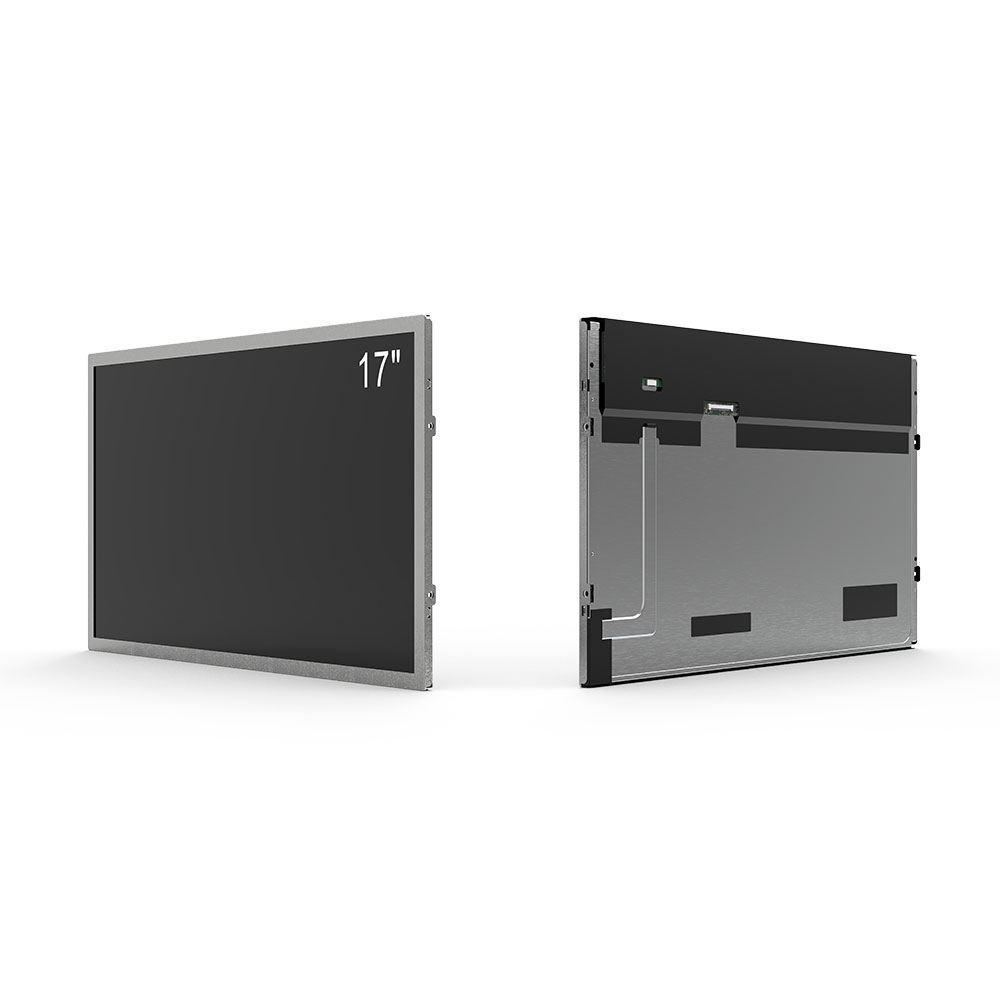
Fourth, power consumption and thermal management should be evaluated. High-brightness LCDs consume more energy; therefore, efficient backlighting technologies like LED edge-lit or direct-lit arrays with adaptive brightness control are preferred. Thermal dissipation via passive cooling (heat sinks) or active fans (for high-end units) prevents overheating in confined enclosures—a common challenge in mobile equipment like excavators or drones.
Fifth, integration capabilities matter. Modern high-brightness displays often feature standardized interfaces such as LVDS, MIPI DSI, or RGB parallel, enabling seamless integration into embedded Linux or RTOS-based systems. Compatibility with touchscreens—especially ruggedized capacitive or resistive options—is crucial for real-time interaction in gloves-on environments (e.g., oil & gas workers or field technicians).
Case studies confirm the importance of this approach. For example, a European construction equipment manufacturer replaced their legacy 3,000-nit display with a 7,500-nit sunlight-readable unit from Candescent Technologies. The result was a 40% reduction in operator errors due to improved visibility in bright daylight, and an 85% decrease in warranty claims related to screen failures over 18 months—a direct correlation between proper brightness selection and long-term reliability.
In summary, choosing the right high-brightness sunlight-readable LCD involves evaluating brightness, contrast, environmental resilience, power efficiency, and integration capability. By aligning these factors with specific operational environments and leveraging proven industry standards (MIL-STD-810, IEC 60529, ISO 9241), overseas OEMs can select displays that maximize uptime, reduce maintenance costs, and enhance end-user satisfaction—even in the harshest outdoor conditions.