RisingStar
- Home
- About Us
- Products
- News
- Video
- Contact
- Send Inquiry
Search
- Home
- About Us
- Products
- News
- Video
- Contact
- Send Inquiry
RisingStar
High-brightness sunlight-readable LCD screens have become essential in modern industrial, military, transportation, and outdoor digital signage applications where visibility under direct sunlight is critical. These displays are engineered to overcome the limitations of standard LCDs that typically fail to provide adequate contrast and readability when exposed to ambient light levels exceeding 10,000 lux—common in sunny environments such as construction sites, solar farms, public transit, and vehicle dashboards.
The most commonly used display ratios in this category are 16:9, which aligns with modern video and content standards, enabling seamless integration across devices from portable tablets to large-format kiosks. Available sizes range from compact 10.1-inch units ideal for handheld industrial tools and mobile workstations to massive 110-inch panels used in outdoor advertising, command centers, and control rooms. Key dimensions include 13.3", 15.6", 18.5", 21.5", 23.8", 27", 32", 43", 46", 49", 55", 65", 75", 86", 98", and 110"—each tailored to specific application needs in terms of resolution, mounting flexibility, power efficiency, and environmental resilience.
These displays achieve superior sunlight readability through multiple technologies: high-brightness LED backlights (often exceeding 5,000 nits), anti-glare or polarized coatings, wide viewing angles (up to 178°), and sometimes integrated ambient light sensors that dynamically adjust brightness based on environmental conditions. For instance, a 55" 16:9 panel used in an airport information kiosk must maintain legibility even during peak daylight hours, requiring a minimum brightness of 5,000 nits per IEC 62368-1 safety standards. In contrast, a 10.1" unit in a ruggedized tablet designed for field engineers may prioritize portability and battery life while still delivering 3,000 nits peak brightness for clear visibility in direct sun.
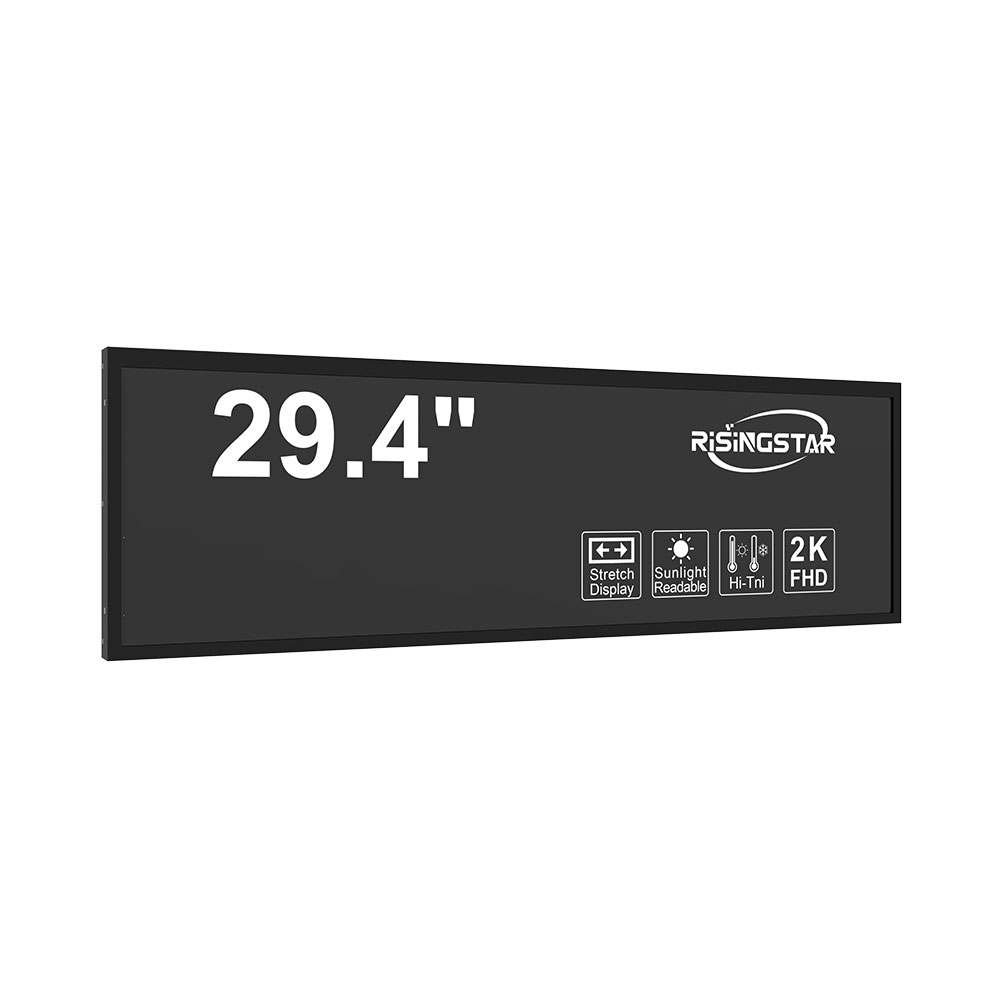
Manufacturers like LG, Samsung, Sharp, and Innolux leverage advanced backlighting techniques such as local dimming zones and quantum dot enhancement to improve contrast ratios beyond 10,000:1. Additionally, industrial-grade IPS or VA panels ensure consistent color accuracy and pixel response times under extreme temperatures (-20°C to +70°C), meeting IP65 or higher ingress protection standards for dust and water resistance. Case studies from defense contractors (e.g., Lockheed Martin’s ground control systems) and logistics firms (like FedEx’s fleet tracking terminals) demonstrate significant productivity gains when deploying sunlight-readable displays compared to conventional LCDs.
According to a 2023 report by MarketsandMarkets, the global market for high-brightness LCDs is projected to grow at a CAGR of 6.8% through 2028, driven by demand from smart cities, IoT-enabled infrastructure, and autonomous vehicles. This growth underscores the importance of selecting not just size and ratio but also robustness, energy efficiency, and compatibility with embedded systems such as Raspberry Pi, Android Auto, or Windows Embedded platforms.
In conclusion, choosing the right high-brightness sunlight-readable LCD requires a balance between screen size, aspect ratio (primarily 16:9), brightness level, durability, and integration capabilities. Whether designing a 15.6" dashboard for a mining vehicle or a 98" outdoor advertisement board, understanding these technical nuances ensures optimal performance in demanding real-world conditions.