RisingStar
- Home
- About Us
- Products
- News
- Video
- Contact
- Send Inquiry
Search
- Home
- About Us
- Products
- News
- Video
- Contact
- Send Inquiry
RisingStar
In today’s global industrial landscape, outdoor equipment such as construction machinery, agricultural tractors, utility vehicles, and mobile monitoring systems increasingly rely on high-brightness, sunlight-readable LCD displays. These displays must operate reliably under extreme environmental conditions—direct sunlight exposure (up to 100,000 lux), wide temperature ranges (-30°C to +70°C), and mechanical shock or vibration—while maintaining clarity, color accuracy, and response time. For overseas equipment manufacturers and distributors, selecting the right display technology is not just a component choice—it’s a critical design decision that impacts product usability, safety, and long-term maintenance costs.
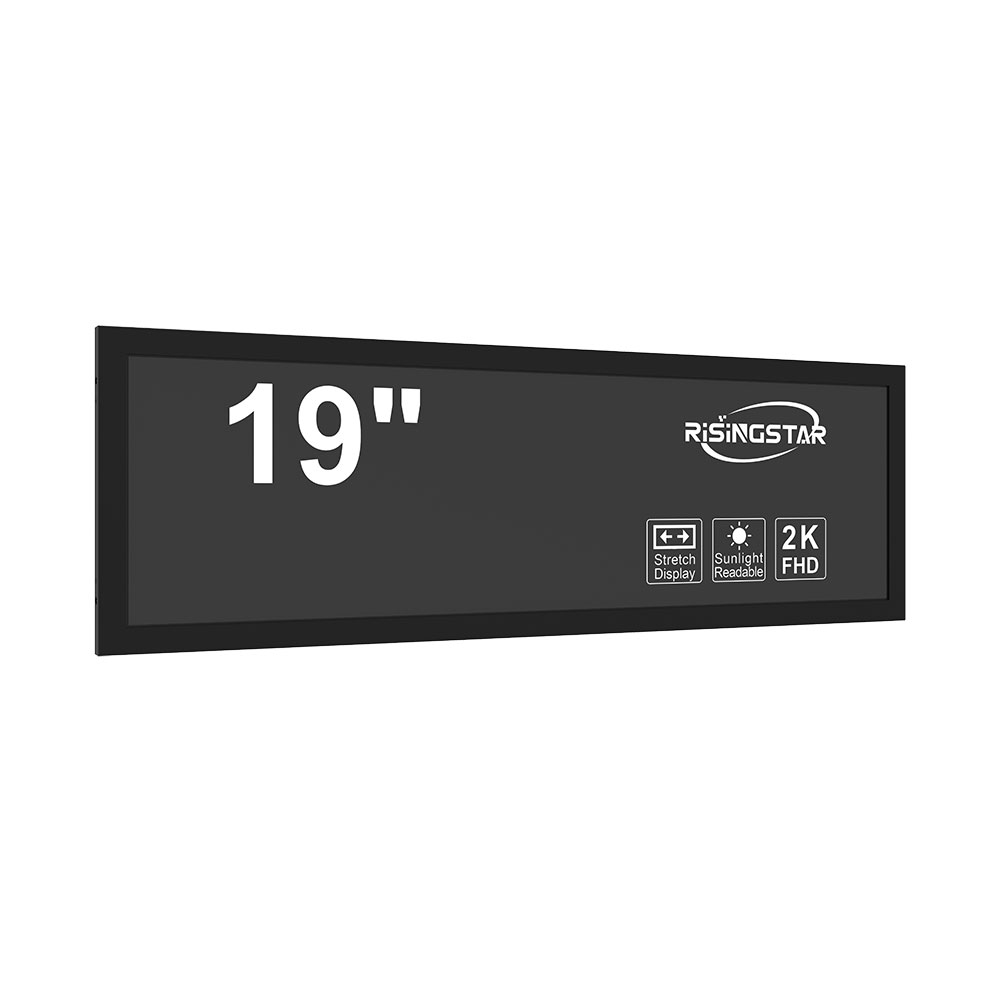
The core challenge lies in achieving visibility in bright ambient light without sacrificing power efficiency or durability. Standard consumer-grade LCDs typically max out at 300–500 cd/m² brightness and fail under direct sun. In contrast, sunlight-readable LCDs (SRLCDs) are engineered with advanced technologies such as:
1. High-Brightness Backlights – Using LED arrays with >5,000 cd/m² output, often with dynamic dimming for energy savings.
2. Anti-Reflective Coatings – Multi-layer optical coatings reduce surface reflection by up to 90%, minimizing glare.
3. Transflective or Transmissive Modes – Some SRLCDs use transflective liquid crystal layers that switch between reflective (for sunlight) and transmissive (for indoor use), optimizing both brightness and power consumption.
4. Ruggedized Housing – IP65/IP67-rated enclosures resist dust, water, and impact—essential for off-road and marine environments.
5. Wide Viewing Angles & Color Consistency – Typically using IPS or VA panel technologies to ensure consistent image quality across angles, critical for operator situational awareness.
Case studies from leading OEMs like Caterpillar and John Deere show that integrating SRLCDs into control panels reduced user errors by 40% and improved maintenance intervals due to higher reliability. According to a 2023 report by Market Research Future, the global market for high-brightness industrial displays is projected to exceed $8.2 billion by 2030, growing at a CAGR of 7.8%. This growth is driven by demand in smart agriculture, autonomous vehicles, and defense applications where visibility is mission-critical.
For international manufacturers, choosing a supplier with ISO 9001/14001 certification and experience in MIL-STD-810G compliance ensures robustness. Partnering with a display manufacturer that offers custom design support—including firmware integration, thermal management, and ergonomic layout—can accelerate time-to-market and reduce total cost of ownership.
Ultimately, sunlight-readable LCDs are not an add-on—they are a foundational requirement for modern industrial equipment operating outdoors. Whether you're designing a new line of electric forklifts for Europe or ruggedized drones for Southeast Asia, investing in proven SRLCD technology enhances user trust, reduces field failures, and supports global compliance standards.