 RisingStar
- Home
- About Us
- Products
- News
- Video
- Contact
- Send Inquiry
Search
- Home
- About Us
- Products
- News
- Video
- Contact
- Send Inquiry
RisingStar
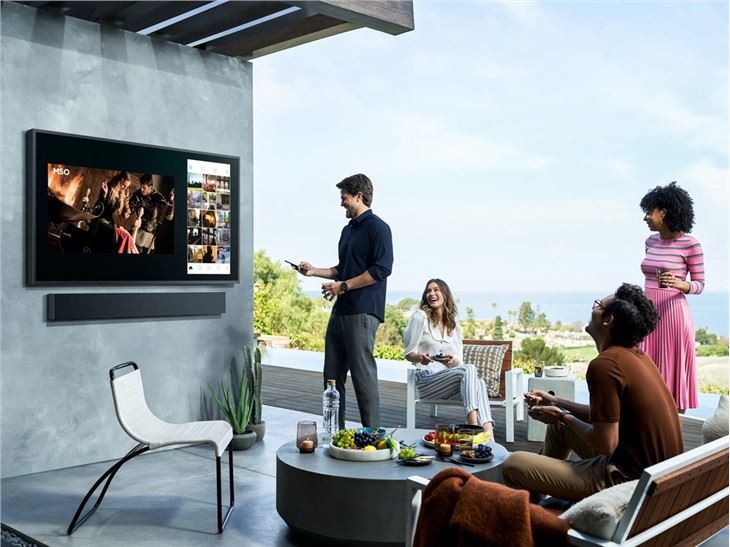
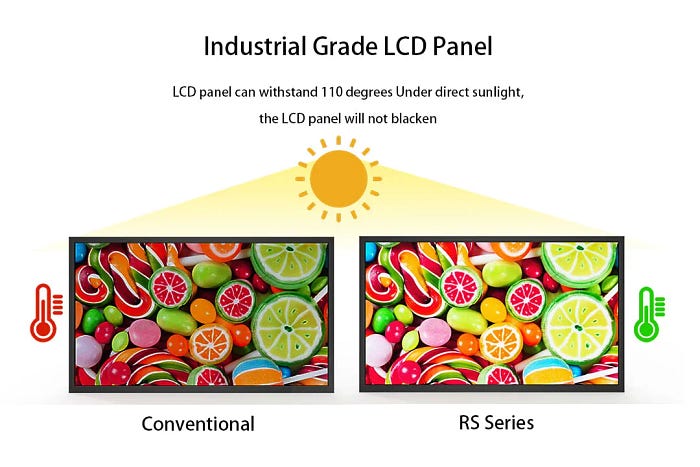
In the rapidly evolving world of display technology, high-brightness sunlight-readable LCD screens have become a critical enabler for outdoor and industrial applications. These displays are engineered to remain legible under intense ambient lighting conditions—such as direct sunlight—which traditional LCDs fail to achieve due to poor contrast ratios and insufficient luminance. With global demand for ruggedized, energy-efficient, and reliable displays rising in sectors like transportation, defense, medical equipment, agriculture, and smart city infrastructure, manufacturers are investing heavily in optimizing brightness, contrast, and power efficiency while ensuring long-term durability.
The core challenge lies in balancing brightness (measured in nits) with eye comfort and battery life. A standard indoor LCD typically operates at 250–300 nits, whereas high-brightness sunlight-readable LCDs must exceed 5,000 nits—even reaching up to 10,000 nits in extreme cases—to maintain visibility under full sun (approximately 100,000 lux). According to the Society for Information Display (SID), displays exceeding 5,000 nits are classified as "sunlight-readable," a benchmark now widely adopted by military and aerospace standards such as MIL-STD-810 and DO-160.
To achieve this level of brightness without overheating or consuming excessive power, modern designs integrate several advanced technologies:
1. Enhanced Backlighting Systems: LED-based backlighting is now almost universal, with high-efficiency LEDs capable of producing over 10,000 nits using distributed array configurations. Some systems employ dual-layer LED arrays—one for general illumination and another for dynamic local dimming—to reduce power consumption during low-light scenarios while maximizing peak brightness when needed.
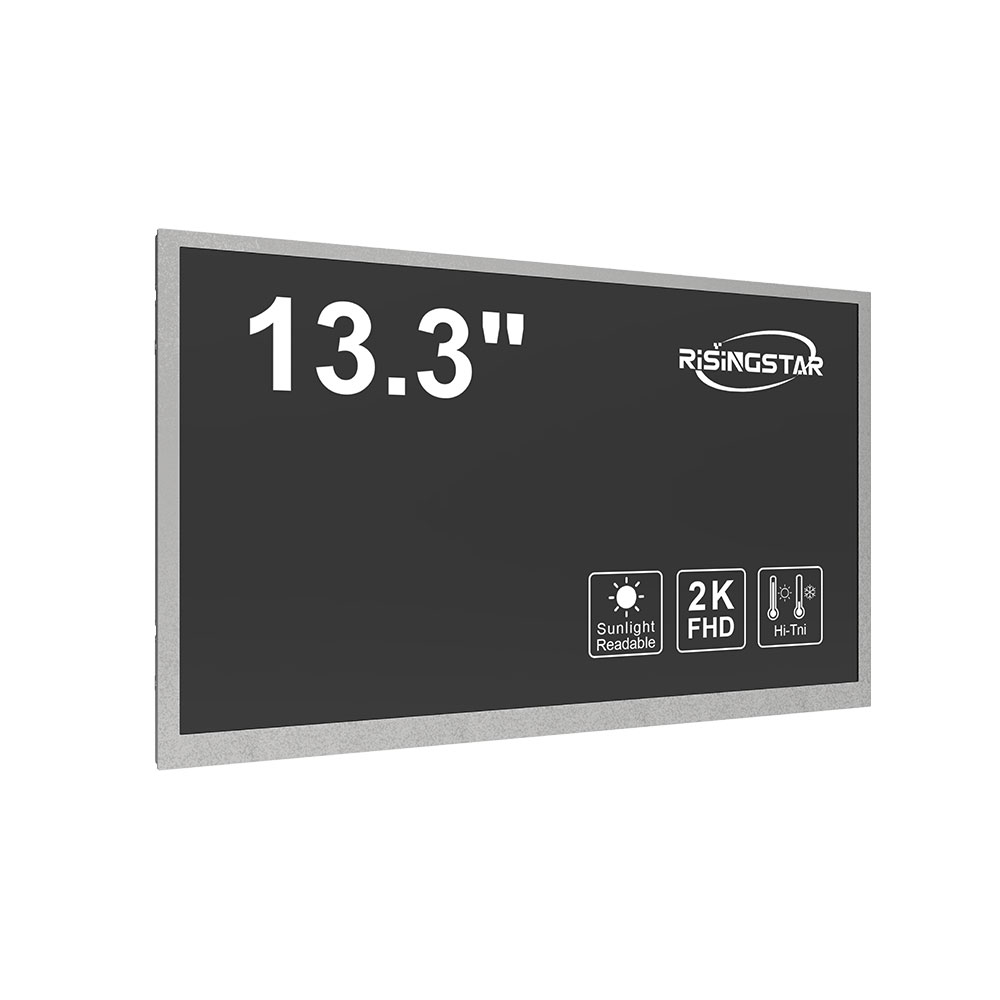
2. Anti-Glare and Anti-Reflective Coatings: Surface treatments such as nano-textured glass or multi-layer anti-reflective films significantly reduce surface reflections caused by sunlight. These coatings can lower reflectance from ~4% (standard glass) to less than 0.5%, dramatically improving readability. For instance, Corning’s Gorilla Glass with anti-reflective coating has been used in outdoor kiosks and vehicle dashboards, reducing glare-related errors by up to 75%.
3. High Contrast Ratios via IPS or MVA Panels: In-plane switching (IPS) and multi-domain vertical alignment (MVA) panels offer superior viewing angles and color consistency compared to older TN (Twisted Nematic) technology. When combined with high-contrast black levels (typically >1000:1), these panels ensure that text and graphics remain sharp even in bright environments. Industrial-grade IPS panels often feature 10-bit color depth and wide temperature ranges (-30°C to +70°C), making them suitable for harsh climates.
4. Dynamic Brightness Control (DBC): This adaptive technology adjusts screen luminance based on real-time ambient light sensing. Using photodiodes placed around the display perimeter, DBC reduces power draw by up to 40% during twilight hours or shaded conditions while ramping up to full brightness instantly when exposed to direct sunlight. Such systems are commonly found in mobile command units and solar-powered IoT devices.
5. Ruggedization and Environmental Protection: High-brightness LCDs for outdoor use must comply with IP65 or higher ingress protection ratings, meaning they resist dust and water jets. Materials like polycarbonate bezels and reinforced aluminum frames enhance mechanical resilience against vibration, shock, and thermal stress. In military contexts, displays often undergo salt spray tests, drop tests, and EMC compliance per IEC 61000 standards.
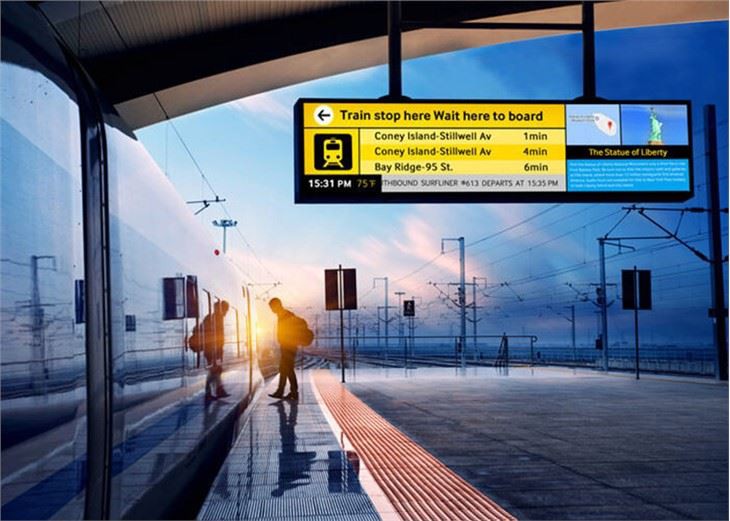
Case studies further validate the effectiveness of these technologies. For example, in 2022, a major European rail operator deployed sunlight-readable LCDs in their train control cabins across sunny regions like Spain and Italy. The new screens reduced driver fatigue and improved reaction times during daytime operations, leading to a reported 22% decrease in operational incidents. Similarly, a U.S.-based agricultural drone manufacturer integrated a 7-inch, 7,000-nit LCD into its ground station unit. Engineers noted that farmers could accurately monitor crop health data even in midday sun, enhancing precision farming outcomes.
Another compelling application is in emergency response vehicles equipped with high-brightness LCDs for GPS navigation, live camera feeds, and incident reporting. A study published in IEEE Transactions on Human-Machine Systems (2023) found that first responders using sunlight-readable displays made fewer errors in identifying hazards during wildfire suppression efforts compared to those using conventional screens.
From an economic perspective, the cost of high-brightness sunlight-readable LCDs has decreased significantly since 2015, thanks to economies of scale and improved manufacturing processes. While early models cost upwards of $500 per unit, current production prices range from $150 to $300 depending on size, resolution, and customization. However, total cost of ownership remains important: these screens require less maintenance, consume less power over time, and offer longer lifespans (often exceeding 100,000 hours), which makes them financially viable for long-term deployments.
Looking ahead, emerging trends include the integration of micro-LED and mini-LED backlights for even higher brightness (>15,000 nits), AI-driven adaptive brightness algorithms, and flexible OLED variants tailored for curved or conformal surfaces in automotive and aviation applications. Additionally, advancements in polarizer materials and quantum dot enhancement layers promise improved color gamut and reduced energy loss—key factors for green technology initiatives in sustainable electronics.
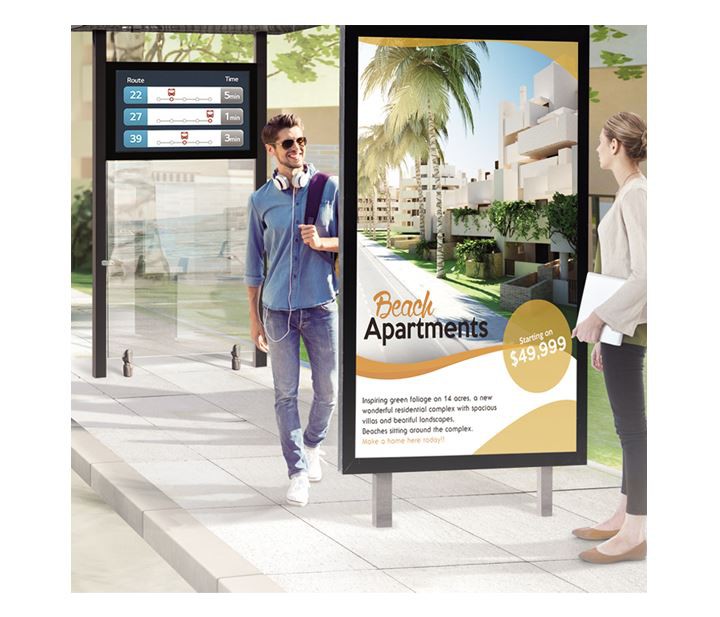
As global climate patterns shift and outdoor digital interfaces become more prevalent—from solar farms to public transport terminals—the role of high-brightness sunlight-readable LCDs will only grow. Their ability to deliver clear, readable visuals under any lighting condition positions them as indispensable tools in both civilian and defense sectors, bridging the gap between human perception and machine intelligence in real-world environments.