RisingStar
- Home
- About Us
- Products
- News
- Video
- Contact
- Send Inquiry
Search
- Home
- About Us
- Products
- News
- Video
- Contact
- Send Inquiry
RisingStar
For transit authorities worldwide, passenger information displays (PIDs) are critical for safety, efficiency, and rider satisfaction—but 72% of transit operators cite sunlight visibility and environmental durability as top pain points, per the International Association of Public Transport (UITP) 2024 Global Transit Tech Report. Consumer-grade displays often fail in direct sunlight, vibration, or extreme temperatures, leading to missed updates, delayed passenger assistance, and costly maintenance. This article explores the technical design, compliance requirements, and real-world applications of high-brightness sunlight-readable LCD displays built exclusively for transit environments.
Compliance with Global Transit Standards: The Foundation for Reliable Performance
Transit displays must adhere to region-specific and international standards to operate safely and consistently in rolling stock or public stations. For on-vehicle systems, EN 50155 is non-negotiable: this European standard defines operating temperature ranges (-40°C to +85°C for harsh climates) and electromagnetic compatibility for railway electronics, ensuring displays withstand the rigors of train operations. EN 61373 further specifies vibration and shock testing, requiring displays to survive 10-20g shock loads and continuous vibration during long-haul journeys— a critical benchmark, as untested displays often fail within two years of deployment, per 2023 data from Siemens Mobility’s transit division. For station and outdoor deployments, IP ratings and impact resistance standards take priority: IP65 seals for on-board bus/metro displays prevent dust and water ingress, while IP67 for platform edge systems withstands full submersion (1 meter for 30 minutes) to handle heavy rain or spills. IK10 vandal resistance, another mandatory requirement for high-traffic stations, ensures enclosures survive direct impacts from 1kg steel balls dropped from 40cm, reducing maintenance costs by up to 40% for public transit operators.
Core Technologies for Unmatched Sunlight Readability
The biggest challenge for transit displays is visibility in direct midday sunlight, where glare can wash out text and graphics on standard panels. Two key technologies solve this problem, balancing performance and cost efficiency for large-scale deployments.
#Optical Bonding: Eliminating Glare at the Source
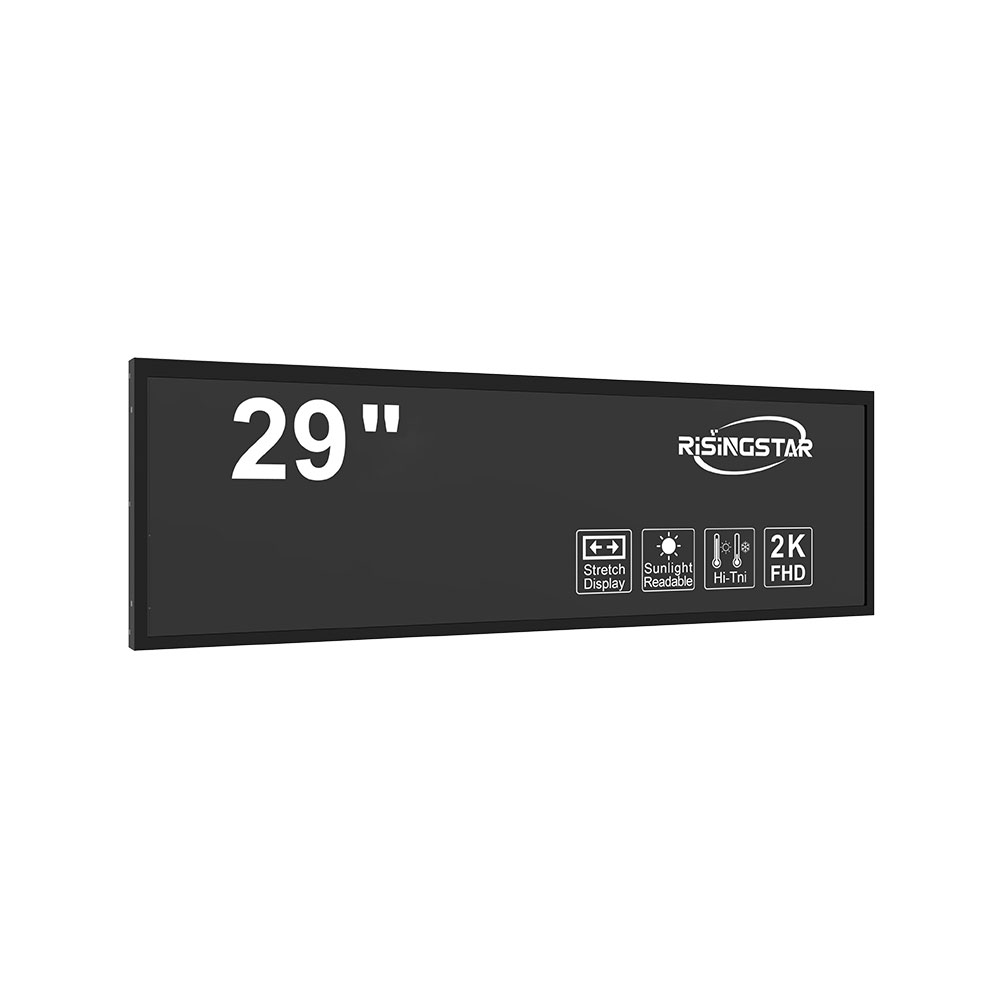
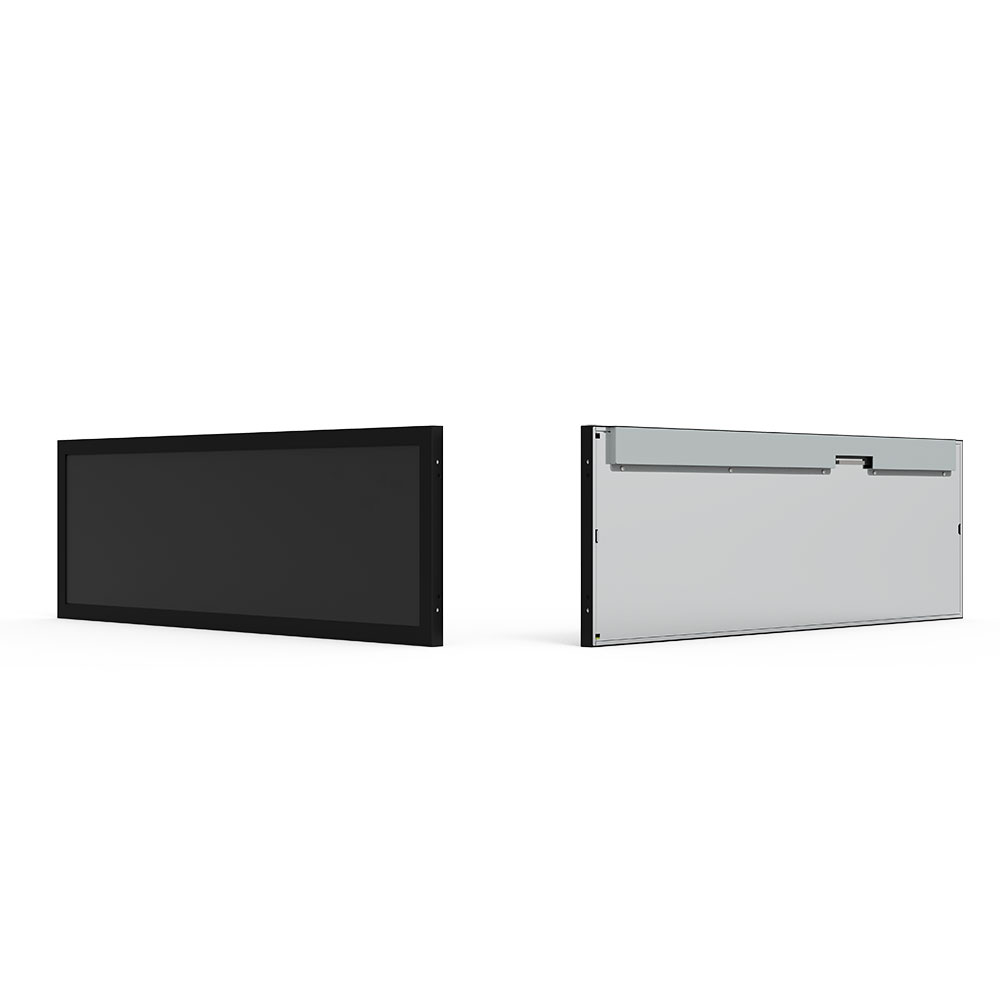
Optical bonding replaces the air gap between the LCD panel and protective cover glass with a optically clear adhesive (OCA), reducing internal reflection by up to 85%. This technology is especially effective for narrow onboard spaces, like stretch bar LCD displays, which are designed to fit seamlessly above train doors without blocking passenger views. A 2022 pilot by London Underground’s Northern Line used optical-bonded stretch bar displays, testing visibility at 1200 nits (the industry minimum for sunlight readability) and reporting a 28% reduction in passenger wayfinding errors compared to their older displays. To learn more about this space-saving solution, visit our [Stretch Bar LCD Products Page](/products/stretch-bar/).
#High-Brightness Panel Optimization
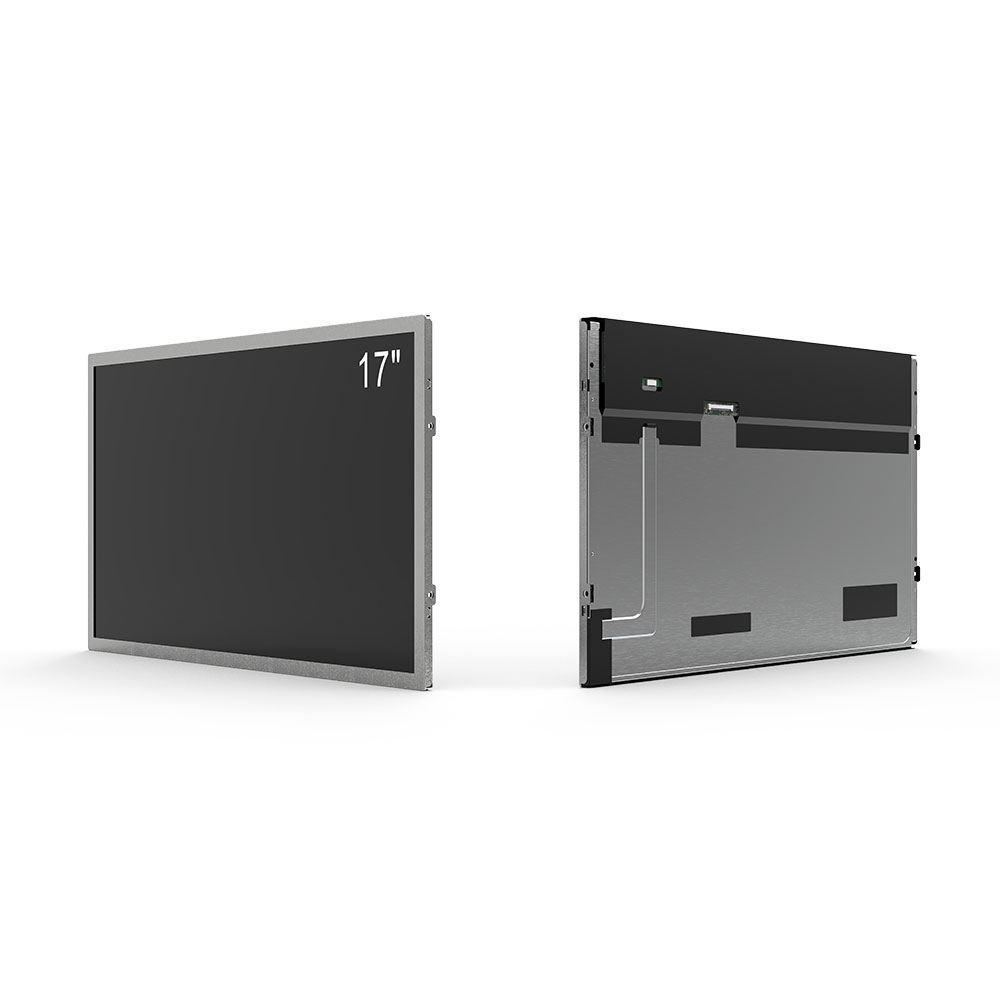
Beyond optical bonding, transit displays require panels calibrated to deliver a minimum of 3000 nits (12x brighter than consumer TVs, which average 250 nits) paired with a 1000:1 contrast ratio. Advanced ambient light sensors automatically adjust brightness levels, dimming to 500 nits at night to reduce glare for night-time passengers and boosting to 4000 nits in direct sunlight to maintain readability. This dynamic dimming also cuts power consumption by up to 30%, reducing long-term operational costs for transit authorities.
Application-Specific Solutions for On-Board and Station Deployments
Transit displays are not one-size-fits-all; their design must adapt to the unique constraints of on-vehicle or station environments.
#On-Vehicle Displays: Metros, Buses, and Commuter Trains
On-board displays need to be compact, lightweight, and vibration-resistant, making stretch bar LCD technology the preferred choice for modern fleets. Singapore’s SMRT deployed 1,200+ EN 50155 compliant stretch bar displays for its 2023 North-South Line expansion, which passed EN 61373 vibration testing and delivered 99.8% uptime in its first year of operation. These displays provide real-time train updates, station names, and transfer information, with zero visibility issues reported even during midday outdoor runs. To explore how these displays can fit your onboard fleet needs, visit our [On-Vehicle Transit Solutions](/solutions/on-vehicle/).
#Station Platform Displays: Edge and Central Systems
Platform edge displays require robust sealing to handle outdoor conditions, with visibility for passengers waiting up to 50 meters away. Dubai Metro’s Red Line deployed IP67 rated platform displays in 2022, featuring high-brightness panels and anti-reflective coatings that remained legible at all times, even during the city’s peak summer sunlight (up to 120,000 lux). These displays integrate with the metro’s signaling system to show real-time train arrival times and safety alerts, reducing passenger confusion and station crowding. For station-specific display solutions, see our [At-Station Transit Solutions](/solutions/at-station/) and [Platform Display Products](/products/platform/).
Thermal Management: Extending Display Lifespan for Long-Term Value
High-brightness panels generate significant heat, which can reduce lifespan by 50% if not managed properly. Transit display manufacturers use passive thermal design—including aluminum heat sinks and vented enclosures that draw cool air from the surroundings and expel hot air without fans—to maintain operating temperatures within safe limits (below 60°C). This design eliminates fan-related failures, a common cause of downtime in consumer displays, and extends the typical lifespan of transit-grade displays to 7+ years, compared to 2-3 years for consumer alternatives. A 2023 UITP study found that transit displays with proper thermal management reduce total cost of ownership by 35% over 10 years, making them a cost-effective investment for global transit networks.
In conclusion, high-brightness sunlight-readable LCD displays are a critical component of modern transit infrastructure, delivering reliable visibility, compliance, and durability for onboard and station deployments. As transit networks expand to meet growing global demand, partnering with a provider that understands strict transit standards (EN 50155, IP ratings) and application-specific needs ensures your displays perform consistently in harsh environments. To learn how to integrate these solutions into your next transit project, talk to our expert engineers or request a custom quote via our contact page.