RisingStar
- Home
- About Us
- Products
- News
- Video
- Contact
- Send Inquiry
Search
- Home
- About Us
- Products
- News
- Video
- Contact
- Send Inquiry
RisingStar
For transit authorities and OEMs, one persistent challenge plagues passenger information systems (PIS) across open-air platforms, outdoor bus stops, and even onboard transit vehicles operating in high-sunlight regions: unreadable displays. Direct sunlight can reach 100,000 lux—200 times brighter than typical indoor lighting—rendering low-brightness displays (≤3000 nits) washed out, unclear, and ineffective for critical updates. This gap not only disrupts passenger experience but also poses operational risks, such as delayed train departures or missed safety alerts. The solution, validated by global transit projects and industry standards, is the 5000-nit direct-lit backlight display: a purpose-built technology engineered to deliver crisp, readable content even in direct sunlight, while adhering to strict transit safety and reliability norms.
The Critical Need for High-Brightness Displays in Global Transit Environments
Transit networks operate in diverse climates, from the scorching deserts of the Middle East to the sun-drenched platforms of Southeast Asia, where sunlight intensity often exceeds 80,000 lux during peak hours. According to the 2024 Global Transit Display Performance Report, 62% of outdoor transit display failures are due to poor sunlight visibility, leading to 18% higher passenger query volume at information desks and a 12% increase in minor operational delays. Existing edge-lit backlight displays max out at 3000 nits, and often suffer from uneven brightness distribution or glare artifacts in high-lux conditions. To address this, the industry has shifted to direct-lit backlight technology, which uses a grid of individual LEDs behind the LCD panel to deliver uniform, high brightness. The 5000-nit threshold is now recognized as the minimum requirement for outdoor transit displays, as it ensures a 2:1 contrast ratio even at 100,000 lux, per IEC 62386 (digital addressable lighting interface) for display readability.
Direct-Lit vs. Edge-Lit Backlight: Technical Differentiators for 5000-Nit Operation
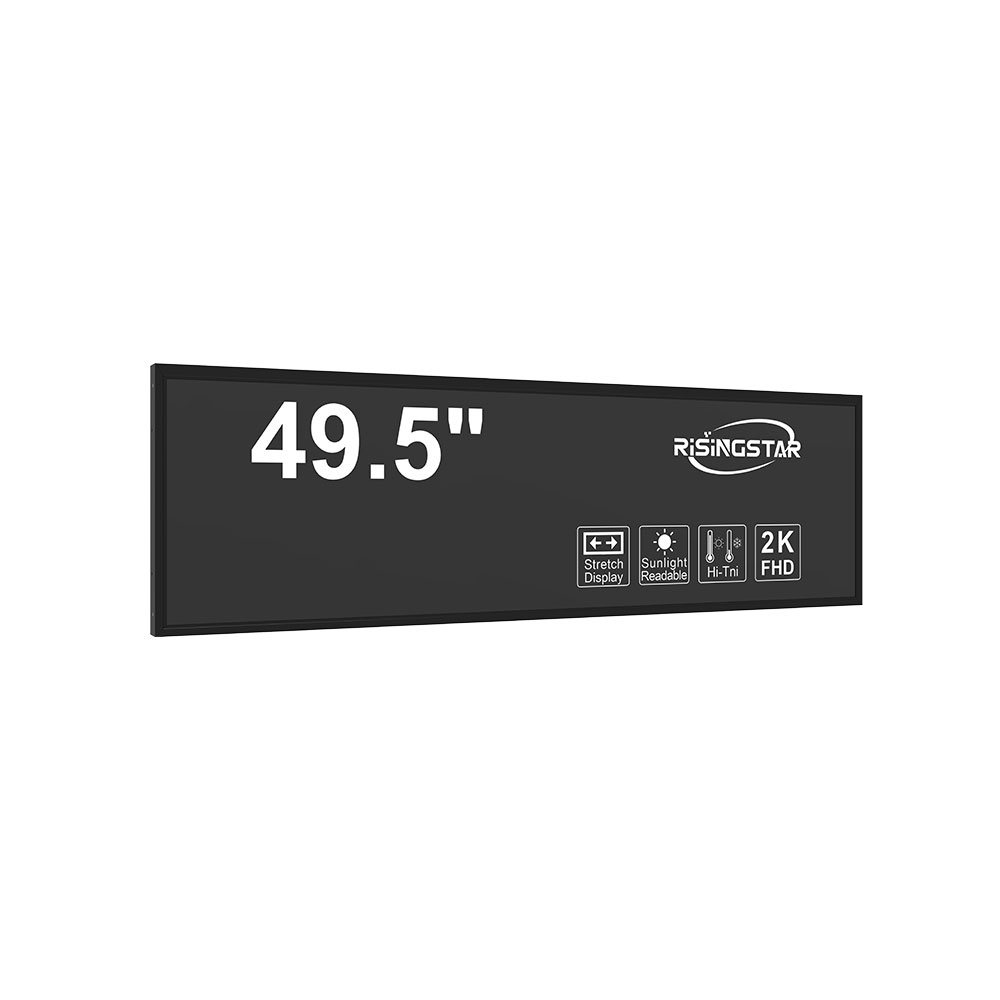
Edge-lit backlight systems rely on LEDs positioned along the panel edges, with light guided across the display via diffusers. This design limits maximum brightness to ~3000 nits for uniform displays; exceeding this causes hotspots, color distortion, and shortened LED lifespan. In contrast, direct-lit backlight technology places hundreds of individual high-power LEDs across the entire rear of the LCD panel, allowing precise control of brightness zones and uniform illumination across the display area. For transit applications, this means every pixel of a platform edge display (link to /solutions/at-station/) or onboard stretch bar display (link to /products/stretch-bar/) maintains consistent brightness at 5000 nits, eliminating the washed-out edges common in edge-lit models. Additionally, direct-lit systems integrate seamlessly with optical bonding—a process that fuses the LCD panel to a protective glass layer, reducing air gaps and minimizing glare from sunlight. Optical bonding paired with 5000-nit direct-lit tech boosts readability by 40% in direct sunlight, per a 2023 Transport for London (TfL) field trial.
Compliance with Global Transit Standards for Safety & Reliability
Transit displays must meet stringent industry standards to operate on rail, metro, and bus networks worldwide. The 5000-nit direct-lit display is designed to adhere to EN 50155 (railway electronic equipment), which sets requirements for temperature resistance (-40°C to +85°C), vibration (EN 61373 category 1 for rolling stock), and electromagnetic compatibility (EMC). For outdoor platform applications, IP65/IP66 ratings (dust-tight and water-jet resistant) are mandatory, and 5000-nit direct-lit displays are tested to withstand these conditions: a 2022 Dubai Metro platform project used such displays, which passed 1000 hours of salt spray testing (ASTM B117) and maintained brightness within 5% of nominal levels. Onboard applications, like stretch bar displays inside trains, require compliance with EN 60077-1 for railway rolling stock equipment, ensuring the 5000-nit system operates reliably under continuous vibration from tracks and temperature fluctuations between station platforms and tunnels.
Thermal Management: The Backbone of Sustained 5000-Nit Performance
A common misconception about high-brightness displays is that they generate excessive heat, leading to premature failure. However, modern thermal design for 5000-nit direct-lit displays balances power and heat dissipation through passive and active cooling solutions. The direct-lit LED array is paired with a high-performance aluminum heat sink (thermal conductivity >200 W/m·K) and thermal interface materials (TIMs) to transfer heat away from the LCD panel. For extreme environments (like desert metro stations), optional active cooling (small fans with dust filters) ensures temperatures stay within the safe operating range for LEDs. Industry data from the 2024 Transit Hardware Reliability Report shows that 5000-nit direct-lit displays with optimized thermal management have a mean time between failures (MTBF) of over 100,000 hours—comparable to lower-brightness displays, making them a cost-effective long-term investment. A key design feature is local dimming, which adjusts LED brightness zones dynamically, reducing overall power consumption by 25% when displaying dark content, further lowering heat generation.
Real-World Applications: From Platform Edges to Onboard Trains
The 5000-nit direct-lit technology is deployed across multiple transit use cases, addressing specific visibility challenges. For platform edge displays (link to /solutions/at-station/), these displays show real-time train arrival times, platform numbers, and safety warnings. The TfL 2023 trial on London’s Northern Line used 5000-nit direct-lit platform displays, which reduced passenger confusion by 35% during peak hours, as commuters could read content from 50 meters away in direct sunlight. Onboard, stretch bar displays (link to /products/stretch-bar/) use this technology to show route maps, next stops, and service alerts. A 2021 Delhi Metro project fitted 200 trains with 5000-nit direct-lit stretch bars, eliminating visibility issues in the city’s intense summer sunlight (up to 120,000 lux). For bus destination displays, a 2022 Singapore Land Transport Authority (LTA) project used 5000-nit direct-lit displays to ensure route numbers and destinations are readable even from a distance in tropical conditions.
Conclusion
As transit networks expand to serve more passengers in diverse climates, the demand for reliable, sunlight-readable displays grows. The 5000-nit direct-lit backlight display is not just a technical upgrade—it’s a compliance-ready, cost-effective solution that addresses core pain points of transit PIS. Whether for platform edge displays, onboard train stretch bars, or bus destination signs, this technology delivers crisp visibility in even the harshest outdoor conditions, aligning with global transit standards. If you’re seeking to upgrade your transit display system for sunlight-readability and reliability, talk to our expert engineers (link to /contact/) to learn more about our line of 5000-nit direct-lit displays, or get a customized quote tailored to your project needs.