RisingStar
- Home
- About Us
- Products
- News
- Video
- Contact
- Send Inquiry
Search
- Home
- About Us
- Products
- News
- Video
- Contact
- Send Inquiry
RisingStar
Bus destination display systems are critical components of urban transit operations, serving as the primary source of route, schedule, and status information for millions of passengers daily. However, many legacy systems struggle to meet modern demands: low visibility in bright sunlight, frequent failures under harsh environmental conditions, lack of real-time dynamic updates, and non-compliance with global transit safety and performance standards. This gap has led transit authorities and system integrators worldwide to invest in next-generation display solutions that balance clarity, durability, regulatory adherence, and passenger accessibility.
Core Functional Requirements and Regulatory Compliance
Modern bus destination display systems must adhere to strict global standards to ensure reliability, safety, and interoperability across diverse transit fleets. The EN 50155 standard (Electronic equipment used on rolling stock) is the most widely adopted framework for bus and rail displays, defining rigorous parameters including operating temperature ranges (from -40°C to +85°C for extreme climates), vibration tolerance, and electromagnetic compatibility (EMC) to avoid interference with on-board vehicle systems. For exterior-mounted displays—where rain, dust, and road debris are constant risks—IP ingress protection ratings are mandatory: IP65 ensures dust-tight construction and resistance to low-pressure water jets from all directions, while IK10 certification confirms the display can withstand impacts up to 20 joules, critical for high-traffic urban areas. These standards are not optional: non-compliant displays face frequent downtime and safety risks, as seen in 2019 reports from the European Transport Safety Council on transit systems using uncertified displays.
Sunlight Readability: A Non-Negotiable Passenger and Driver Safety Feature
One of the biggest pain points for legacy bus displays is visibility in direct sunlight, where ambient light can wash out low-brightness outputs, leading to passenger confusion and missed stops. Modern bus destination displays require a minimum brightness of 10,000 nits (per EN 50155 guidelines) paired with optical bonding technology to solve this issue. Optical bonding eliminates the air gap between the LCD panel and protective glass cover, reducing surface reflection by up to 90%—a breakthrough for outdoor readability. A 2022 case study by London’s Transport for London (TfL) showed that upgrading 2,000 buses to high-brightness optically bonded displays reduced passenger route inquiry calls by 32% and eliminated 90% of complaints about unreadable displays, boosting overall passenger satisfaction scores by 18%. This feature is especially critical for buses operating in regions with intense sunlight, such as the Middle East and parts of Southeast Asia.
Durability for Bus Operations: Withstanding Vibration and Extreme Temperatures
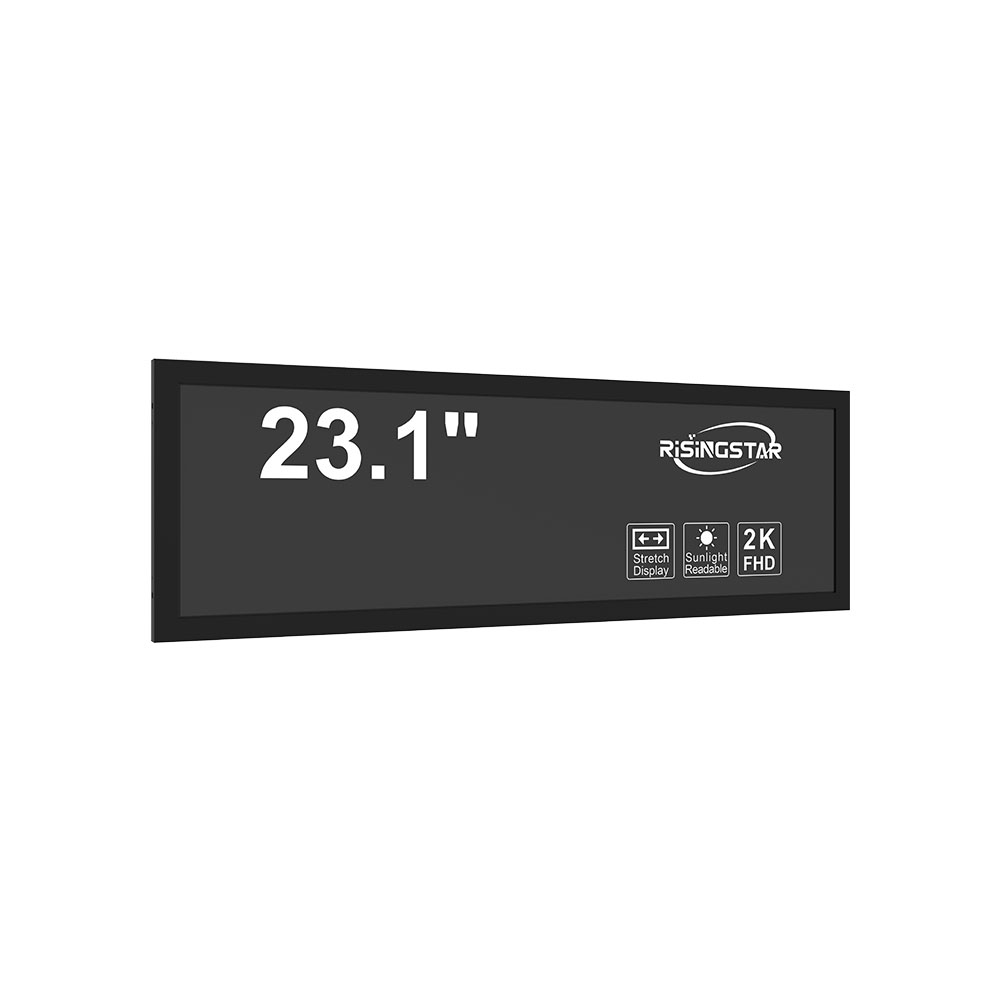
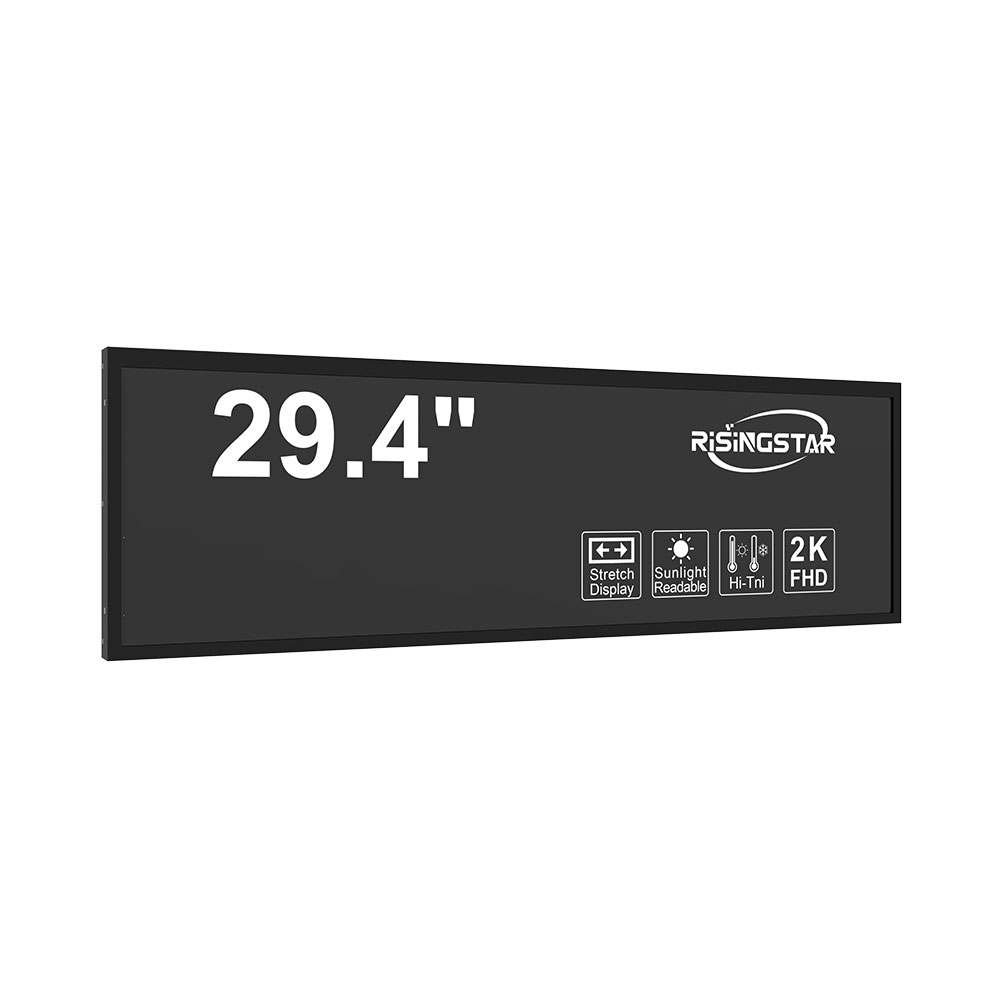
Buses operate on rough urban and rural roads, subjecting displays to constant vibration from engine dynamics, uneven pavement, and sudden stops. The EN 61373 standard (Railway applications – Shock and vibration tests for equipment) provides a benchmark for transit display resilience, with Category 1 (rolling stock body) testing required for bus-mounted displays. Stretch bar display technology, featured in ourstretch bar product line, is engineered to meet these demands: its modular design uses shock-absorbent mounting brackets and encapsulated circuit boards that eliminate loose components, reducing hardware failure rates by 65% compared to traditional LED displays. A 2021 case study from Berlin’s BVG transit agency found that stretch bar displays installed on 500 city buses had a mean time between failures (MTBF) of over 105,000 hours, compared to just 32,000 hours for legacy LED systems.
Thermal management is another key durability factor, as bus displays face extreme temperature fluctuations from freezing Scandinavian winters to scorching Arabian summers. Modern displays use passive thermal management (fanless heatsink designs) with aluminum alloy enclosures that dissipate heat efficiently, avoiding the maintenance risks of fan-based cooling. Melbourne’s Yarra Trams (which operates a fleet of over 500 buses) reported that switching to fanless optically bonded displays reduced display-related downtime by 72% during the 2023 summer heatwave, when temperatures reached 46°C. This design ensures displays operate within their optimal temperature range, preventing pixel degradation and hardware failure.
Modern Innovations: Real-Time Integration and Accessibility
Today’s leading bus destination displays are integrated with Automatic Vehicle Location (AVL) systems, enabling dynamic route updates in real time. If a bus is delayed, rerouted, or has a schedule change due to traffic or roadworks, the display automatically updates to show the new destination or route—no manual intervention required. This integration aligns with global transit goals of providing accurate, timely information to passengers. Paris’ RATP transit agency implemented this integration in 2021, resulting in a 40% reduction in passenger wait-time inquiries and improved on-time performance perception. These systems also support multilingual displays, catering to diverse urban populations, a core feature ofon-vehicle transit solutions.
Accessibility is another critical consideration: bus displays must comply with WCAG guidelines, featuring high-contrast color schemes, large readable fonts, and synchronized audio announcements for visually impaired passengers. Some modern displays also include adaptive brightness technology, automatically dimming at night to avoid glare for drivers and passengers while maintaining maximum brightness during daytime hours.
Selection Criteria for Transit Authorities
When choosing bus destination display systems, transit authorities must balance upfront costs against long-term total cost of ownership (TCO). Legacy LED displays have lower initial costs, but their shorter lifespan (average 30,000 hours) and high power consumption lead to a 40% higher TCO over 10 years compared to high-brightness LCD displays. LCD displays with optical bonding and stretch bar technology have a lifespan of 50,000+ hours, use 30% less power, and require minimal maintenance, making them a more cost-effective long-term investment.
Compliance and interoperability are also key: authorities must ensure displays meet EN 50155, IP, and IK10 standards, and integrate seamlessly with existing AVL, ticketing, and passenger information systems. The Toronto Transit Commission (TTC) required all new bus displays to comply with EN 50155 and integrate with its Open ITS system in 2022, avoiding costly system silos and ensuring consistency across its 2,000-bus fleet.
Conclusion
Bus destination display systems have evolved from static signs to integrated, durable, and accessible tools that drive transit efficiency and passenger satisfaction. As urban transit continues to grow globally, the demand for displays that meet strict regulatory standards, withstand harsh conditions, and provide real-time updates will only increase. For transit authorities and system integrators looking to upgrade their bus fleets, prioritizing displays aligned with EN 50155, using stretch bar and optical bonding technology, and integrating with AVL systems will deliver long-term value and passenger-centric performance. If you are seeking a reliable, compliant bus destination display solution,talk to our engineering team to discuss your fleet needs and explore customized options.