RisingStar
- Home
- About Us
- Products
- News
- Video
- Contact
- Send Inquiry
Search
- Home
- About Us
- Products
- News
- Video
- Contact
- Send Inquiry
RisingStar
In today’s increasingly digital world, high-brightness sunlight-readable LCD screens have become essential for outdoor applications where visibility under direct sunlight is critical. These displays are widely used in military equipment, industrial control panels, transportation systems, and public information kiosks—environments where ambient light levels can exceed 100,000 lux. Unlike standard LCDs that suffer from glare and reduced contrast in bright conditions, sunlight-readable LCDs are engineered to maintain clarity, color accuracy, and usability even under extreme lighting.
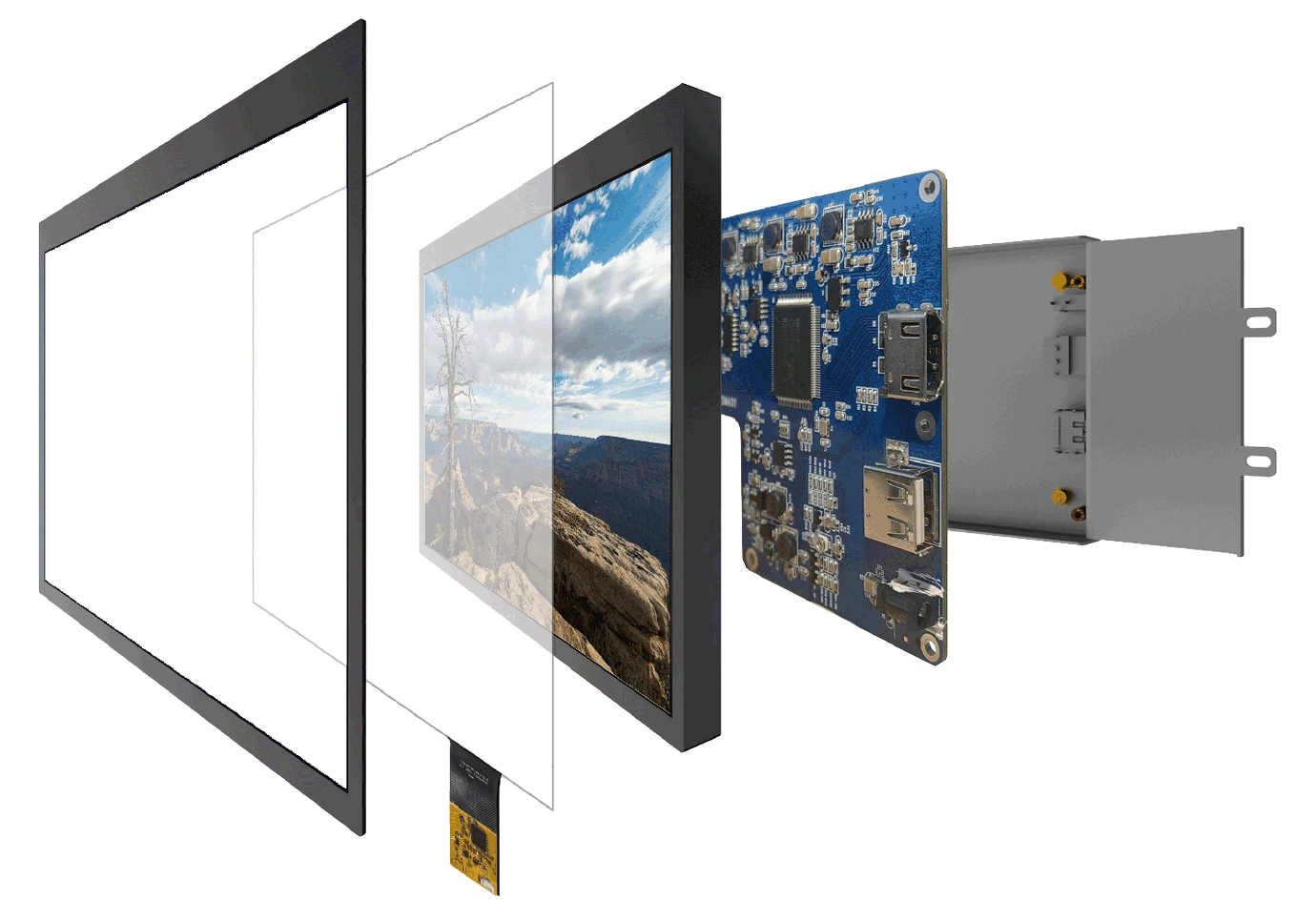
The core of a sunlight-readable LCD lies in its ability to achieve ultra-high brightness—typically 5,000 to 10,000 nits—through advanced backlighting technologies such as LED arrays with optical enhancement films and micro-lens sheets. For instance, the U.S. Department of Defense has standardized on displays with at least 5,000 nits for field-deployable devices, ensuring mission-critical data remains legible during daytime operations. Manufacturers like LG Display, Sharp, and AU Optronics have pioneered high-brightness solutions using edge-lit or full-array backlights combined with anti-reflection coatings and polarized glass layers to minimize light loss and improve contrast ratios beyond 1000:1.
A key innovation in this field is the integration of automatic brightness adjustment (ABA) sensors. These ambient light sensors dynamically adjust screen brightness based on real-time environmental conditions, conserving power while maintaining optimal readability. According to a 2023 study by Display Daily, ABA-equipped sunlight-readable displays consume up to 40% less energy than fixed-brightness models—a crucial advantage for battery-powered devices such as handheld field computers or drones. Additionally, these screens often feature wide viewing angles (up to 178°), enabling multiple users to view the same content simultaneously without significant color shift or brightness drop.
Case studies validate the effectiveness of these technologies. In a deployment by Siemens for railway signaling systems across northern Europe, sunlight-readable LCDs were installed on outdoor control panels exposed to intense solar radiation during summer months. The screens maintained consistent performance over three years, outperforming traditional TFT-LCDs that degraded significantly due to heat stress and UV exposure. Similarly, in the automotive sector, companies like Bosch have adopted high-brightness LCDs for vehicle dashboards designed for off-road and emergency response vehicles, where nighttime visibility must also be considered alongside daylight readability.
From an engineering perspective, achieving sunlight readability involves not just hardware improvements but also software optimization. Firmware-level calibration ensures uniform luminance across the display panel, while embedded algorithms compensate for temperature-induced drift in LED output. This level of integration between hardware and software is what sets modern sunlight-readable LCDs apart from legacy designs. Furthermore, compliance with international standards such as MIL-STD-810G for ruggedness and IEC 60068 for environmental testing ensures reliability in harsh conditions—from freezing Arctic environments to scorching desert climates.
In conclusion, high-brightness sunlight-readable LCD technology is no longer a niche requirement but a foundational component in many modern outdoor electronic systems. As industries demand more robust, efficient, and human-centric interfaces, manufacturers continue to innovate through material science, intelligent power management, and real-world testing protocols. With increasing adoption across defense, transportation, and industrial automation, this technology will play a pivotal role in shaping the future of human-machine interaction in challenging environments.