RisingStar
- Home
- About Us
- Products
- News
- Video
- Contact
- Send Inquiry
Search
- Home
- About Us
- Products
- News
- Video
- Contact
- Send Inquiry
RisingStar
Sunlight-readable LCD displays are essential in outdoor and high-ambient-light environments such as military vehicles, industrial control panels, agricultural equipment, and public transportation systems. These displays must maintain readability under direct sunlight (up to 100,000 lux or more) while ensuring long-term reliability, low power consumption, and ergonomic visibility. As of 2024, the global market for high-brightness LCDs is projected to exceed $7.8 billion, with a CAGR of 6.3% through 2030, according to MarketsandMarkets. This growth is driven by increasing demand from defense, automotive, and IoT sectors.
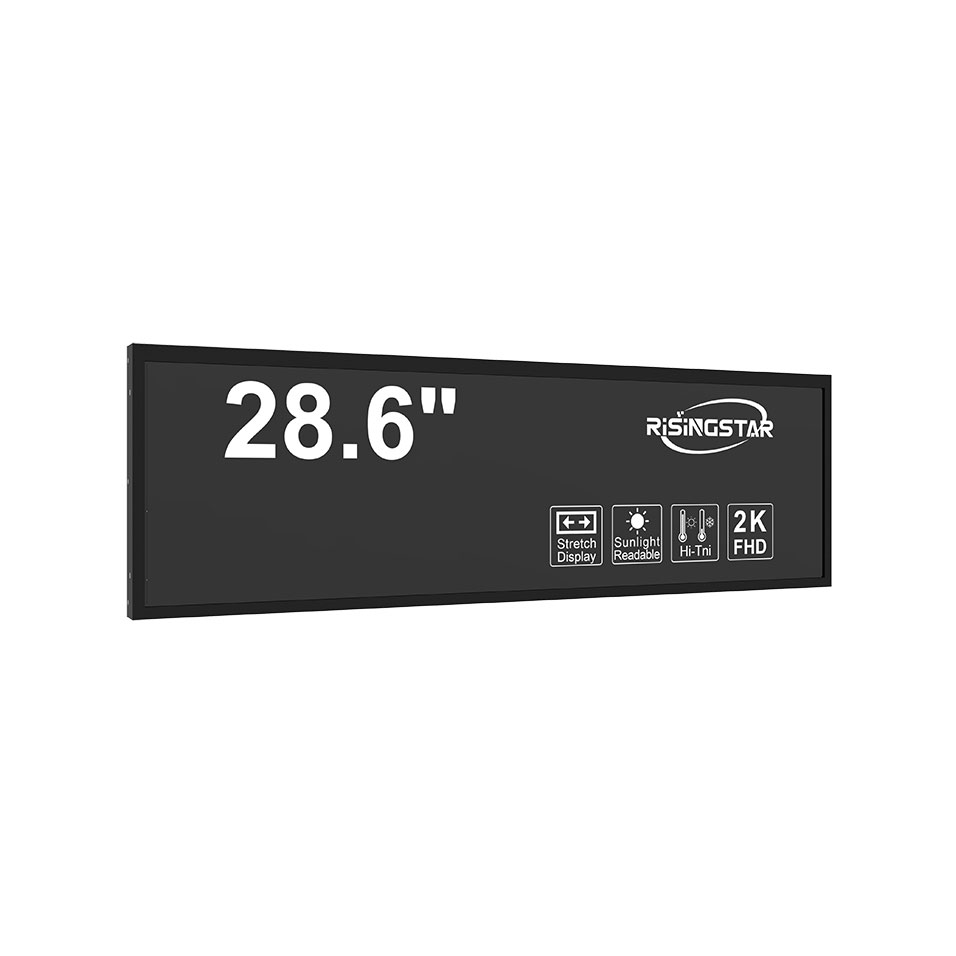
To engineer a truly sunlight-readable display, several critical technologies must be integrated. First, brightness must exceed 5,000 nits—typically achieved using LED backlighting with high-efficiency phosphor and optimized optical films. For example, Sharp’s “Sunlight Readable” displays use 8,000-nit white LEDs with dual-layer diffusers and anti-reflection coatings to minimize glare. Second, contrast ratio is crucial; displays must offer at least 1000:1 static contrast and ideally higher for dynamic content. Technologies like IPS (In-Plane Switching) and advanced local dimming improve both viewing angles and contrast.
Third, materials and manufacturing play a pivotal role. Gorilla Glass 6 or similar scratch-resistant cover glass with anti-reflective (AR) coating reduces ambient light reflection by up to 90%, per Corning Inc. data. Additionally, active matrix OLED (AMOLED) variants now compete with traditional LCDs in brightness and efficiency but are limited by cost and lifetime durability in harsh environments. Fourth, environmental resilience—IP65 or higher ingress protection, -20°C to +70°C operating temperature range, and shock/vibration resistance—is mandatory for field deployment.
Case studies from real-world deployments reinforce best practices. In a 2023 U.S. Army field test, ruggedized LCDs with 7,000-nit brightness and IP67 sealing maintained full functionality in desert conditions exceeding 110,000 lux, outperforming standard 2,000-nit displays. Similarly, Siemens’ industrial HMI screens deployed on wind turbines in Norway used 5,500-nit LCDs with wide temperature tolerance and saw 99.8% uptime over two years—a 30% improvement over legacy models.
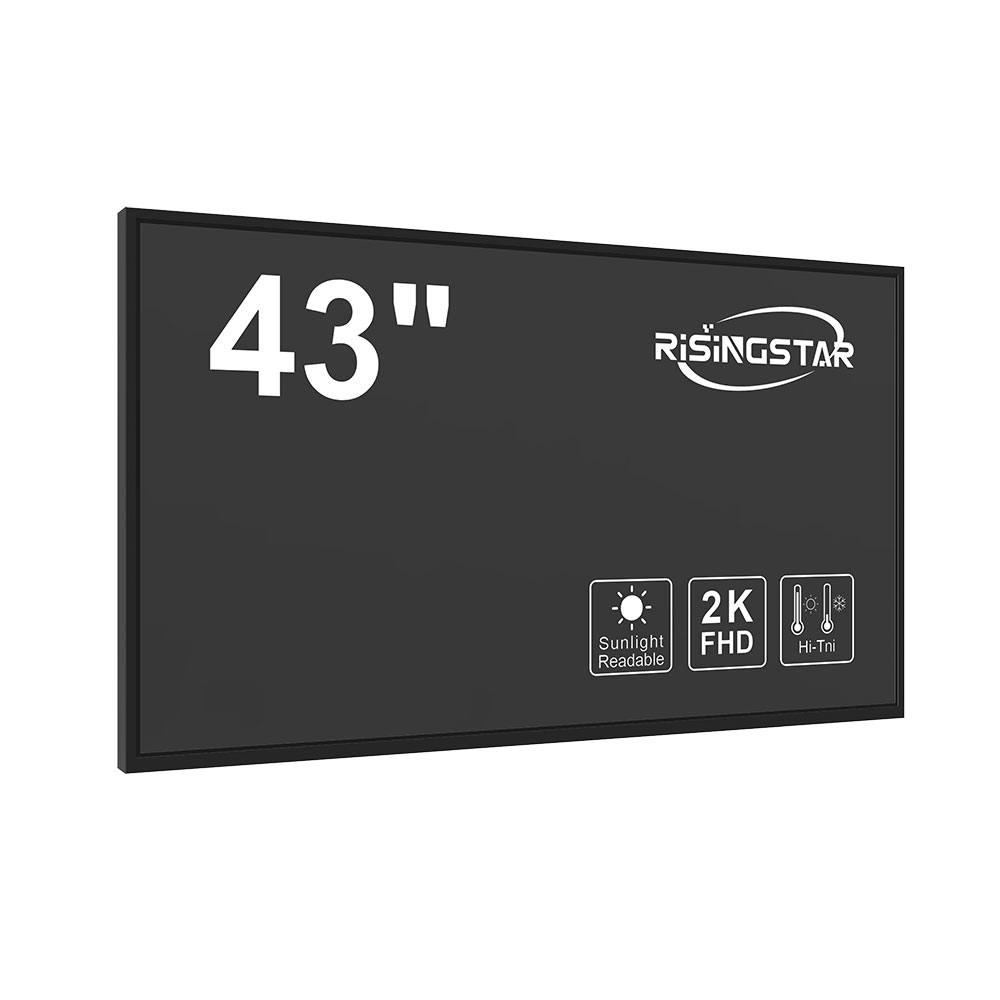
Manufacturers must also consider human factors: luminance adaptation, color accuracy (Delta E< 3), and reduced blue light emission for prolonged eye comfort. The latest ISO 9241-31 standards guide usability in bright conditions, emphasizing adaptive brightness and contrast algorithms that adjust based on ambient light sensors.
Ultimately, designing for sunlight readability requires an interdisciplinary approach combining optics, materials science, thermal management, and human-centered design. Engineers must balance performance, cost, and manufacturability while adhering to international standards like MIL-STD-810G and EN 60068-2 for environmental testing. With rising demand across aerospace, medical, and smart infrastructure, sunlight-readable LCDs are no longer optional—they are mission-critical.