RisingStar
- Home
- About Us
- Products
- News
- Video
- Contact
- Send Inquiry
Search
- Home
- About Us
- Products
- News
- Video
- Contact
- Send Inquiry
RisingStar
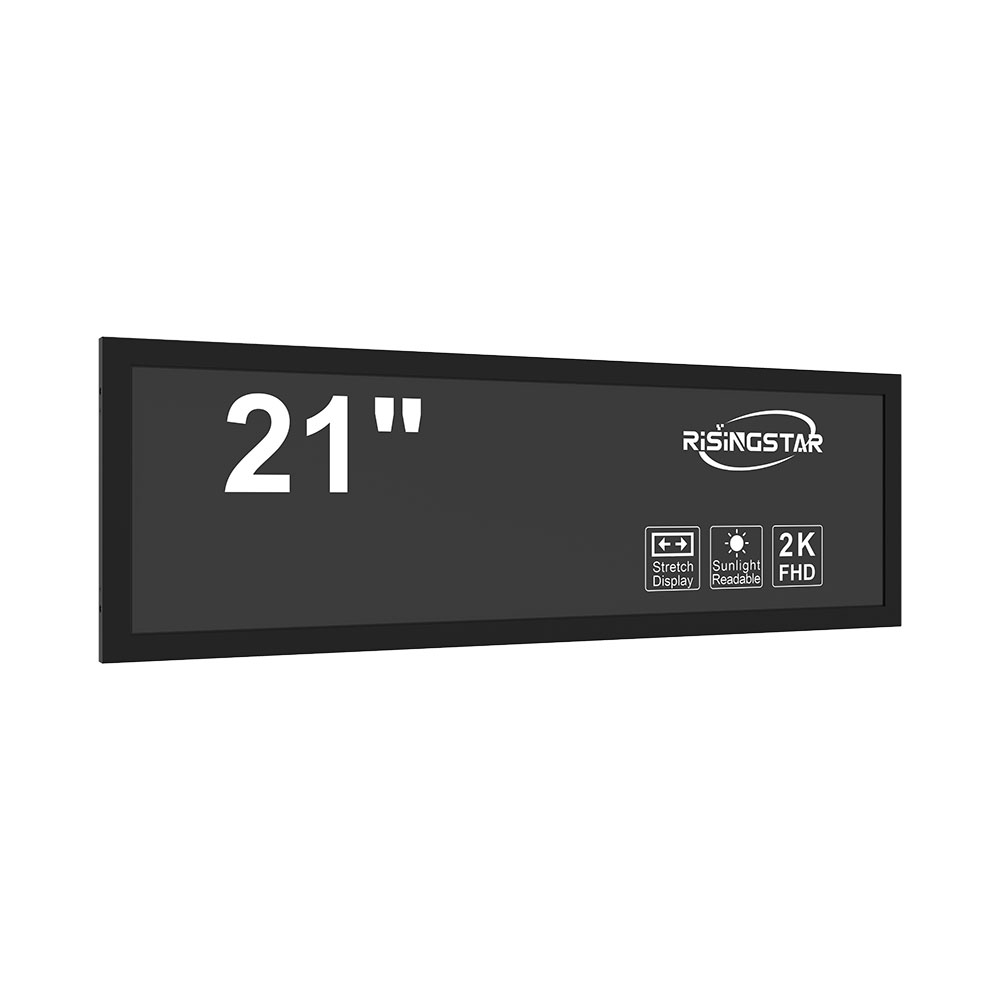
High-brightness, sunlight-readable LCD displays are essential in modern outdoor and transit environments where visibility under direct sunlight is critical. These specialized screens are engineered to deliver consistent performance in extreme lighting conditions—from the harsh glare of midday sun to low-light nighttime operations—making them indispensable in applications such as passenger information systems on railways, buses, trains, subways, and intercity rail networks. Unlike standard indoor displays, which suffer from washed-out images and poor contrast in bright environments, sunlight-readable LCDs utilize advanced technologies like high-luminance LED backlights (typically 5,000 to 10,000 cd/m²), anti-glare coatings, and enhanced contrast ratios (often >10,000:1) to maintain clarity and readability even under direct sunlight.
In transportation settings—including metro stations, bus terminals, and train platforms—these displays provide real-time updates on schedules, delays, route changes, and safety alerts. For instance, the London Underground has implemented high-brightness LCDs across its network to improve accessibility during peak daylight hours, reducing confusion among passengers and enhancing operational efficiency. Similarly, Japanese Shinkansen trains use these displays for dynamic signage that adjusts brightness based on ambient light sensors, ensuring optimal viewing without glare or eye strain.
Beyond transit, high-brightness LCDs are increasingly deployed in EV charging kiosks, gas pumps, and outdoor digital signage used in retail, real estate, and public advertising. In EV charging stations, such as those by ChargePoint or Electrify America, these displays enable users to monitor charging status, payment options, and energy usage—all clearly visible in full sun. Gas stations like Shell and BP have adopted similar solutions for fuel pricing and loyalty program updates. Real estate developers now use high-brightness digital signage in parking lots and lobbies to showcase property listings, floor plans, and virtual tours—even in sunny climates like Dubai or Los Angeles.
Retail chains such as Walmart, Tesco, and Uniqlo integrate these displays into outdoor banners and storefronts to promote promotions, weather-dependent offers, and live inventory updates. According to a 2023 report by Statista, over 68% of global retail digital signage deployments now include sunlight-readable technology due to improved ROI from higher engagement rates in outdoor environments.
These displays often comply with international standards such as MIL-STD-810G for ruggedness, IP65/IP67 for dust and water resistance, and EN 60950 for electrical safety. They are also designed for long-term reliability in temperatures ranging from -20°C to +60°C, making them suitable for both Arctic and desert regions. With advancements in IPS (In-Plane Switching) and transflective liquid crystal technologies, manufacturers like LG Display, BOE, and Sharp continue to push the boundaries of brightness, power efficiency, and durability—ensuring seamless integration into smart city infrastructure and next-generation IoT ecosystems.