RisingStar
- Home
- About Us
- Products
- News
- Video
- Contact
- Send Inquiry
Search
- Home
- About Us
- Products
- News
- Video
- Contact
- Send Inquiry
RisingStar
High-brightness sunlight-readable LCD screens are essential in environments where visibility under direct sunlight is critical—such as military command centers, outdoor construction sites, transportation systems (e.g., buses, trains, and aircraft), and industrial control panels. These displays must deliver excellent contrast, high peak brightness (typically 5,000 to 10,000 nits or more), and anti-glare coatings to ensure usability even in harsh lighting conditions. A key advancement in this field is the integration of 2K (2560x1440) and 4K (3840x2160) resolution options, which significantly enhance image clarity, detail fidelity, and user experience across both professional and consumer-grade applications.
Manufacturers like LG Display, BOE Technology, and Sharp have led innovation by developing advanced liquid crystal display technologies that combine high luminance with ultra-high-definition resolutions. For instance, a 4K sunlight-readable LCD panel can render complex data visualizations, satellite imagery, and video feeds with minimal pixelation—even when exposed to intense solar radiation. This makes them ideal for mission-critical applications such as battlefield situational awareness systems, UAV (unmanned aerial vehicle) ground stations, and smart grid monitoring equipment deployed in remote locations.
The engineering behind these displays involves several key components: a high-efficiency LED backlight system capable of producing sustained high brightness without thermal degradation; polarized glass layers that reduce reflection while maintaining color accuracy; and an active matrix thin-film transistor (TFT) array optimized for fast response times and wide viewing angles. Additionally, many models now include integrated ambient light sensors that dynamically adjust brightness based on environmental conditions—a feature crucial for energy efficiency in portable and battery-powered devices.
Industry standards such as MIL-STD-810 for ruggedization and IEC 60945 for marine environments ensure that these displays meet stringent durability requirements. Case studies from the U.S. Department of Defense highlight successful deployments of 4K sunlight-readable displays in armored vehicles and mobile command units, where operators require real-time access to high-resolution maps and sensor feeds under full sun exposure. Similarly, in the automotive sector, companies like Bosch and Continental are integrating 2K/4K sunlight-readable screens into electric vehicle dashboards to improve driver safety and infotainment clarity during daytime operations.
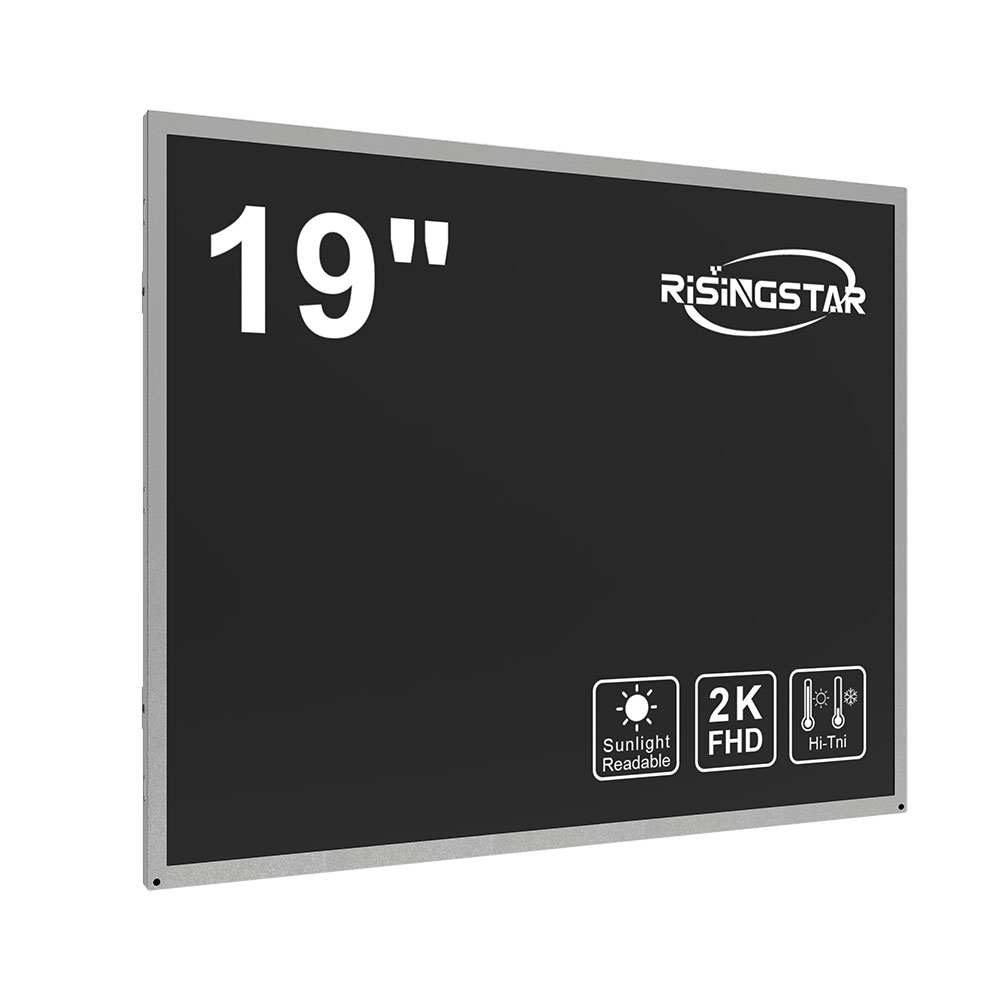
For developers and system integrators, choosing between 2K and 4K depends on specific use cases: 2K offers a compelling balance of performance, cost, and power consumption for mid-range applications, while 4K provides unparalleled visual precision for professional-grade tools such as medical imaging interfaces, aerospace cockpit displays, and digital signage in extreme climates. Both resolutions support modern interface frameworks like Android Automotive OS and Linux-based embedded systems, enabling seamless software integration.
In conclusion, the availability of 2K and 4K resolution options in high-brightness sunlight-readable LCDs marks a significant evolution in display technology. As industries increasingly rely on visual data for decision-making, these screens bridge the gap between performance and usability in demanding outdoor and industrial settings. With ongoing advancements in materials science, backlighting efficiency, and manufacturing scalability, future iterations will likely offer even higher resolutions, lower power consumption, and greater environmental resilience—solidifying their role as indispensable tools in the global digital infrastructure.