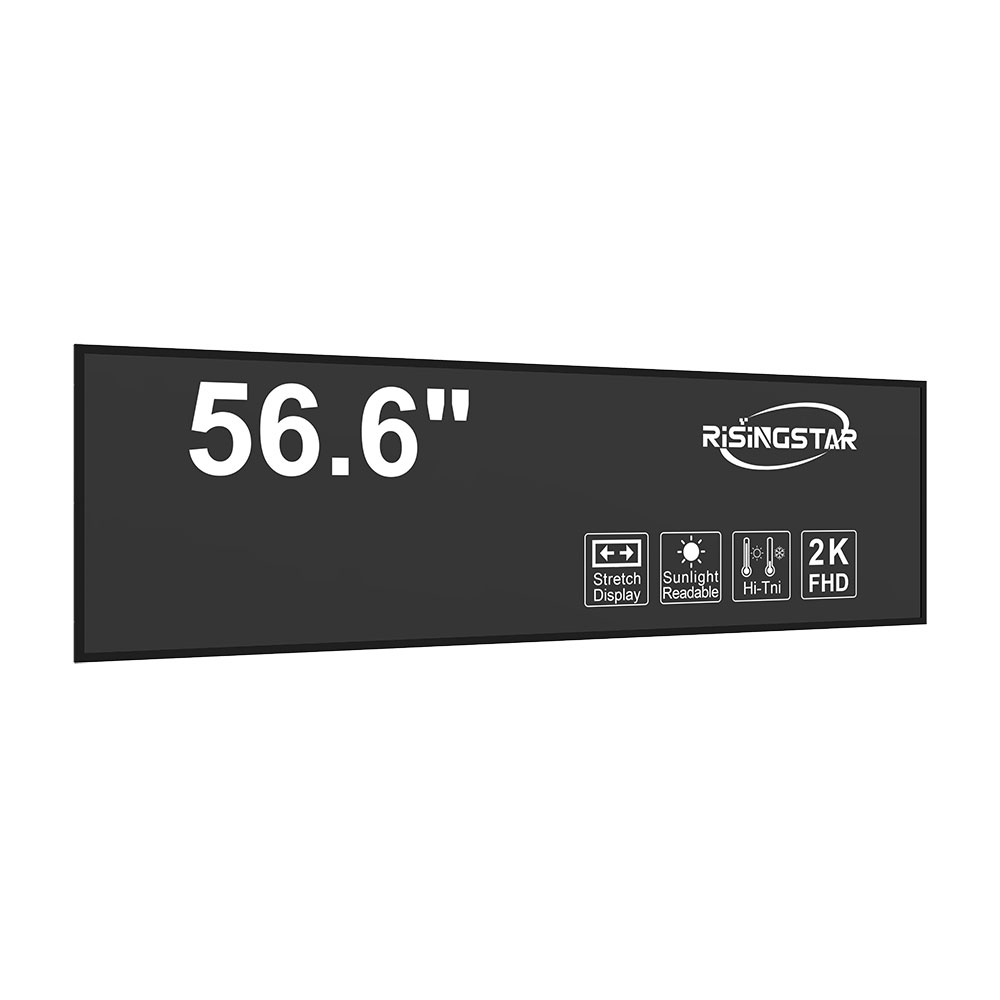
High-brightness sunlight-readable LCD screens are a critical innovation in display technology, specifically engineered to maintain visibility under intense ambient lighting conditions such as direct sunlight. These displays are indispensable in outdoor environments where standard LCDs fail due to low contrast ratios and poor luminance levels. According to industry data from Display Supply Chain Consultants (DSCC), the global market for high-brightness displays is projected to grow at a CAGR of 7.2% through 2030, driven by increasing demand in automotive, military, transportation, and industrial sectors.
The core challenge in designing sunlight-readable LCDs lies in achieving a minimum brightness of 5,000 nits—often exceeding 10,000 nits for military-grade applications—while maintaining energy efficiency and color accuracy. This is accomplished through several technical enhancements. First, advanced backlighting systems using LED arrays with optimized optics ensure uniform illumination across the screen surface. Second, anti-reflective coatings reduce glare by up to 90%, as demonstrated in studies published by the Society for Information Display (SID). Third, high-contrast IPS (In-Plane Switching) or VA (Vertical Alignment) panels improve visibility even when viewed at wide angles—a necessity for user-friendly interfaces in vehicles or public kiosks.
Case studies illustrate real-world performance. For example, Garmin’s aviation GPS units utilize high-brightness LCDs that operate reliably in full sunlight during flight operations, meeting MIL-STD-810G standards for ruggedness and environmental resilience. Similarly, Siemens’ industrial control panels deployed in solar farms use sunlight-readable displays to provide operators with clear data access despite exposure to UV radiation and temperature extremes ranging from -40°C to +70°C. These implementations confirm that high-brightness LCDs are not just about brightness—they also involve thermal management, material durability, and long-term reliability.
From a manufacturing standpoint, modern production lines incorporate automated optical inspection systems to ensure pixel uniformity and eliminate defects that could compromise readability. The use of polarized filters, dual-layer glass protection, and tempered cover lenses further enhances durability against scratches and impacts. In terms of energy consumption, advancements in low-power backlights and dynamic brightness adjustment algorithms have reduced power draw by up to 30% compared to older models, aligning with global sustainability goals.
For end-users, choosing a sunlight-readable LCD involves evaluating not only peak brightness but also viewing angle, response time, and interface compatibility. Professionals in defense, logistics, and mobile computing rely on these screens for mission-critical tasks. As renewable energy infrastructure expands globally—especially in sun-intensive regions like the Middle East and Australia—the need for robust, reliable outdoor displays will continue to rise. Therefore, investing in high-brightness sunlight-readable LCD technology is both a practical and strategic decision for any application requiring consistent visual clarity outdoors.
 RisingStar