RisingStar
- Home
- About Us
- Products
- News
- Video
- Contact
- Send Inquiry
Search
- Home
- About Us
- Products
- News
- Video
- Contact
- Send Inquiry
RisingStar
The outdoor touch display market has seen phenomenal growth over the past decade, driven by advancements in technology that enhance durability, visibility, and user interactivity. These high-performance displays are specifically designed to withstand the elements while providing clarity and responsiveness in various outdoor conditions. In this article, we will explore the key features, applications, and technologies involved in outdoor touch displays, highlighting their significance in modern urban environments and beyond.
Outdoor touch displays are engineered to endure harsh weather conditions such as rain, snow, and extreme temperatures. One of the standout features of these displays is their enhanced brightness, which can exceed 2,500 nits. This high-brightness capability ensures that the content remains visible in direct sunlight, making it ideal for outdoor advertising, wayfinding, and information kiosks. The optical bonding technique used in these displays minimizes reflection and glare, further improving visibility.
Another critical aspect of outdoor touch displays is their rugged design. Manufacturers often utilize materials that provide a higher level of protection against water, dust, and impacts. For instance, many outdoor touch displays carry an IP65 or IP67 rating, indicating that they are dust-tight and can withstand low-pressure water jets. This durability ensures reliable operation in various situations, from busy shopping districts to remote outdoor locations.
Interactivity is another fundamental element of outdoor touch displays. Modern capacitive touch technology allows for multi-touch functionality, enabling users to engage with the content in a seamless manner. This feature is crucial for applications like interactive maps, self-service kiosks, and entertainment displays. Additionally, outdoor touch displays often come equipped with infrared touch technology, which works effectively even when users are wearing gloves, making them suitable for colder climates.
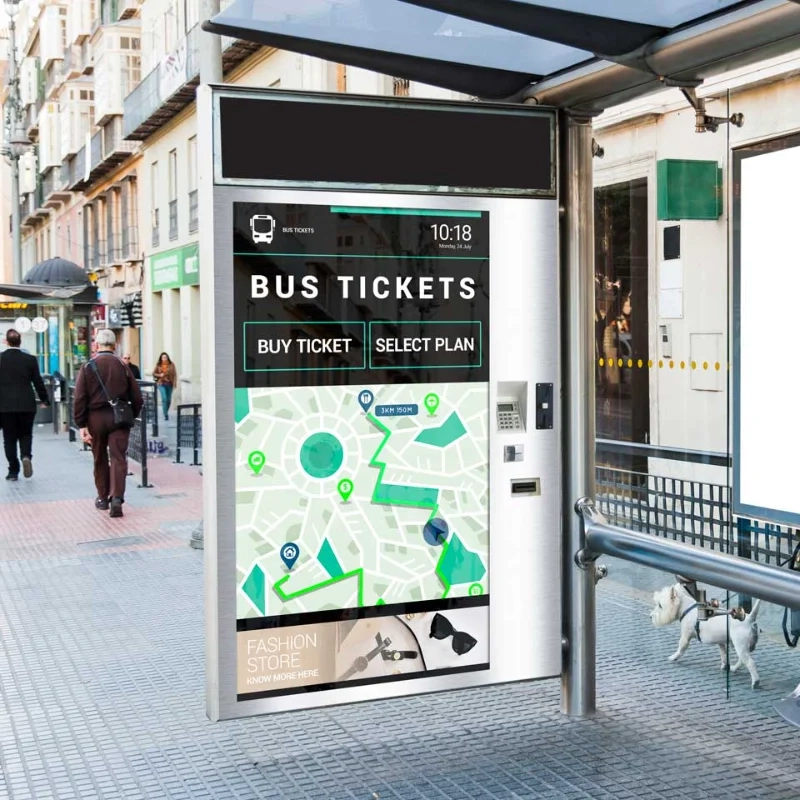
The applications for outdoor touch displays span various industries including retail, transportation, healthcare, and tourism. In urban settings, they serve as interactive wayfinding solutions, guiding users to their destinations while providing local information and advertisements. Retailers can use these displays for engaging advertising campaigns, allowing customers to browse products, check inventory, and even place orders directly. The transportation sector benefits from these displays by providing real-time information about public transport schedules, ensuring that commuters remain informed.
Moreover, outdoor touch displays have found significant utility in healthcare settings, where they can be used for patient check-in systems, wayfinding, and providing health information in outdoor areas of medical facilities. In tourism, they help attract visitors by showcasing engaging content about local attractions, restaurants, and events.
While there are numerous benefits associated with outdoor touch displays, challenges such as environmental impact and power consumption are worth considering. Manufacturers are increasingly focusing on energy-efficient technologies, including solar powering options, ensuring that these displays can operate sustainably in eco-sensitive applications.
To achieve the best performance, organizations must also consider the installation aspects of outdoor touch displays. Proper positioning, screen angle, and ambient light considerations can significantly impact user interaction. Therefore, collaboration with skilled AV integration partners when deploying these systems can optimize functionality and user experience.
As we move forward, the convergence of outdoor touch displays with artificial intelligence (AI) and the Internet of Things (IoT) is anticipated to enhance their capabilities. AI can be utilized for analytics and personalization, allowing organizations to tailor content based on user behavior. Meanwhile, IoT integration can facilitate remote monitoring and management of display networks, enabling timely updates and maintenance.
In summary, outdoor touch displays represent a significant advancement in user interaction technology for outdoor applications. Their capacity to endure environmental challenges, coupled with interactive features, provides a unique avenue for engaging users in various industries. Understanding the technical specifications and applications of these displays is crucial for organizations looking to leverage them effectively. With continuous advancements, we can anticipate further innovations that will shape the future of outdoor communication and interactivity.