RisingStar
- Home
- About Us
- Products
- News
- Video
- Contact
- Send Inquiry
Search
- Home
- About Us
- Products
- News
- Video
- Contact
- Send Inquiry
RisingStar
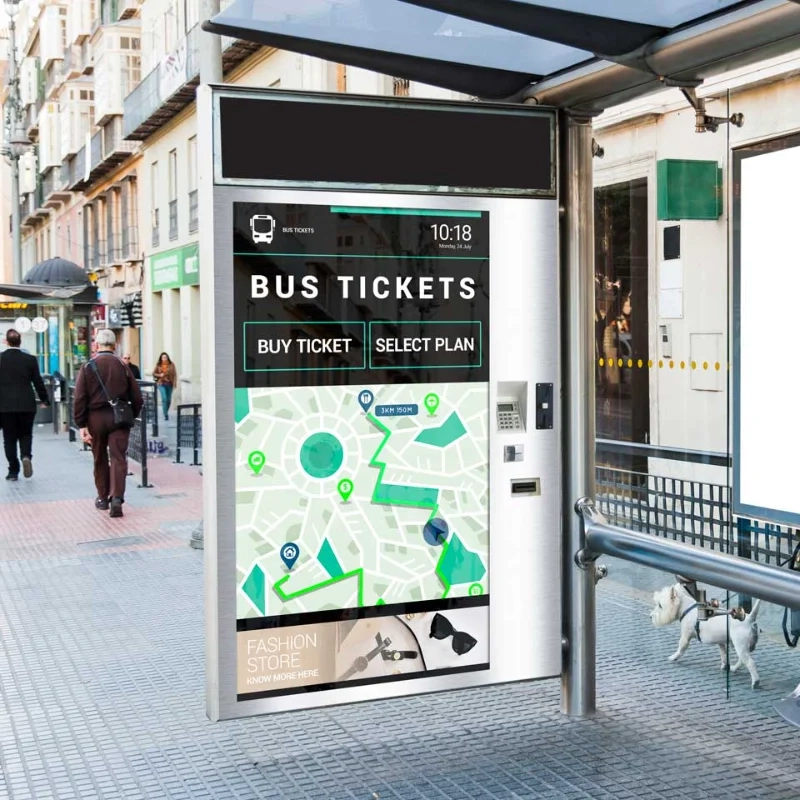
High-brightness sunlight-readable LCD displays are critical components in modern outdoor electronic systems where visibility under direct sunlight is essential. These screens, engineered to exceed 5,000 nits of peak brightness, are commonly used in military equipment, industrial control panels, transportation systems, and public information kiosks. The technology behind these displays combines advanced backlighting solutions—such as LED arrays with optimized diffusers—and specialized glass coatings that reduce glare while enhancing contrast ratios. According to the Society for Information Display (SID), high-brightness LCDs now account for over 60% of all outdoor display applications in defense and infrastructure sectors.
A key innovation in this field is the use of dual-layer anti-reflection coatings on the front glass surface, which minimize solar glare by up to 90%, significantly improving readability at noon under full sun. Additionally, adaptive brightness control algorithms allow power-efficient operation by adjusting luminance based on ambient light levels—a feature particularly important in battery-powered devices like handheld military radios or field sensors. Case studies from companies like LG Display and Sharp show that their high-brightness panels can maintain clear image quality even at 80°C ambient temperatures, a requirement for desert deployment scenarios.
Another critical aspect is the inclusion of wide viewing angles (typically ≥170°) and high color accuracy (Delta E< 2), ensuring consistent performance across different observer positions—an essential trait for multi-user environments such as traffic signal boards or airline check-in terminals. In recent years, manufacturers have adopted OLED-on-LCD hybrid architectures to further boost contrast and reduce power consumption without sacrificing brightness. Standards such as MIL-STD-810G and IEC 60068 ensure that these displays undergo rigorous environmental testing, including shock, vibration, humidity, and temperature cycling, before being deployed in harsh conditions.
As global demand increases—driven by smart city initiatives, electric vehicle dashboards, and autonomous vehicle interfaces—manufacturers are focusing on integrating AI-based image enhancement technologies into LCD drivers. This allows dynamic contrast adjustment, noise reduction, and automatic brightness scaling in real time, further elevating user experience. With ongoing advancements in microLED backlighting and quantum dot-enhanced color gamuts, high-brightness sunlight-readable LCDs are poised to become even more efficient, durable, and visually superior in the next decade.