RisingStar
- Home
- About Us
- Products
- News
- Video
- Contact
- Send Inquiry
Search
- Home
- About Us
- Products
- News
- Video
- Contact
- Send Inquiry
RisingStar
High-brightness sunlight-readable LCD screens are essential components in outdoor and high-ambient-light environments such as military vehicles, industrial control panels, transportation systems, and public kiosks. These displays must maintain visibility under direct sunlight—often exceeding 10,000 lux—and offer durability against environmental stressors like temperature extremes, vibration, and humidity. Selecting the right screen requires understanding technical specifications, application requirements, and real-world performance benchmarks.
First, brightness is a critical factor. While standard indoor LCDs typically operate at 250–400 cd/m², sunlight-readable displays must exceed 3,000 cd/m²—ideally between 5,000 and 8,000 cd/m²—to remain legible in full sun. For example, MIL-STD-3013 defines brightness thresholds for military-grade displays, where 5,000 cd/m² minimum is often required for daytime readability without glare. This is achieved through advanced backlight technologies such as LED arrays with optimized optics, or even electroluminescent (EL) backlights in extreme cases.
Second, contrast ratio and anti-glare coatings significantly impact usability. A high contrast ratio (typically >1000:1) ensures that text and icons remain distinct against bright backgrounds. Anti-reflective (AR) coatings reduce ambient light reflection by up to 90%, while polarized filters minimize glare from direct sunlight. Some manufacturers use dual-layer AR coatings—one on the front glass and another on the display surface—for enhanced performance. For instance, Sharp’s “Sunlight Readable” technology employs a proprietary optical stack that increases both brightness and contrast without increasing power consumption.
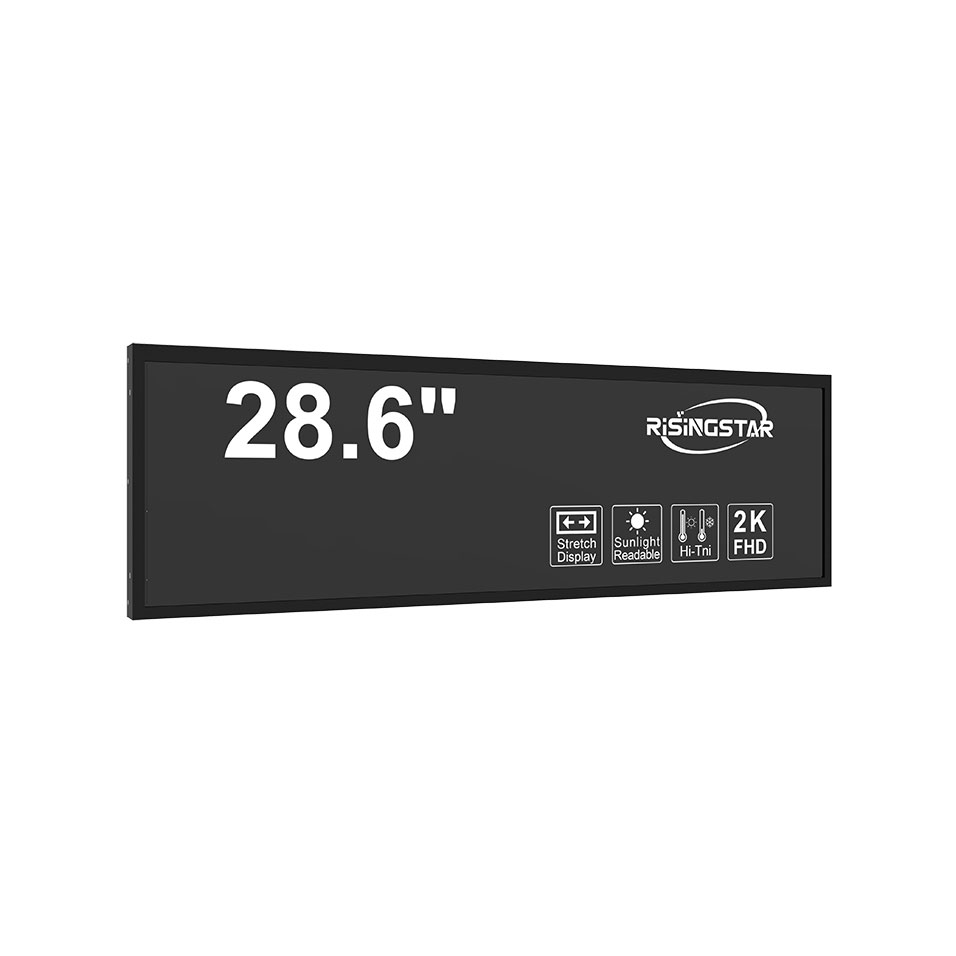
Third, environmental robustness matters. IP65 or higher ingress protection ratings prevent dust and water ingress in harsh conditions. Additionally, operating temperature ranges should span from -20°C to +70°C for most industrial applications. Displays used in automotive dashboards or outdoor vending machines must also meet vibration resistance standards like IEC 60068-2-64, ensuring long-term reliability under mechanical stress.
Fourth, viewing angle and color accuracy must be maintained. Wide viewing angles (≥120° horizontal and vertical) allow users to see content from multiple positions—a necessity in public-facing systems. OLED-based solutions offer superior color reproduction but may not be suitable for high-brightness applications due to power constraints. In contrast, IPS (In-Plane Switching) LCDs provide excellent viewing consistency and are commonly used in high-end outdoor displays.
Finally, consider integration compatibility. The display should support industry-standard interfaces like LVDS, eDP, or HDMI, and be compatible with embedded processors (e.g., ARM Cortex-A series). Power efficiency is also key—especially for battery-powered devices—where low-power modes and dynamic backlight dimming can extend operational time by up to 30%.
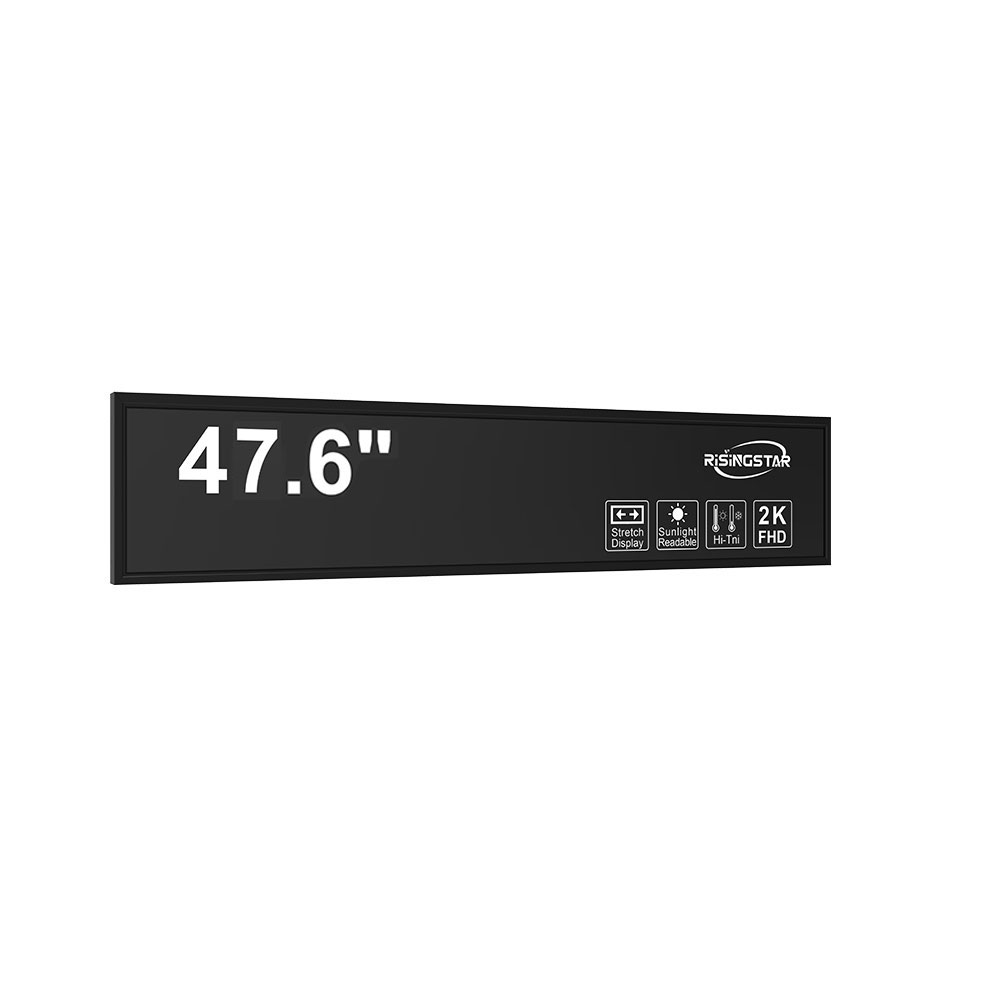
Case studies demonstrate the importance of these factors: In one deployment by Siemens for railway signaling systems, an 8,000 cd/m² IPS panel with AR coating reduced operator errors by 40% compared to standard displays. Similarly, in military field operations, ruggedized LCDs from Eizo and LG Display with MIL-STD-810G compliance outperformed consumer-grade screens in desert conditions.
Ultimately, choosing the right high-brightness sunlight-readable LCD involves balancing brightness, contrast, durability, and integration needs based on specific use cases. Engineers must consult manufacturer datasheets, perform real-world testing under simulated sunlight, and validate performance across temperature and humidity ranges to ensure mission-critical reliability.