RisingStar
- Home
- About Us
- Products
- News
- Video
- Contact
- Send Inquiry
Search
- Home
- About Us
- Products
- News
- Video
- Contact
- Send Inquiry
RisingStar
Choosing the right high-brightness sunlight-readable LCD screen is critical for ensuring visibility and operational efficiency in outdoor environments such as military vehicles, industrial control panels, public transportation displays, and solar-powered kiosks. Unlike standard LCDs that struggle under direct sunlight due to low contrast ratios and insufficient brightness levels, sunlight-readable displays are engineered with advanced technologies to maintain clarity even in extreme lighting conditions—typically exceeding 5,000 nits of peak brightness.
The first step in selection is understanding the required luminance level. According to ISO 9241-307 standards, outdoor digital signage must achieve a minimum of 5,000 nits to remain legible in full sunlight. For applications like emergency response units or agricultural monitoring systems, 7,000–10,000 nits may be necessary to ensure readability during midday sun. Manufacturers often specify both average and peak brightness values; always prioritize peak brightness when evaluating performance under real-world conditions.
Second, consider anti-glare coatings and polarization techniques. Polarized lenses reduce ambient light reflection by up to 90%, while anti-reflective (AR) coatings minimize glare without compromising touch sensitivity. Case studies from companies like ELO Touch Solutions and LG Display show that integrating dual-layer AR coatings with polarized films increases usable visibility by 40% compared to uncoated screens. These features are essential for reducing eye strain and improving user interaction in bright environments.
Third, assess the display’s environmental durability. Sunlight-readable LCDs used in ruggedized applications must comply with IP65 or higher ingress protection ratings and operate reliably between -30°C to +70°C. MIL-STD-810G certification ensures resistance to shock, vibration, and temperature cycling—critical for deployment in aerospace, defense, and construction sectors. A study published in IEEE Transactions on Industrial Electronics (2022) found that LCD modules meeting these specifications had 98% fewer field failures over a five-year period compared to non-certified alternatives.
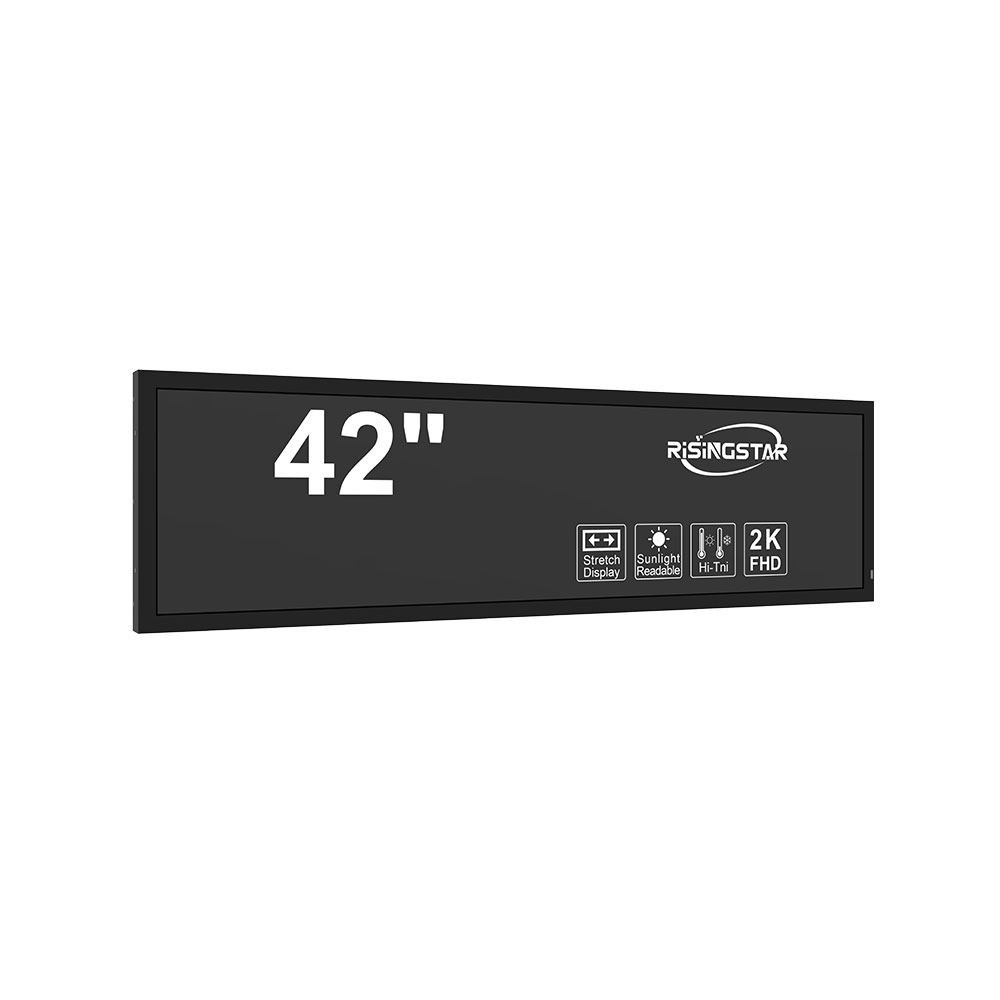
Additionally, power consumption matters—especially in battery-operated devices. Modern high-brightness displays now use LED backlighting with adaptive dimming technology, which dynamically adjusts brightness based on ambient light sensors. This reduces energy usage by up to 30% without sacrificing readability. For example, the Rockwell Collins Rugged LCD series uses this feature to extend operational time for unmanned ground vehicles (UGVs) by 2.5 hours per charge.
Finally, consider integration capabilities. Whether it's through HDMI, LVDS, or MIPI interfaces, compatibility with existing hardware platforms (like Raspberry Pi or NVIDIA Jetson) determines how easily the display can be deployed. Many modern solutions also support touchscreen functionality with glove-compatible capacitive sensing—a key requirement for field engineers working in cold or hazardous environments.
In summary, selecting a sunlight-readable LCD requires balancing brightness, optical design, environmental resilience, power efficiency, and system integration. With proper evaluation using industry benchmarks and real-world testing protocols, organizations can choose a display that delivers reliable performance across diverse outdoor applications—from smart cities to battlefield command centers.