RisingStar
- Home
- About Us
- Products
- News
- Video
- Contact
- Send Inquiry
Search
- Home
- About Us
- Products
- News
- Video
- Contact
- Send Inquiry
RisingStar
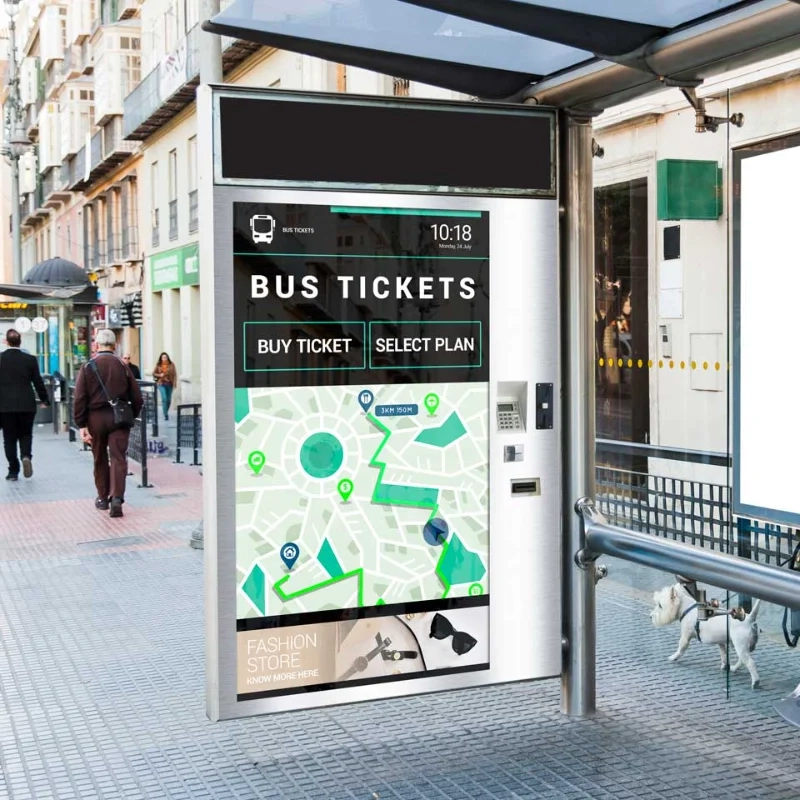
In today’s industrial and outdoor technology landscape, the demand for robust, sunlight-readable LCD displays with IP66 waterproof protection is growing rapidly. These screens are not just a feature—they’re a necessity in environments where moisture, dust, and intense ambient light can compromise performance. As defined by the International Electrotechnical Commission (IEC) standard IEC 60529, an IP66 rating means the device is fully protected against dust ingress (6) and can withstand powerful water jets from any direction (6). This makes it ideal for applications such as military equipment, agricultural machinery, public transportation systems, and outdoor kiosks.
The engineering behind IP66-rated LCDs involves several critical layers. First, the display panel itself must be encapsulated using high-quality sealants like silicone or epoxy that resist thermal expansion and contraction. Second, the housing must be designed with tight tolerances—often using aluminum or stainless steel enclosures—to prevent water penetration even under high-pressure conditions. Third, advanced optical bonding techniques (e.g., direct optical bonding or air gap reduction) are used to minimize glare while improving brightness and contrast, ensuring readability under direct sunlight—a key requirement for field-deployed devices.
Case studies demonstrate real-world reliability. For instance, a major European railway operator deployed IP66-rated LCD panels in train control systems across humid coastal regions. After one year of operation, zero failures were reported due to water ingress—even during heavy rainstorms. Similarly, in precision agriculture, IP66 waterproof displays integrated into autonomous tractors enabled farmers to monitor soil moisture and GPS data in dusty fields without screen degradation or touch response issues.
Manufacturers must also consider long-term durability. Components such as backlight units (typically LED-based), polarizers, and touchscreens need to be tested under accelerated environmental stress tests (EST), including humidity cycling (85% RH at 40°C), thermal shock (-30°C to +70°C), and salt spray exposure. Industry benchmarks show that compliant IP66 displays must maintain >80% luminance after 10,000 hours of continuous operation in harsh conditions—a metric verified through MIL-STD-810G testing protocols.
For engineers and procurement teams, selecting the right IP66 display means balancing brightness (minimum 5,000 nits for sunlight readability), color accuracy, and power efficiency. High-brightness LEDs combined with anti-reflection coatings and wide viewing angles (typically 170° horizontal/vertical) ensure usability across diverse lighting scenarios. Moreover, compliance with RoHS and REACH regulations ensures environmental safety and global market access.
Ultimately, IP66 waterproof LCDs represent a convergence of materials science, mechanical design, and optical engineering. Their adoption is no longer optional—it's strategic for any application where uptime, visibility, and resilience are mission-critical. Whether in defense, infrastructure, or smart city solutions, these displays provide the backbone for reliable human-machine interfaces in the most demanding environments.