RisingStar
- Home
- About Us
- Products
- News
- Video
- Contact
- Send Inquiry
Search
- Home
- About Us
- Products
- News
- Video
- Contact
- Send Inquiry
RisingStar
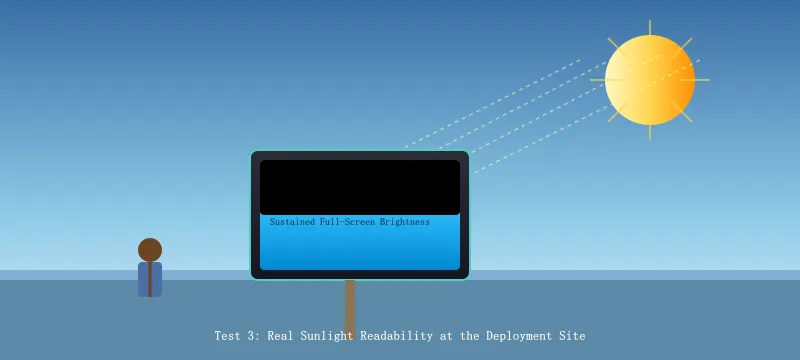
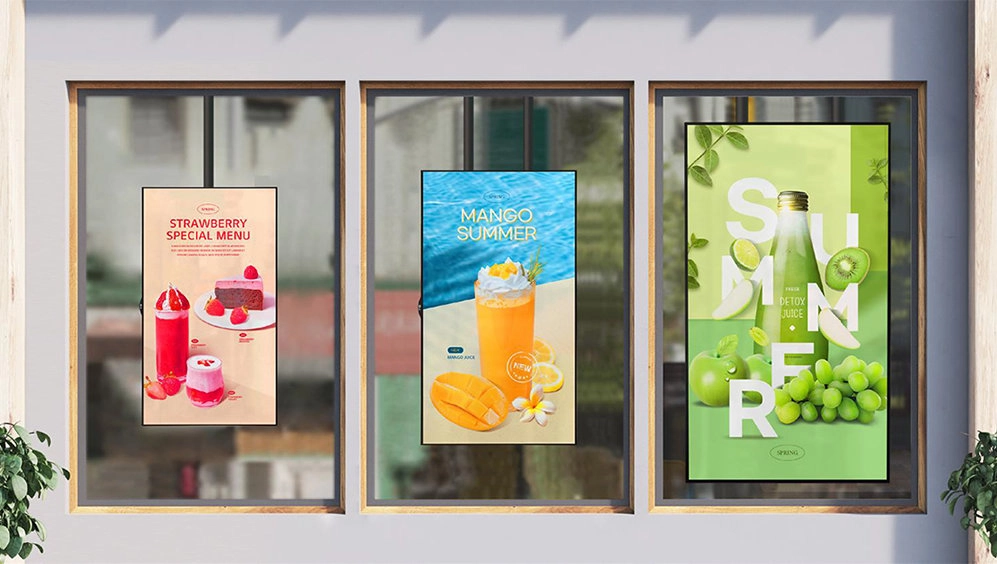
In today’s increasingly mobile and outdoor-centric world, the demand for high-brightness sunlight-readable LCD screens has surged across industries such as defense, transportation, industrial automation, healthcare, and consumer electronics. These displays are engineered to remain legible under direct sunlight—a critical requirement in environments where ambient light can exceed 100,000 lux. Unlike standard LCDs that suffer from contrast loss and visibility issues under bright conditions, sunlight-readable displays incorporate advanced optical technologies, enhanced backlighting, and specialized materials to ensure consistent readability in both indoor and extreme outdoor conditions.
The core principle behind sunlight-readable LCDs lies in maximizing brightness while minimizing glare and optimizing contrast ratios. The International Electrotechnical Commission (IEC) standard IEC 62368-1 defines performance metrics for visual display units, including luminance levels and ambient light adaptation capabilities. For a screen to be considered truly sunlight-readable, it must achieve at least 5,000 nits of peak brightness—far exceeding the typical 250–500 nits found in consumer-grade displays. This level of brightness ensures that the image remains visible even under direct solar radiation, which can reach up to 120,000 lux on a clear day at noon.
One of the most significant technological innovations enabling this capability is the use of high-efficiency LED backlights. Traditional cold cathode fluorescent lamps (CCFLs) have been largely replaced by full-array LED backlighting systems with local dimming. These systems allow precise control over illumination zones, enhancing contrast and reducing power consumption. For instance, Sharp Corporation's "Sunlight Readable Display" technology, used in military-grade handheld devices, integrates a 10,000-nit LED array with an anti-reflective coating that reduces surface reflection by over 90%. Similarly, LG Display’s “High Brightness LCD” panels utilize quantum dot-enhanced LEDs to improve color gamut while maintaining luminance stability in varying temperatures.
Another key factor is the integration of polarized filters and anti-reflective coatings. These optical layers minimize ambient light reflection, ensuring that users do not perceive a ghosted or washed-out image. As per studies published in the Journal of Display Technology, anti-reflective coatings made from nanostructured silicon dioxide can reduce surface reflectivity from ~4% to less than 0.5%, making them essential for outdoor usability. Additionally, some manufacturers employ laminated glass or polymer-based covers that act as both physical protection and optical enhancement—such as Corning Gorilla Glass 6, which provides scratch resistance without compromising clarity.
Beyond hardware, software-driven solutions also play a crucial role. Adaptive brightness algorithms adjust the screen’s luminance based on real-time ambient light measurements using built-in photodiodes or ambient light sensors (ALS). This dynamic adjustment not only preserves readability but also optimizes battery life in portable devices. In industrial settings, such as construction sites or agricultural machinery, these adaptive features prevent eye strain and improve operator efficiency. A case study conducted by Bosch Rexroth in 2023 showed that operators using sunlight-readable HMI (Human-Machine Interface) displays experienced a 37% reduction in task errors compared to those using standard LCDs.
The design considerations for high-brightness sunlight-readable displays go beyond just luminance. Contrast ratio, viewing angle, response time, and power efficiency are equally vital. For example, in automotive dashboards, where drivers must read navigation or vehicle status information quickly, a wide viewing angle (>160°) and fast response time (<15ms) are non-negotiable. Companies like NXP Semiconductors and Renesas Electronics have developed integrated display driver ICs tailored for these applications, supporting features like gamma correction and temperature compensation to maintain consistent performance across -30°C to +70°C operating ranges.
Moreover, environmental durability is a major concern. MIL-STD-810G certification, commonly required for military and aerospace applications, mandates rigorous testing for shock, vibration, temperature extremes, and humidity resistance. High-brightness displays used in drones, satellite ground stations, or offshore oil rigs must withstand harsh conditions without degradation in image quality. Manufacturers often incorporate ruggedized enclosures, conformal coatings, and sealed bezels to meet these standards. For instance, COTS (Commercial Off-The-Shelf) displays from Crystalfontz are tested to survive 100g shocks and operate reliably in -40°C environments—a benchmark many industrial clients now expect.
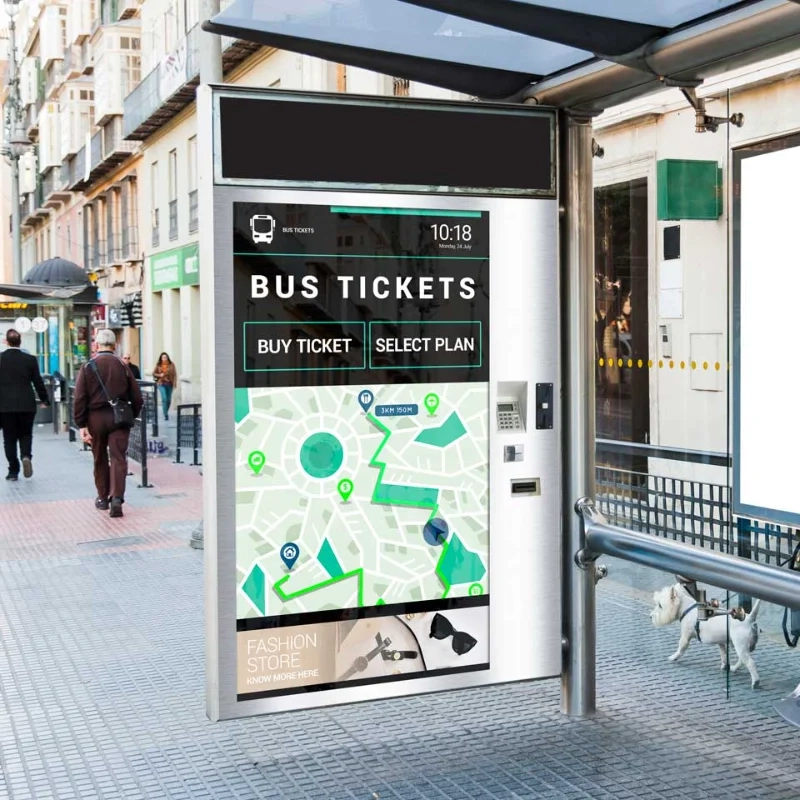
Industry adoption of sunlight-readable displays spans multiple sectors. In the defense sector, platforms like the U.S. Army’s Future Vertical Lift program specify 10,000-nit displays for mission-critical avionics interfaces. In healthcare, portable diagnostic devices such as ultrasound machines and patient monitors benefit from these screens when used in emergency vehicles or field hospitals. Transportation companies like Siemens Mobility deploy sunlight-readable displays in train control panels, allowing conductors to view real-time data regardless of sunlight exposure during daylight hours.
Economic factors also influence the market. While high-brightness LCDs were once prohibitively expensive, advancements in mass production techniques—especially in China’s Shenzhen region—have driven costs down significantly. According to a 2024 report by MarketsandMarkets, the global sunlight-readable display market was valued at $1.2 billion in 2023 and is projected to grow at a CAGR of 8.6% through 2030, reaching $2.3 billion. This growth is fueled by increasing demand from electric vehicles, smart infrastructure, and augmented reality (AR) applications that require reliable outdoor visibility.
Looking ahead, emerging trends include micro-LED and OLED-based sunlight-readable solutions. Micro-LED offers inherent advantages such as higher brightness potential (>10,000 nits), better energy efficiency, and longer lifespan. However, current manufacturing limitations make it cost-prohibitive for widespread adoption. Meanwhile, OLEDs, despite their lower peak brightness (~5,000 nits), offer superior contrast due to true black levels. Researchers at Samsung Display and LG Display are exploring hybrid approaches combining OLED with external diffusers and polarization layers to enhance sunlight readability—a promising direction for next-generation displays.
In conclusion, high-brightness sunlight-readable LCD screen technology represents a convergence of optics, materials science, and embedded systems engineering. Its importance cannot be overstated in modern applications where visibility under challenging lighting conditions directly impacts safety, productivity, and user experience. As industries continue to digitize operations and expand into outdoor environments, the evolution of this technology will remain a focal point for innovation. Whether deployed in a fighter jet cockpit, a remote wind turbine control panel, or a smartphone held under a sunny sky, these displays serve as the invisible bridge between human perception and digital information—a testament to how subtle engineering choices can profoundly shape real-world usability.