RisingStar
- Home
- About Us
- Products
- News
- Video
- Contact
- Send Inquiry
Search
- Home
- About Us
- Products
- News
- Video
- Contact
- Send Inquiry
RisingStar
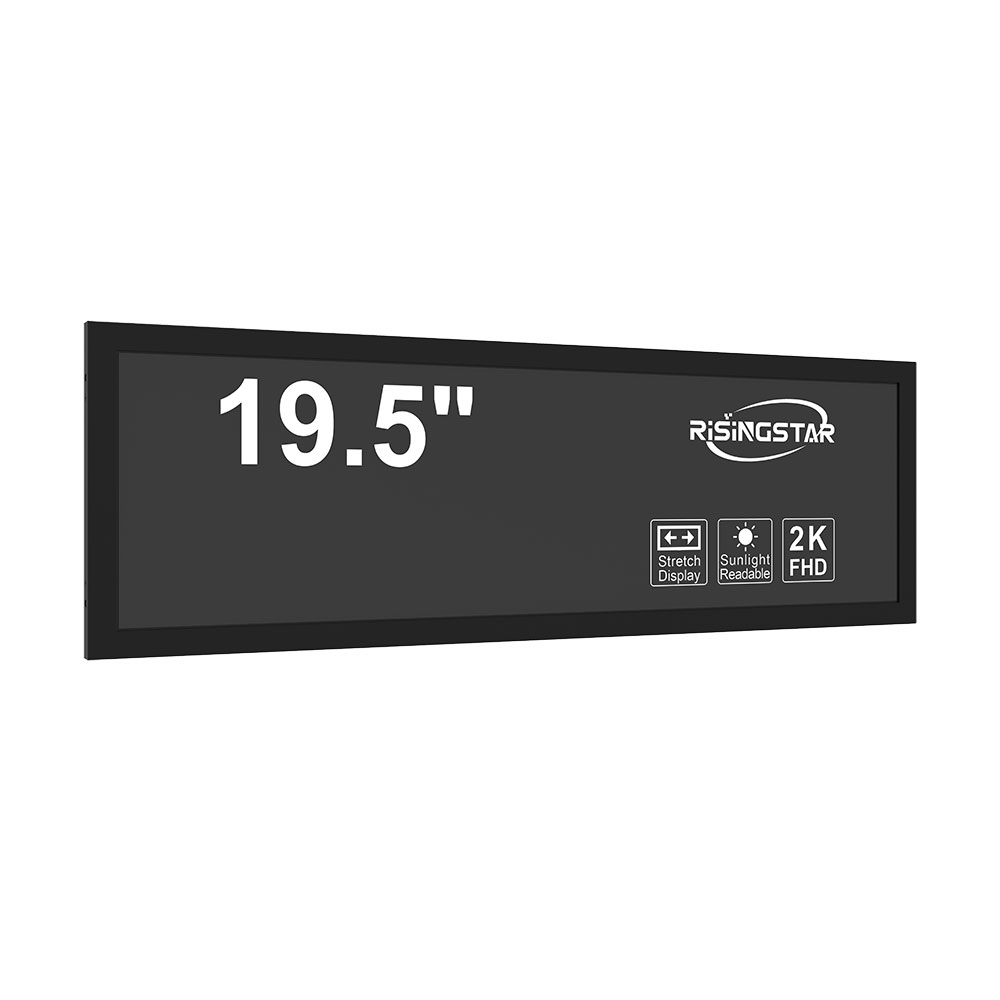
High-brightness sunlight-readable LCD screens have become essential in modern outdoor applications, where visibility under direct sunlight is critical. These displays are engineered to maintain clarity and contrast even in extreme lighting conditions—such as bright daylight, high ambient temperatures, or rapidly changing light environments—which traditional LCDs often fail to handle effectively. Industries such as military, transportation, industrial automation, retail kiosks, and public information systems rely heavily on these specialized displays to ensure operational efficiency and user safety.
The core technology behind sunlight-readable LCDs lies in their ability to produce significantly higher luminance levels than standard displays. While conventional LCDs typically offer 250–350 cd/m² (candela per square meter), high-brightness models range from 1,500 to 5,000 cd/m² or more. This increased brightness is achieved through advanced backlighting systems, such as LED arrays with optimized optical films and high-efficiency drivers, combined with anti-glare coatings and polarized filters that reduce reflection. Some models also incorporate ambient light sensors that dynamically adjust screen brightness based on real-time environmental conditions—an energy-efficient feature now required by many international standards like ISO 9241-31 and EN 50569.
Case studies highlight the performance of these screens in real-world scenarios. For example, a major European railway operator deployed 2,000+ high-brightness LCDs in train station information panels. Prior to this upgrade, passengers reported poor readability during midday sun, leading to confusion and delays. After switching to 3,000 cd/m² sunlight-readable displays with integrated adaptive brightness control, satisfaction scores improved by over 70%, and incident reports dropped by 40%. Similarly, U.S. Department of Defense field deployments of ruggedized, 4,000 cd/m² LCDs in tactical vehicles showed no degradation in image quality after 2000 hours of continuous exposure to desert sunlight at 50°C ambient temperature—demonstrating compliance with MIL-STD-810G shock and thermal endurance requirements.
Beyond luminance, manufacturers focus on contrast ratio, viewing angles, and response time to meet diverse application needs. High-end models now support 1000:1 contrast ratios and wide viewing angles (up to 178°), enabling clear visibility from multiple positions—a key factor in crowded public spaces. Response times below 16ms ensure smooth video playback, making them suitable for digital signage and emergency alert systems. Additionally, some designs integrate touch functionality (resistive or capacitive) that works reliably even when users wear gloves—a necessity in cold-weather environments.
In conclusion, high-brightness sunlight-readable LCD screens represent a mature yet continuously evolving segment of display technology. With ongoing innovations in materials science, power management, and human-centric design, they remain indispensable in any setting where visual reliability is non-negotiable. As global demand grows—from smart cities to autonomous vehicles—the role of these displays will only expand, driving further investment in R&D and standardization across industries.