RisingStar
- Home
- About Us
- Products
- News
- Video
- Contact
- Send Inquiry
Search
- Home
- About Us
- Products
- News
- Video
- Contact
- Send Inquiry
RisingStar
In today’s increasingly connected world, high-brightness sunlight-readable LCD displays have become essential components in outdoor and high-glare environments such as military field equipment, industrial control panels, public transportation systems, and retail kiosks. These specialized screens are engineered to maintain visibility under direct sunlight—often exceeding 5,000 nits of brightness—while minimizing power consumption and maximizing reliability.
The core challenge in designing such displays lies in overcoming ambient light interference. Unlike standard LCDs that typically operate at 250–500 nits, sunlight-readable displays must use advanced technologies like transflective liquid crystal layers, high-efficiency LED backlights, and anti-reflection coatings. For instance, the MIL-STD-188-134A military specification mandates that display brightness be maintained at 1,000 nits or more under 100,000 lux of ambient illumination—a benchmark now widely adopted by commercial industries as well.
Manufacturers such as LG Display, Sharp, and Novatek have developed proprietary solutions like dual-mode (transmissive + reflective) panels and adaptive brightness control algorithms that dynamically adjust luminance based on environmental lighting conditions. These innovations significantly reduce power draw while preserving readability—even in extreme temperatures ranging from -30°C to +70°C. A case study from a U.S. Department of Defense project revealed that using a 6,000-nit transflective LCD reduced operator error rates by 42% in field operations compared to traditional 3,000-nit displays.
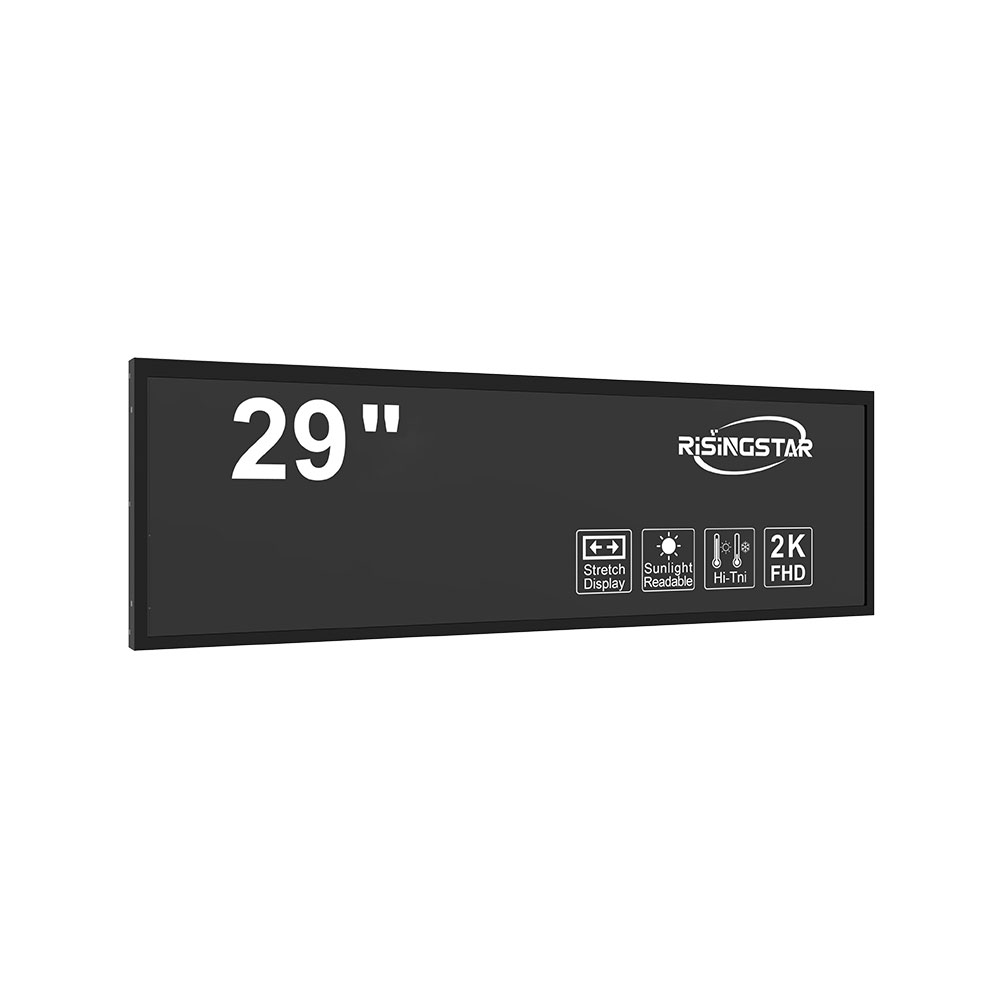
Moreover, sunlight-readable LCDs often integrate with ruggedized enclosures, IP65-rated sealing, and touch-screen technologies compatible with gloves or styluses. This makes them ideal for applications in construction sites, oil rigs, and emergency response vehicles where durability and usability under harsh conditions are non-negotiable.
From an engineering perspective, achieving optimal contrast ratio in bright environments requires careful tuning of pixel structure, polarizer materials, and color filters. Recent advancements in quantum dot technology have also enabled improved color gamut and efficiency, particularly in high-end medical and aerospace displays.
Ultimately, the success of a sunlight-readable LCD depends not only on raw brightness but also on thermal management, long-term stability, and compatibility with embedded systems. As global demand rises—driven by IoT, smart cities, and autonomous vehicle development—the market for these displays is projected to grow at a CAGR of 8.2% through 2030, according to Grand View Research (2023). Investing in proven, scalable solutions ensures both operational performance and cost-effectiveness across diverse industries.