RisingStar
- Home
- About Us
- Products
- News
- Video
- Contact
- Send Inquiry
Search
- Home
- About Us
- Products
- News
- Video
- Contact
- Send Inquiry
RisingStar
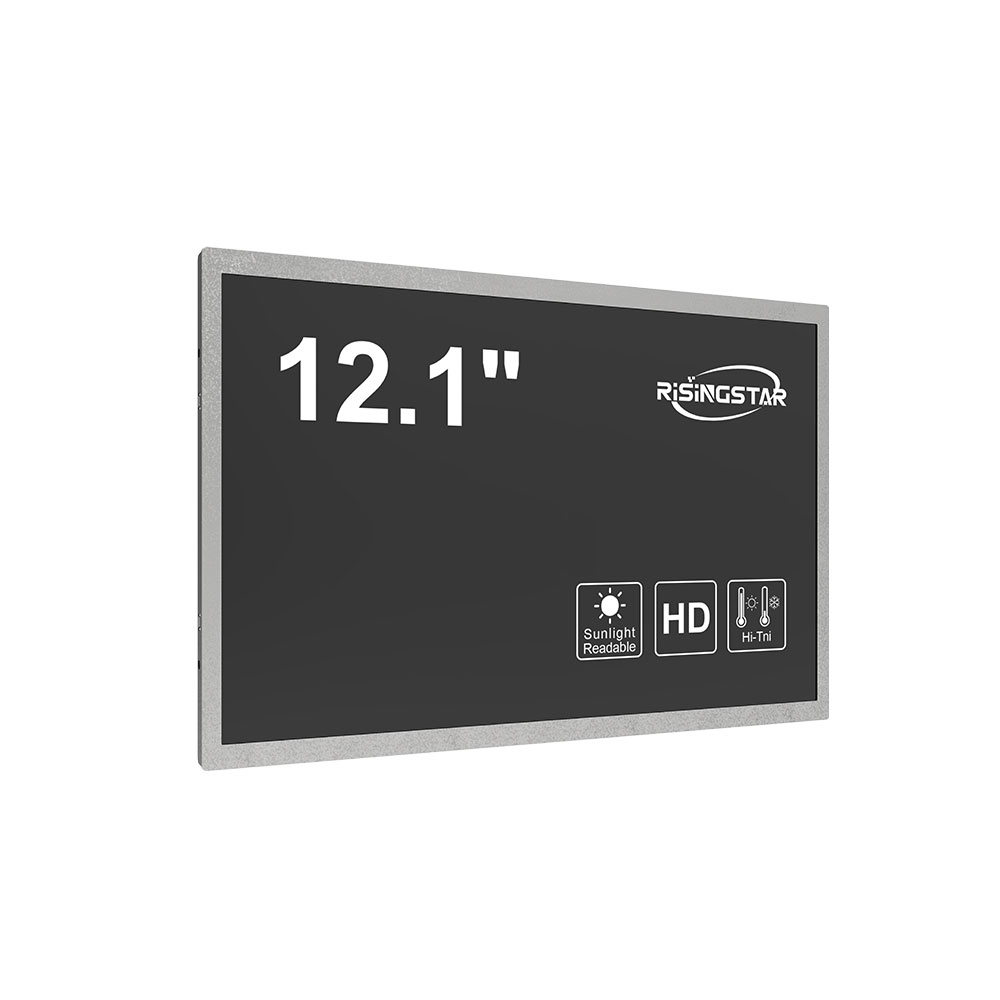
High-brightness sunlight-readable LCD screens are critical for applications where visibility under direct sunlight is essential. These displays, often exceeding 5,000 nits of brightness, are engineered to maintain clarity, contrast, and color accuracy even in intense solar conditions—such as those found in military equipment, transportation systems, industrial control panels, and outdoor advertising. Unlike standard LCDs that suffer from glare and washed-out images under sunlight, these specialized screens utilize advanced optical technologies such as anti-glare coatings, high-efficiency backlighting (often LED-based), and polarized light management to ensure readability in full daylight.
The core of a sunlight-readable LCD lies in its ability to combat ambient light interference. This is achieved through several key innovations. First, the use of high-luminance LEDs allows for brightness levels typically ranging from 3,000 to 10,000 nits, far surpassing the average 250–500 nits of indoor displays. Second, micro-lens arrays and diffusers optimize light distribution across the screen surface, reducing hotspots and improving uniformity. Third, polarization techniques—such as using dual-layer polarizers or liquid crystal alignment methods like IPS (In-Plane Switching)—enhance contrast ratios and reduce reflection. In addition, many modern models incorporate adaptive brightness sensors that automatically adjust luminance based on ambient light levels, optimizing both performance and power consumption.
Industry case studies demonstrate the effectiveness of these technologies. For instance, in the U.S. Department of Defense’s field deployment of ruggedized handheld devices, sunlight-readable LCDs enabled mission-critical operations in desert environments where display visibility was previously unreliable. Similarly, public transit systems in cities like Tokyo and Singapore rely on high-brightness displays in bus stop information kiosks, ensuring passengers can read schedules and real-time updates regardless of time of day or weather. According to a 2023 report by MarketsandMarkets, the global market for sunlight-readable displays is projected to grow at a CAGR of 7.4% from 2023 to 2028, driven by increasing demand in automotive infotainment, smart city infrastructure, and defense electronics.
From an engineering perspective, sunlight-readable LCDs also require robust environmental sealing (IP65 or higher), wide temperature tolerance (-20°C to +70°C), and mechanical durability to withstand vibration, dust, and moisture. The adoption of newer technologies like Mini-LED backlights and quantum dot enhancements further improves efficiency and color gamut while maintaining high brightness. As mobile and IoT applications expand into outdoor environments—from autonomous vehicles to agricultural monitoring—the demand for reliable, high-brightness displays will continue to rise.
In conclusion, high-brightness sunlight-readable LCD technology represents a convergence of materials science, optics, and intelligent control systems. It is no longer a niche solution but a foundational component in modern outdoor digital interfaces. With ongoing R&D in brightness optimization, energy efficiency, and thermal management, this field promises continued innovation and broader adoption across industries worldwide.