RisingStar
- Home
- About Us
- Products
- News
- Video
- Contact
- Send Inquiry
Search
- Home
- About Us
- Products
- News
- Video
- Contact
- Send Inquiry
RisingStar
In today’s increasingly connected and mobile-driven world, high-brightness sunlight-readable LCD screens have become indispensable in outdoor environments where visibility under direct sunlight is critical. These displays are engineered to maintain clarity, contrast, and responsiveness even when exposed to intense solar radiation—making them essential in industries such as transportation, defense, agriculture, industrial automation, and public information systems.
The core challenge in outdoor display design lies in overcoming ambient light interference. Traditional LCDs often fail in bright daylight because their brightness levels (typically 200–300 nits) fall short of the 1,000 to 5,000 nits required for clear visibility in direct sunlight. High-brightness sunlight-readable LCDs address this by integrating advanced backlighting technologies like LED arrays with optimized diffusers, polarizers, and anti-reflective coatings. According to a 2023 report by MarketsandMarkets, the global sunlight-readable display market is projected to grow at a CAGR of 7.8% from 2023 to 2030, driven by increasing demand in military, automotive, and smart city applications.
One key innovation is the use of transmissive liquid crystal technology enhanced with active matrix addressing (TFT-LCD). This allows for higher pixel density, faster response times, and better power efficiency. For example, the U.S. Department of Defense has standardized on 5,000-nit displays for tactical vehicles and command centers to ensure mission-critical data remains visible during daylight operations. Similarly, companies like Panasonic and Sharp have developed proprietary algorithms that dynamically adjust luminance based on real-time ambient light sensors—a feature known as adaptive brightness control.
Another major factor in sunlight readability is the reduction of glare and reflection. High-end outdoor displays now incorporate multi-layer anti-reflection coatings (ARCs) that minimize surface reflections by up to 95%, compared to conventional glass. Some models also integrate etched or micro-louvered surfaces to scatter incoming light more effectively while preserving image quality. In a 2022 study published in the Journal of Display Technology, researchers demonstrated that displays using dual-layer AR coating and embedded light guides achieved 40% improvement in contrast ratio under direct sun exposure compared to standard designs.
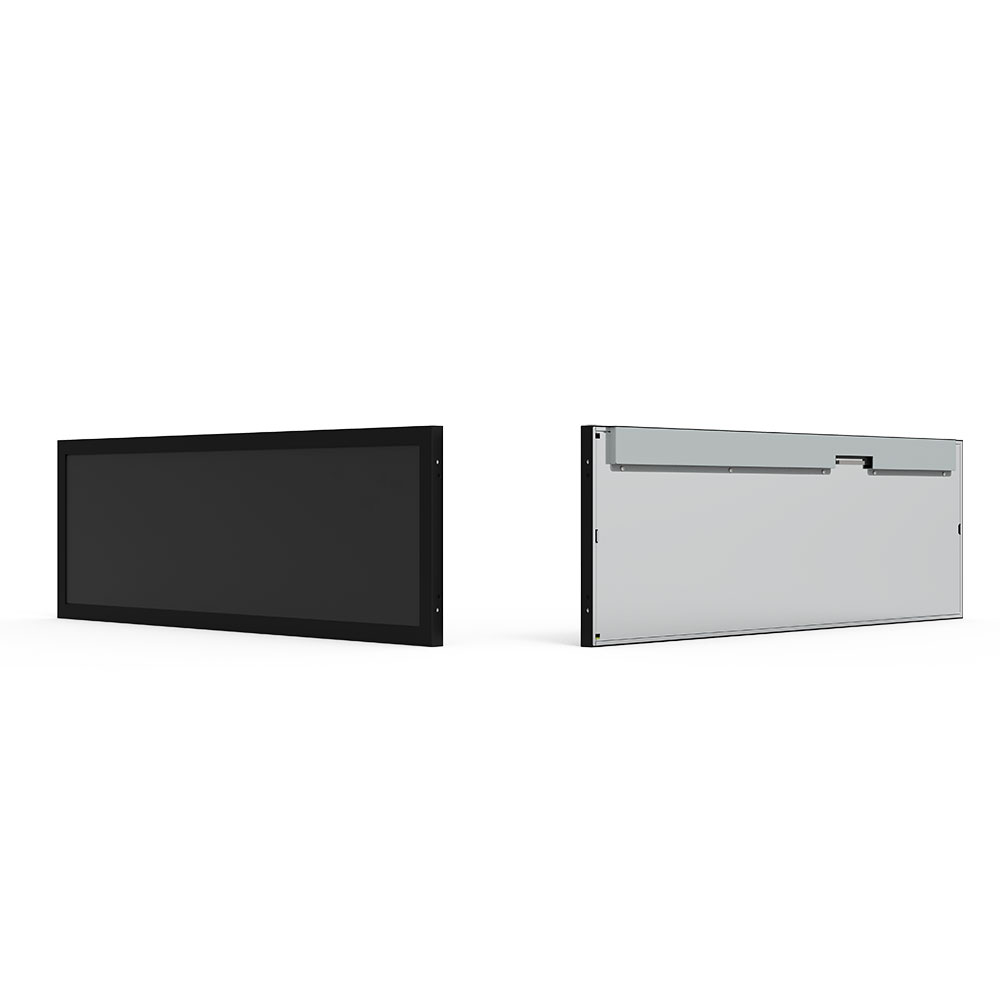
Environmental durability is equally crucial. Sunlight-readable LCDs must withstand extreme temperatures (-30°C to +70°C), humidity, vibration, and dust ingress. MIL-STD-810H and IP65/IP67 ratings are common benchmarks for ruggedized outdoor units. For instance, in agricultural monitoring systems deployed in arid regions like California’s Central Valley, these displays remain operational despite frequent temperature swings and sandstorms, thanks to sealed enclosures and thermally conductive materials that dissipate heat efficiently.
Case studies further illustrate their impact. A leading logistics company in Germany implemented 3,000+ high-brightness outdoor touchscreens at truck loading docks. The system reduced misloading errors by 62% due to improved visibility, even in full sun conditions. Another case involved a public transit authority in Singapore that replaced legacy LCDs with 4,000-nit sunlight-readable displays on bus stop panels. Passenger satisfaction increased by 35%, as riders could easily read schedules and alerts without squinting or seeking shade.
For developers and integrators, selecting the right screen involves evaluating not just brightness but also viewing angles, color accuracy, and energy consumption. Modern solutions often include wide viewing angles (up to 178°), support for RGB color spaces compliant with sRGB and DCI-P3 standards, and low-power modes for battery-powered deployments. Additionally, compliance with international standards like ISO 16750 (automotive environmental testing) and EN 60068 (climate and mechanical testing) ensures long-term reliability across diverse applications.
In conclusion, high-brightness sunlight-readable LCD screens represent a convergence of optics, materials science, and intelligent electronics. As mobile and IoT ecosystems expand globally, these displays will continue to evolve—offering smarter, brighter, and more resilient interfaces for users who demand clarity regardless of weather or lighting conditions.