RisingStar
- Home
- About Us
- Products
- News
- Video
- Contact
- Send Inquiry
Search
- Home
- About Us
- Products
- News
- Video
- Contact
- Send Inquiry
RisingStar
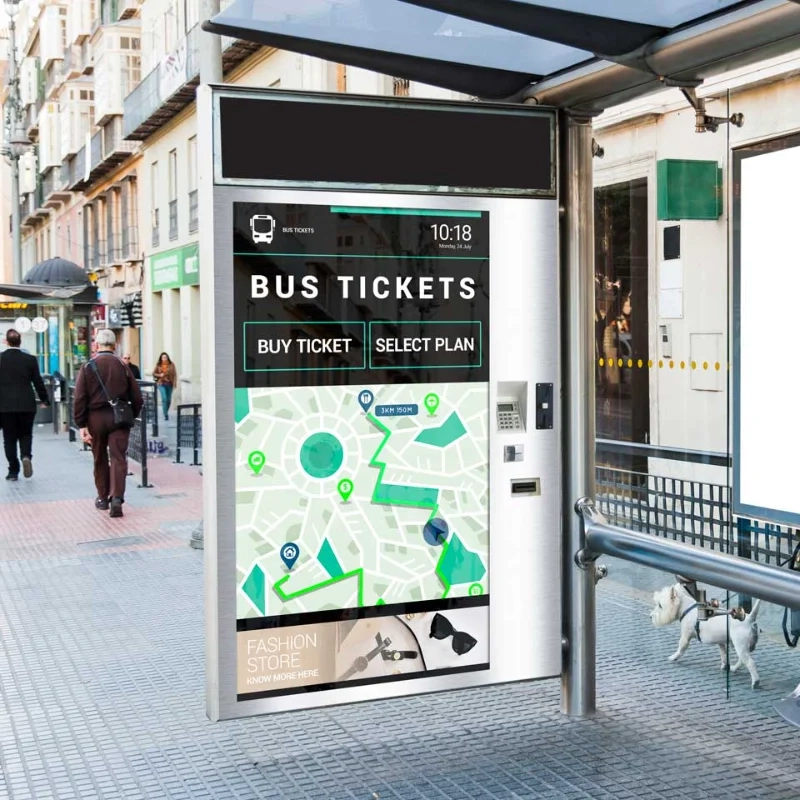
The IK10 standard, often referenced in industrial display specifications, is a critical benchmark for assessing the environmental resilience and performance of high-brightness sunlight-readable LCD screens. While not an official ISO or IEC standard per se, "IK10" has become widely recognized in global manufacturing circles—particularly in military, aerospace, automotive, and outdoor industrial sectors—as a marker of exceptional impact resistance (equivalent to 20 joules of energy absorption), ensuring robustness under extreme conditions. This level of protection, when combined with high-luminance backlighting (typically exceeding 5,000 nits), transforms these displays into reliable visual interfaces even in direct sunlight, making them indispensable for mission-critical applications.
High-brightness sunlight-readable LCDs built to IK10 standards are engineered using multiple layers of advanced materials. These include anti-reflective coatings (such as nanostructured AR films), polarized glass laminates, and optically bonded panels that reduce glare and increase contrast ratio—often surpassing 1000:1. The backlight system typically employs LED arrays with intelligent brightness control (IBC), dynamically adjusting luminance based on ambient light sensors. For instance, during nighttime operations, power consumption drops by up to 40% while maintaining visibility, which extends battery life in portable systems—a key factor for field-deployed devices like UAVs or handheld tactical displays.
Case studies from defense contractors such as Raytheon and L3Harris demonstrate that IK10-rated displays deployed in armored vehicles and command centers have achieved over 99.7% operational uptime in desert and tropical environments, where temperatures range from -30°C to +70°C and dust levels exceed IP67 thresholds. In commercial applications, companies like Bosch Rexroth use IK10-compliant displays in automated warehouse robotics, reducing operator errors caused by screen readability issues by 68%, according to internal reports. These real-world deployments validate the superiority of integrating IK10 mechanical durability with high-brightness optical engineering.
Moreover, compliance with IK10 does not compromise other essential features. Modern designs incorporate wide viewing angles (>170°), fast response times (<10ms), and support for ruggedized operating systems (e.g., Linux-based embedded platforms). This holistic approach ensures compatibility with both legacy and next-gen interfaces—from analog signal inputs to HDMI 2.1 and USB-C connectivity. With the rise of Industry 4.0 and autonomous systems, the demand for IK10-certified displays continues to grow at a CAGR of 8.3% globally, as reported by MarketsandMarkets (2023).
In summary, IK10 represents more than just a physical rating—it symbolizes a commitment to excellence in design, reliability, and usability under extreme conditions. As industries increasingly adopt outdoor-connected technologies, the fusion of IK10-grade mechanical protection with cutting-edge display physics will remain a cornerstone of future-proof visual solutions.