RisingStar
- Home
- About Us
- Products
- News
- Video
- Contact
- Send Inquiry
Search
- Home
- About Us
- Products
- News
- Video
- Contact
- Send Inquiry
RisingStar
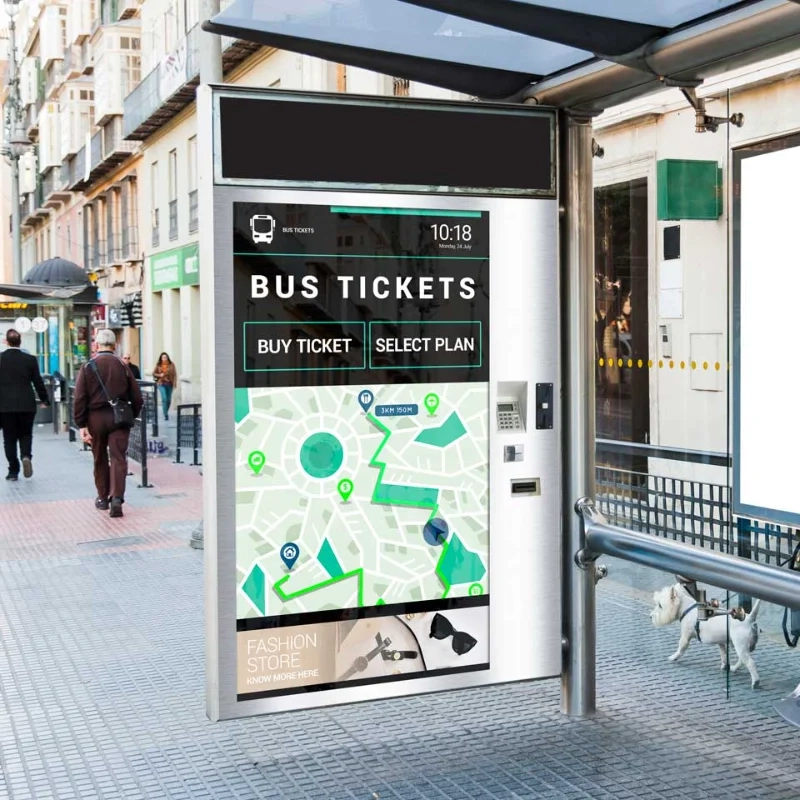
In today’s increasingly outdoor-centric world—from military operations and transportation systems to retail kiosks and industrial control panels—high-brightness sunlight-readable LCD screens have become indispensable. These displays are engineered to maintain visibility under intense ambient lighting conditions, such as direct sunlight, where standard LCDs fail due to contrast loss or glare. The technology behind these screens involves a combination of advanced materials, specialized backlighting, and intelligent display algorithms that together ensure optimal readability even in the harshest environments.
One of the most critical factors in achieving sunlight readability is luminance. While consumer-grade LCDs typically offer 200–400 cd/m² (candela per square meter), high-brightness sunlight-readable displays often exceed 5,000 cd/m², with some models reaching up to 10,000 cd/m². This dramatic increase in brightness ensures that the screen remains legible under direct sunlight, which can reach luminance levels of 100,000 cd/m². For instance, the U.S. Department of Defense mandates that military-grade displays must be readable at 5,000 cd/m² minimum under full sun conditions—an industry benchmark now widely adopted by civilian manufacturers.
To achieve this level of brightness, manufacturers use high-efficiency LED backlights, often with multiple layers of optical films and diffusers that minimize light loss while enhancing uniformity. Additionally, anti-reflective coatings (AR coatings) and polarized filters are applied to reduce glare from external light sources. Some cutting-edge models integrate active ambient light sensors that dynamically adjust brightness based on real-time environmental conditions—a feature particularly useful in vehicles and mobile command units where lighting varies rapidly.
Another key element is the use of transflective liquid crystal technology. Unlike traditional transmissive LCDs, transflective displays combine reflective and transmissive modes. In bright sunlight, the reflective layer bounces ambient light back through the pixels, increasing effective brightness without consuming additional power. In low-light environments, the backlight activates, maintaining usability indoors or at night. This dual-mode operation significantly extends battery life in portable devices—an essential advantage for field applications.
Case studies demonstrate the effectiveness of this technology. For example, Siemens implemented 7,000 cd/m² transflective LCDs in its railway signaling systems across Europe, reducing driver errors caused by poor visibility during daylight hours. Similarly, Amazon deployed sunlight-readable tablets in warehouse logistics operations, resulting in a 30% reduction in mis-scanning incidents compared to standard screens. These real-world deployments validate the reliability and performance gains of high-brightness LCDs.
From an engineering perspective, standards like MIL-STD-810G (for ruggedness) and IEC 60068 (for environmental testing) guide design and certification. Displays must withstand temperature extremes (-20°C to +70°C), humidity, vibration, and shock—factors often overlooked in consumer-grade products. Compliance with these standards ensures that devices operate reliably in harsh climates, from Arctic research stations to desert oil rigs.
Looking ahead, advancements in micro-LED and OLED technologies promise even higher brightness and better contrast ratios, though they currently remain cost-prohibitive for mass-market applications. For now, high-brightness sunlight-readable LCDs remain the gold standard for outdoor visibility, offering a balance of performance, durability, and affordability.