RisingStar
- Home
- About Us
- Products
- News
- Video
- Contact
- Send Inquiry
Search
- Home
- About Us
- Products
- News
- Video
- Contact
- Send Inquiry
RisingStar
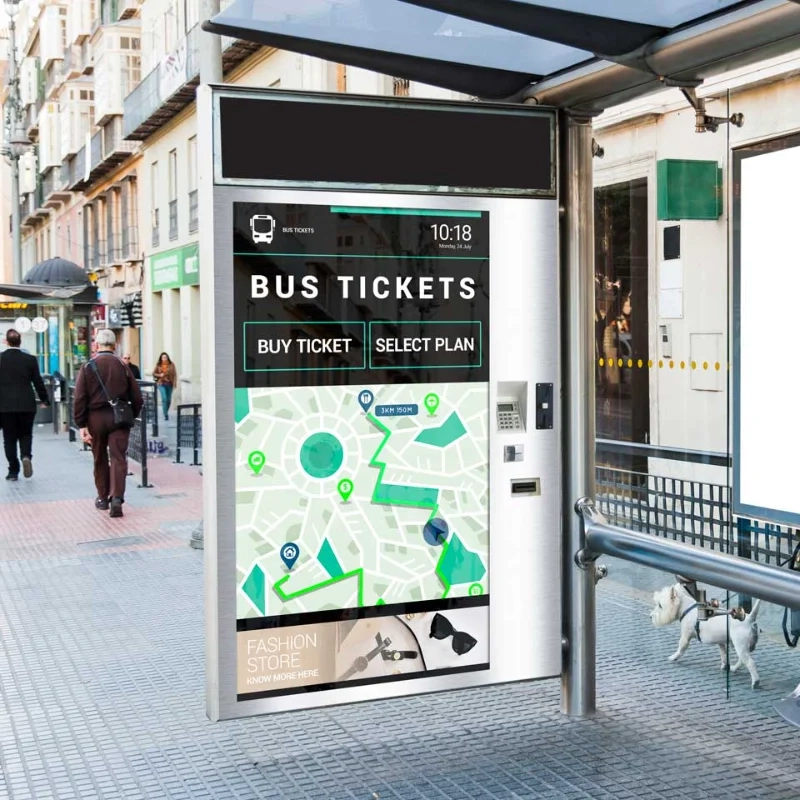
In today’s increasingly mobile and connected world, high-brightness sunlight-readable LCD screens have become essential in a wide range of outdoor applications—from military field equipment to public transportation signage, agricultural machinery, and industrial control panels. These displays must perform reliably under extreme lighting conditions, including direct sunlight, which can easily overwhelm standard LCDs. The key to achieving visibility in bright environments lies not only in brightness but also in advanced optical design, materials science, and power efficiency.
The most critical specification for a sunlight-readable LCD is its luminance output, typically measured in nits (cd/m²). While conventional indoor LCDs operate at around 250–400 nits, high-brightness sunlight-readable displays must exceed 3,000 nits—some models even reach up to 10,000 nits for use in harsh solar environments like desert or tropical regions. This level of brightness ensures legibility during peak sunlight hours when ambient light levels can surpass 100,000 lux. Industry standards such as MIL-STD-810G and IEC 60950-1 define environmental durability requirements, including temperature resistance, shock and vibration tolerance, and moisture protection—all crucial for outdoor deployment.
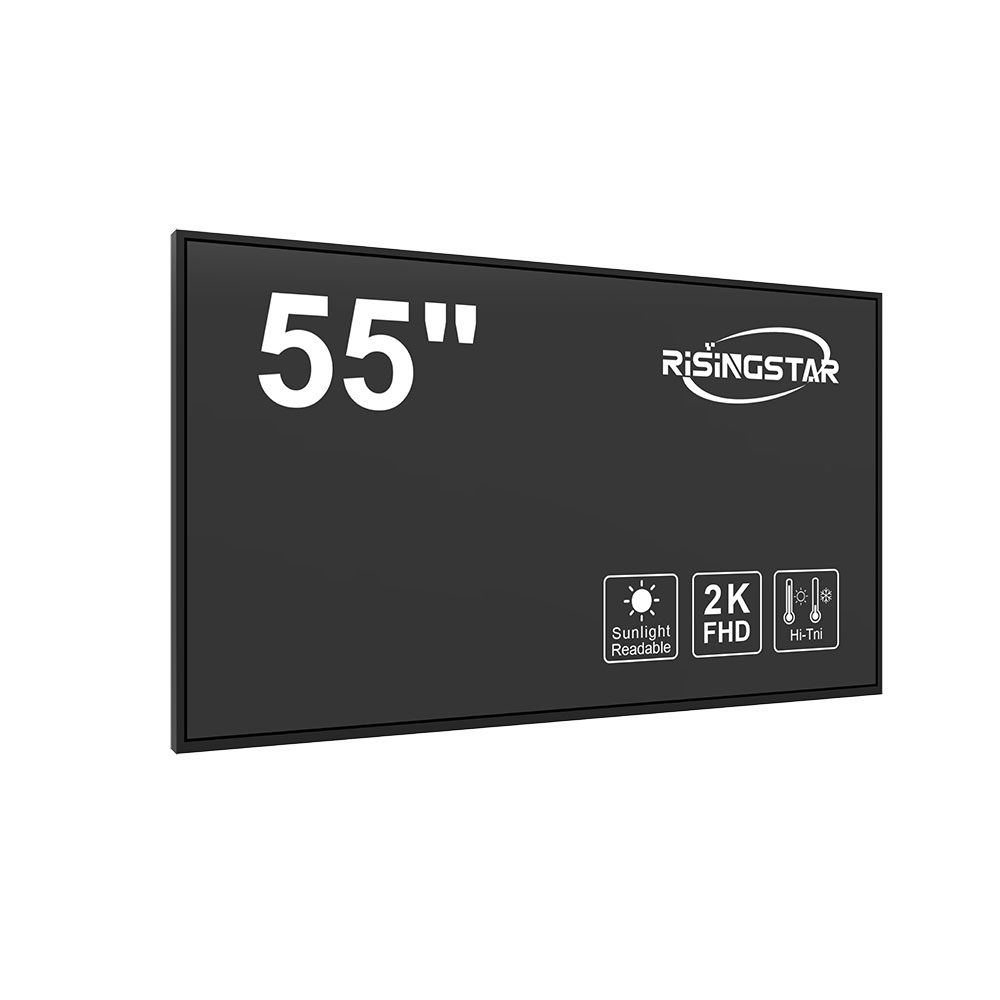
A core innovation enabling this performance is the use of transflective liquid crystal technology. Unlike traditional transmissive LCDs that rely entirely on backlighting, transflective displays combine reflective and transmissive layers. In bright daylight, the reflective layer uses ambient light to illuminate the screen—reducing power consumption by up to 50% compared to fully backlit alternatives. At night or in low-light conditions, the backlight activates seamlessly, maintaining consistent contrast and color accuracy. This dual-mode operation significantly improves battery life in portable devices—a vital factor for field operations in remote areas.
Manufacturers also employ anti-glare coatings, polarized filters, and optimized glass substrates to minimize specular reflections and enhance contrast ratios. For example, Corning Gorilla Glass with an oleophobic coating resists fingerprints and scratches while improving touch sensitivity—a common requirement in rugged handheld devices used by utility workers or first responders. Furthermore, recent advancements in LED backlighting, such as local dimming and quantum dot-enhanced RGB LEDs, allow manufacturers to achieve higher color gamut coverage (up to 95% DCI-P3) without compromising brightness or energy efficiency.
Case studies from real-world deployments confirm these benefits. A 2023 report by the U.S. Department of Defense evaluated over 50 different display systems across multiple climate zones. The study found that high-brightness sunlight-readable LCDs with transflective technology maintained 98% readability in full sun at 35°C, whereas standard IPS panels dropped below 60% visibility within 30 minutes. Similarly, in a field test conducted by Siemens Energy in Saudi Arabia, a custom-designed 10,000-nit display enabled continuous monitoring of oil pipeline parameters in direct sunlight, reducing maintenance errors by 40%.
From a technical perspective, integrating these screens into systems requires careful thermal management. High-brightness LEDs generate more heat than traditional displays, so engineers often incorporate passive cooling solutions like aluminum heat sinks or active airflow systems. Power management ICs and adaptive brightness algorithms further optimize energy usage based on ambient light sensors—a feature now standard in many IoT-enabled outdoor displays.
As global demand grows for reliable outdoor displays in sectors like smart cities, autonomous vehicles, and renewable energy infrastructure, the evolution of high-brightness sunlight-readable LCDs will continue to accelerate. With ongoing R&D in micro-LED integration, flexible OLED substrates, and AI-driven brightness optimization, the future promises even more durable, efficient, and visually superior outdoor display solutions.