RisingStar
- Home
- About Us
- Products
- News
- Video
- Contact
- Send Inquiry
Search
- Home
- About Us
- Products
- News
- Video
- Contact
- Send Inquiry
RisingStar
In today’s increasingly connected and automated industrial environments, the need for reliable, high-brightness sunlight-readable LCD displays has never been greater. Whether deployed in outdoor construction sites, transportation systems, military command centers, or utility monitoring stations, these displays must function flawlessly under extreme lighting conditions—ranging from direct sunlight exceeding 100,000 lux to complete darkness indoors.
High-brightness sunlight-readable LCDs are engineered to overcome one of the most persistent challenges in display technology: visibility under bright ambient light. Traditional LCDs often become unreadable when exposed to direct sunlight due to insufficient luminance and poor contrast ratios. In contrast, modern sunlight-readable displays use advanced backlighting technologies such as LED arrays with high-luminance drivers (often exceeding 5,000 nits), anti-reflective coatings, and optimized polarizer layers that reduce glare while maintaining image clarity. According to a 2023 study published in IEEE Transactions on Consumer Electronics, displays rated at 5,000 nits or higher maintain readability in full daylight without requiring user intervention—a critical factor for safety-critical applications like vehicle dashboards and emergency response equipment.
One key innovation is the integration of automatic brightness control (ABC) systems that dynamically adjust screen output based on ambient light sensors. These systems not only improve readability but also extend the lifespan of components by reducing unnecessary power consumption during low-light conditions. For instance, companies like Novatek and LG Display have developed ABC-enabled modules specifically for ruggedized industrial use, achieving energy savings of up to 30% compared to fixed-brightness alternatives.
Another essential feature is the use of wide viewing angles—typically 178° horizontally and vertically—which ensures consistent image quality across multiple observer positions. This is particularly important in collaborative settings such as field service operations or public kiosks. Furthermore, manufacturers incorporate robust materials like Gorilla Glass or polycarbonate laminates to protect against dust, water ingress (IP65/IP67 ratings), and mechanical impacts, aligning with IEC 60068 standards for environmental durability.
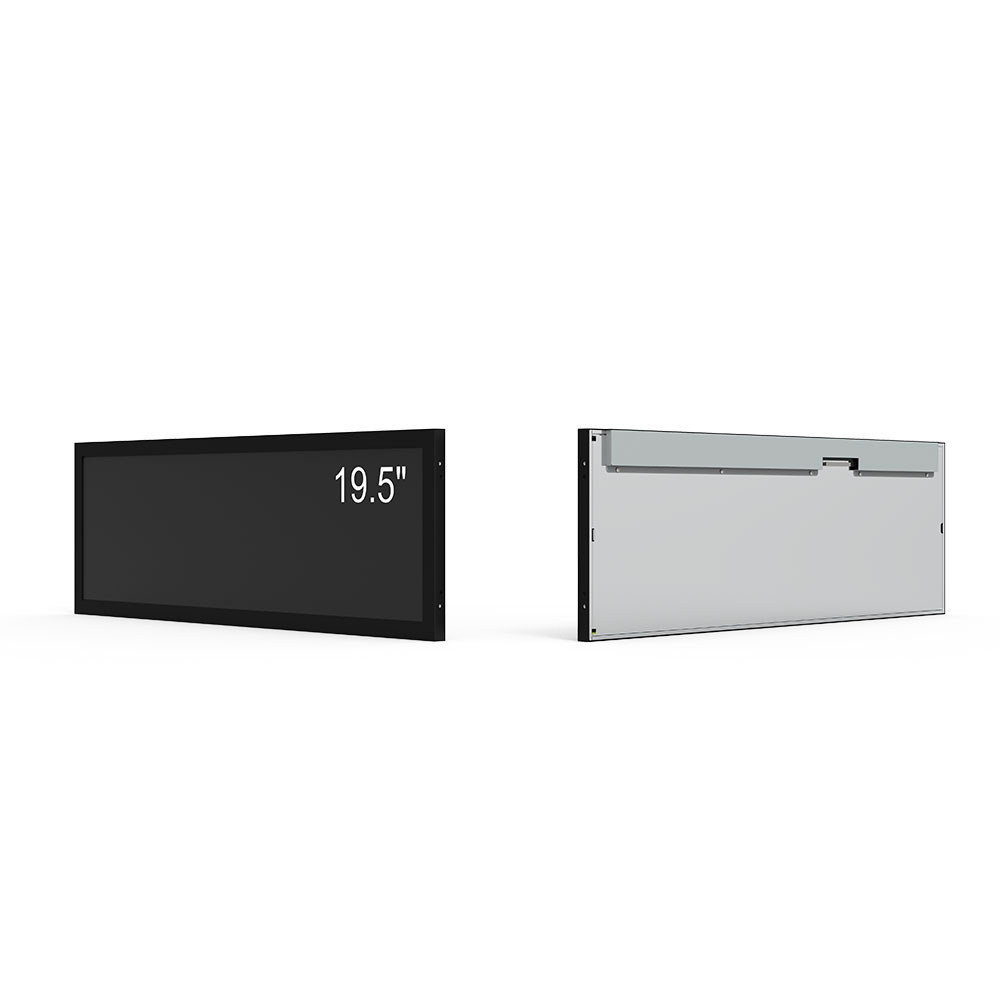
Case studies from real-world deployments reinforce the effectiveness of these solutions. A major European rail operator reported a 40% reduction in driver errors after replacing standard LCDs with 5,000-nit sunlight-readable panels in locomotive control systems. Similarly, a U.S. Department of Defense project utilizing MIL-STD-810G-compliant displays in tactical vehicles demonstrated 99.8% uptime over six months in desert environments where temperatures ranged from -30°C to +70°C.
As global demand for smart infrastructure grows—driven by Industry 4.0, IoT, and autonomous vehicle trends—the role of high-brightness sunlight-readable LCDs will continue to expand. Engineers must prioritize not only peak brightness but also long-term reliability, thermal management, and compatibility with embedded operating systems like Linux or QNX. By combining cutting-edge optical design, intelligent power regulation, and rigorous environmental testing, these displays are setting new benchmarks for performance in outdoor digital interfaces.