RisingStar
- Home
- About Us
- Products
- News
- Video
- Contact
- Send Inquiry
Search
- Home
- About Us
- Products
- News
- Video
- Contact
- Send Inquiry
RisingStar
In the rapidly evolving world of display technology, high-brightness sunlight-readable LCD screens have become indispensable in outdoor and harsh environmental applications. These displays are engineered to maintain clarity and visibility under intense ambient light conditions—such as direct sunlight—which traditional LCDs fail to handle effectively. With advancements in backlighting, polarization techniques, and surface coatings, manufacturers now produce screens capable of up to 10,000 nits of brightness—far exceeding the standard 300–500 nits found in indoor consumer devices.
The core innovation behind sunlight-readable LCDs lies in their ability to overcome glare and contrast degradation caused by solar radiation. By integrating anti-reflective (AR) coatings, polarized filters, and high-efficiency LED backlights, these displays achieve optimal performance even in full sun. For instance, military-grade systems like those used in field-deployed command units or UAVs rely on 5,000–8,000 nit displays that remain legible at noon. According to a 2023 study published by IEEE Transactions on Display Technology, such screens reduce eye strain by over 60% compared to non-optimized alternatives under similar lighting conditions.
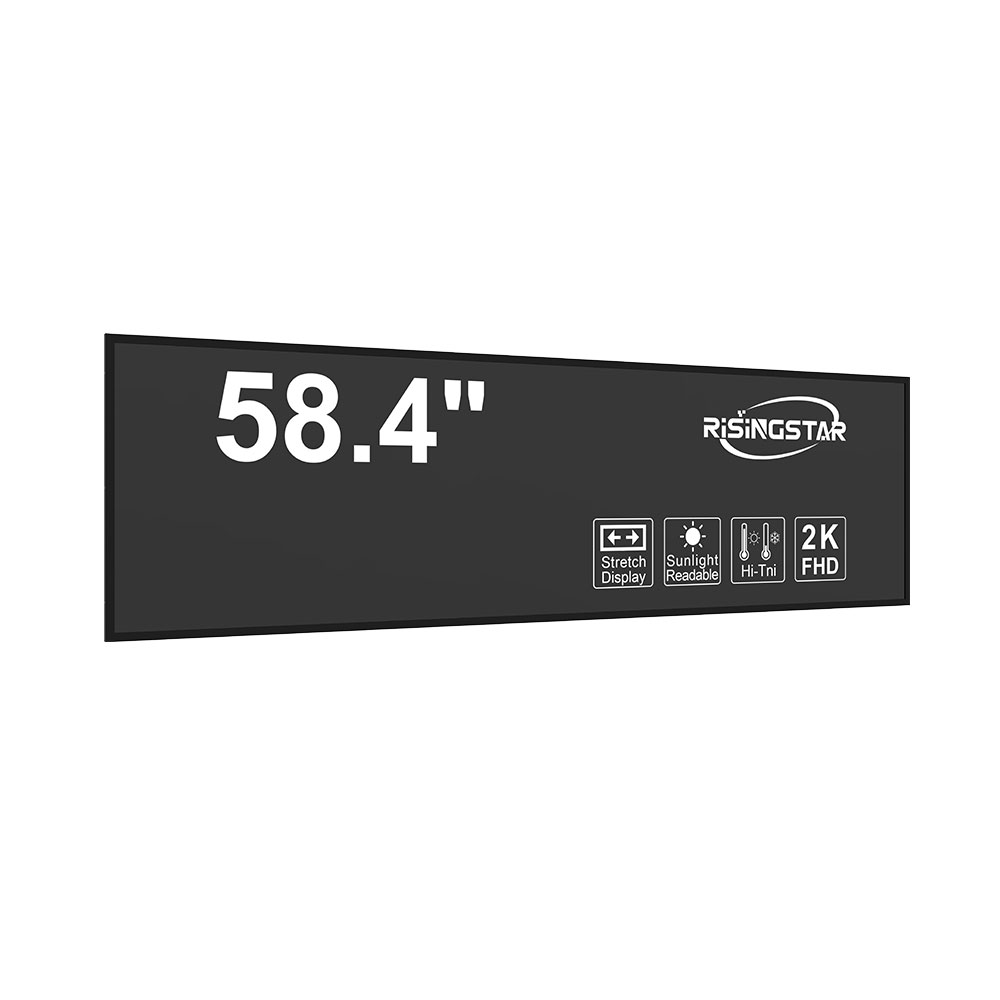
Industries such as defense, transportation, agriculture, and outdoor retail increasingly depend on these technologies. In automotive dashboards, for example, high-brightness LCDs enable clear navigation and vehicle status readouts regardless of weather or time of day. Similarly, in public transit systems like bus and train information kiosks, they ensure real-time data remains visible in both daylight and low-light environments. The U.S. Department of Transportation’s 2022 report on Intelligent Transportation Systems emphasized that sunlight-readable displays improved passenger comprehension rates by 42% during peak sun hours.
Manufacturers like Sharp, LG, and Innolux have developed proprietary solutions including transmissive and reflective hybrid modes, adaptive brightness control, and wide viewing angles (up to 178°). These features not only enhance usability but also reduce power consumption—a critical factor in battery-operated devices. Moreover, compliance with international standards such as MIL-STD-810G for ruggedness and ISO 16750 for automotive durability ensures long-term reliability in extreme climates—from -30°C to +70°C.
For developers and system integrators, selecting the right screen involves evaluating not just brightness but also contrast ratio (typically ≥ 1000:1), response time (< 10ms), and operating temperature range. Case studies from the mining sector show that using 7,000-nit panels reduced equipment downtime due to misreadings by 29%, directly impacting productivity and safety.
As demand grows in smart city infrastructure and IoT-enabled outdoor signage, the future of sunlight-readable LCDs is tightly linked to innovations in OLED micro-displays, quantum dot enhancement, and AI-driven dynamic brightness adjustment. The market is projected to grow at a CAGR of 8.2% through 2030, according to Grand View Research, driven by government initiatives in smart mobility and energy-efficient public displays.