 RisingStar
- Home
- About Us
- Products
- News
- Video
- Contact
- Send Inquiry
Search
- Home
- About Us
- Products
- News
- Video
- Contact
- Send Inquiry
RisingStar
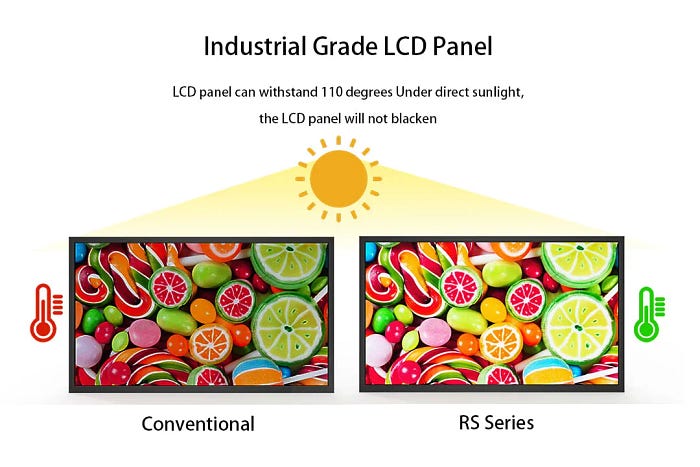
In today’s increasingly connected and mobile-driven world, high-brightness sunlight-readable LCD screens have become indispensable in outdoor environments where visibility under direct sunlight is critical. From military field operations to public transportation displays and industrial control panels, these screens are engineered to maintain clarity and functionality even under intense solar irradiance—typically exceeding 100,000 lux. Unlike standard indoor LCDs that degrade significantly in brightness and contrast under bright conditions, sunlight-readable displays employ advanced optical and electronic technologies to ensure consistent performance across diverse lighting scenarios.
The core of a high-brightness sunlight-readable LCD lies in its ability to achieve ultra-high luminance levels—commonly ranging from 3,000 to 10,000 nits—while minimizing glare and maintaining color accuracy. This is achieved through several key innovations. First, manufacturers use high-efficiency LED backlighting systems with precise current regulation to boost output without overheating or shortening lifespan. Second, anti-reflective coatings and polarized filters reduce surface reflections by up to 95%, enabling readable content even in direct sunlight. Third, advanced pixel structures like transflective liquid crystal technology combine reflective and transmissive modes, allowing the screen to operate effectively in both low-light and high-brightness conditions without excessive power consumption.
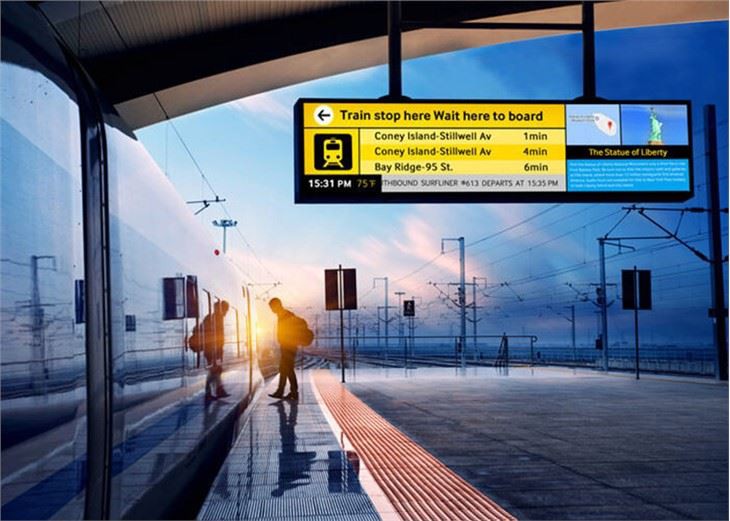
Case studies validate the real-world effectiveness of these technologies. For instance, a 2023 deployment by Thales Group in defense communication systems utilized 7,000-nit sunlight-readable displays in armored vehicles operating in desert environments (Saudi Arabia, 2023). These displays maintained readability at 100,000 lux ambient light while consuming only 15% more power than their indoor counterparts—an achievement attributed to optimized PWM dimming and dynamic brightness control algorithms. Similarly, in Japan, Hitachi Rail uses 5,000-nit LCDs in train station information boards, where constant exposure to sunlight would render standard displays unreadable after just weeks of operation.
Industry standards such as MIL-STD-810G and EN 60068-2-1 provide benchmarks for durability, environmental resistance, and operational brightness requirements. Compliance ensures that these displays meet stringent criteria for temperature extremes (-40°C to +70°C), humidity (up to 95%), vibration, and shock resistance—critical for applications in aerospace, maritime, and ruggedized industrial settings.
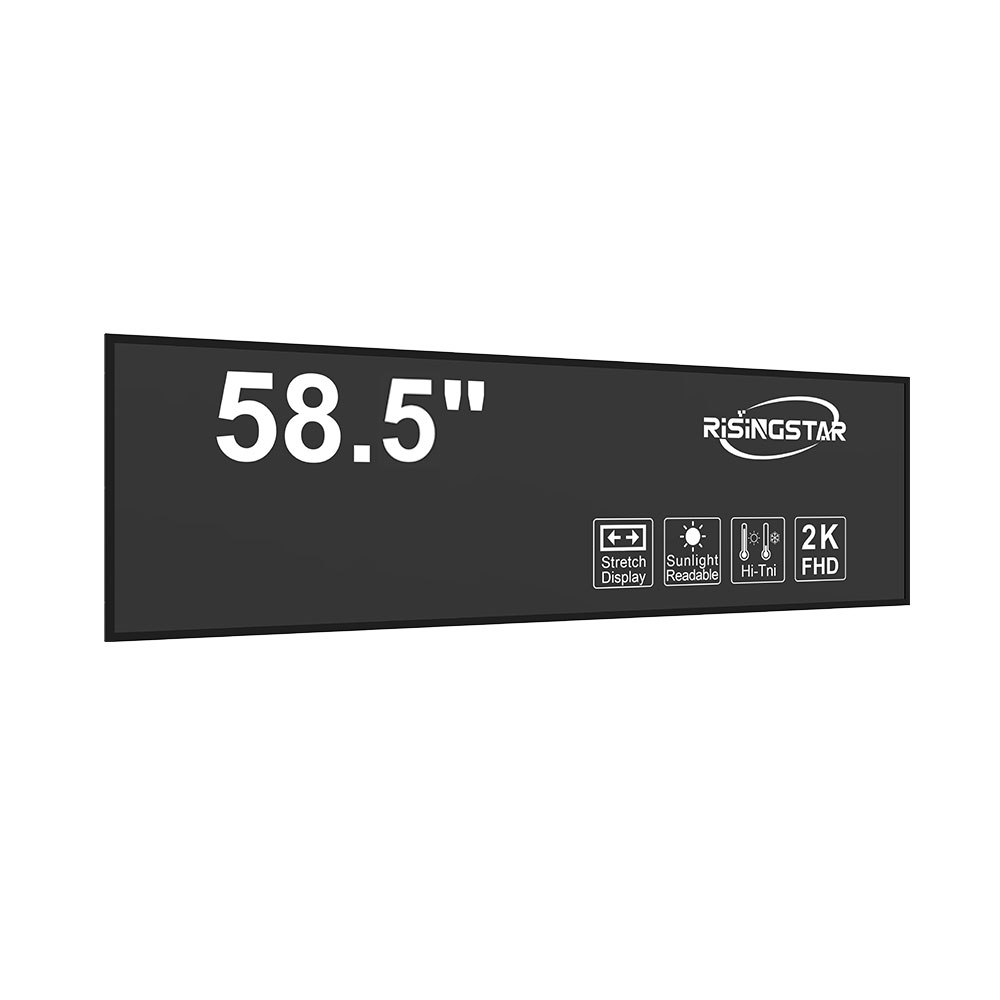
From an engineering perspective, the future of sunlight-readable LCDs includes integration with AI-based adaptive brightness systems that automatically adjust luminance based on ambient light sensors and user behavior patterns. Additionally, advancements in micro-LED backlighting and quantum dot enhancement promise higher contrast ratios (>10,000:1) and improved energy efficiency—key for battery-powered devices used in remote locations.
In conclusion, high-brightness sunlight-readable LCD screens represent a convergence of optical science, materials engineering, and system-level design. As global demand grows—from smart city infrastructure to electric vehicle dashboards—these displays will continue to evolve, driven by innovation, rigorous testing, and adherence to international standards. Their reliability in harsh outdoor environments underscores their role not only as display solutions but as mission-critical components in modern technology ecosystems.