RisingStar
- Home
- About Us
- Products
- News
- Video
- Contact
- Send Inquiry
Search
- Home
- About Us
- Products
- News
- Video
- Contact
- Send Inquiry
RisingStar
High-brightness sunlight-readable LCD screens have become indispensable in modern outdoor and industrial environments where visibility under direct sunlight is critical. These displays are engineered to maintain clarity, contrast, and color accuracy even in intense ambient lighting conditions—commonly found in military vehicles, transportation systems, agricultural machinery, and public information kiosks. A key technical parameter that influences performance and application suitability is the display aspect ratio, most commonly 16:9, which aligns with modern video standards and ensures compatibility with HD and UHD content.
The availability of various screen sizes—from compact 10.1-inch units ideal for handheld devices to massive 110-inch panels used in commercial signage—means engineers can tailor solutions for specific use cases. For example, a 13.3-inch display may be chosen for portable medical equipment due to its balance of portability and readability, while a 55-inch or larger unit might be deployed in outdoor advertising (e.g., digital billboards) where visibility at a distance is essential. According to the International Electrotechnical Commission (IEC), sunlight-readable displays must achieve a minimum brightness of 2,000 nits for reliable operation under direct sunlight—a benchmark now widely adopted by manufacturers such as LG Display, Sharp, and Innolux.
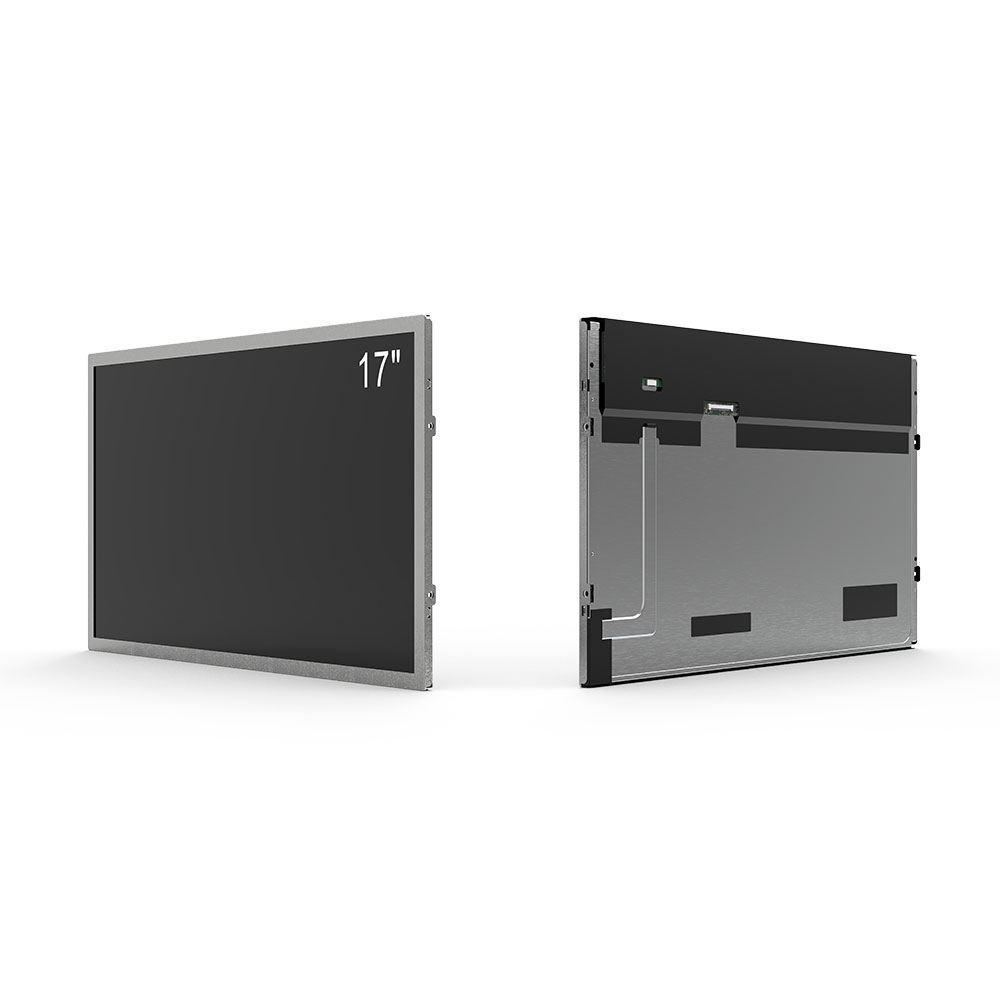
In addition to brightness, advanced technologies like anti-glare coatings, polarized filters, and active matrix addressing (e.g., IPS or TN panels) enhance performance. For instance, an 18.5-inch panel with a 16:9 ratio used in a construction site control system benefits from both high contrast ratios (>1000:1) and wide viewing angles (>170°). Similarly, a 43-inch industrial touchscreen at a power plant must withstand extreme temperatures and humidity while maintaining responsiveness—an engineering challenge met through ruggedized designs certified to IP65 or higher. Case studies from companies like Siemens and Bosch demonstrate that integrating these displays into operational dashboards reduces human error by up to 30% compared to traditional analog indicators.
Manufacturers often provide customization options such as touch overlay integration (capacitive or resistive), backlighting modulation, and embedded processors to reduce system complexity. The growing adoption of these displays in electric vehicle dashboards (e.g., Tesla’s 17-inch center screen) further validates their versatility across consumer and industrial markets. As global demand increases—driven by smart cities, autonomous vehicles, and Industry 4.0 initiatives—the standardization of display specifications including resolution (Full HD to 4K), response time (<5ms), and power efficiency will continue to evolve.