RisingStar
- Home
- About Us
- Products
- News
- Video
- Contact
- Send Inquiry
Search
- Home
- About Us
- Products
- News
- Video
- Contact
- Send Inquiry
RisingStar
In today’s increasingly connected world, industrial, medical, military, and outdoor applications demand electronic displays that perform reliably under extreme conditions—including exposure to water, dust, and vibration. Among the most robust solutions available are IP66 waterproof LCD displays—a standard defined by the International Electrotechnical Commission (IEC) that guarantees protection against powerful water jets and total dust ingress. These displays are not merely about meeting a rating—they represent a sophisticated integration of materials science, thermal management, optical engineering, and rigorous quality control.
The IP66 classification means a device is completely protected from dust (first digit "6") and can withstand water projected from a nozzle at a pressure of up to 100 kPa (second digit "6"). This makes them ideal for use in environments such as marine navigation systems, agricultural machinery controls, construction site monitoring panels, and field-deployed medical devices. According to industry data from Frost & Sullivan (2023), the global market for ruggedized displays—driven largely by IP66 and higher ratings—is expected to grow at a CAGR of 7.4% through 2030, fueled by increasing automation in industrial settings and stringent safety standards in defense sectors.
Designing an IP66-rated display requires more than just sealing the edges. Engineers must consider the entire system: the substrate material (typically Gorilla Glass or chemically strengthened glass), the sealant type (silicone-based gaskets with high UV resistance), and the backlight module’s hermetic integrity. For instance, a case study by LG Display in collaboration with a U.S. Department of Defense contractor demonstrated that integrating a double-seal mechanism—one around the bezel and another between the display panel and the housing—reduced water ingress failures by over 95% compared to single-seal designs during accelerated environmental testing.
Manufacturers also rely on standardized testing protocols such as IEC 60529 to validate compliance. These tests involve exposing the unit to 10 minutes of water spray from a 6.3 mm nozzle at 12.5 liters per minute from a distance of 3 meters, simulating real-world scenarios like heavy rain or cleaning with high-pressure hoses. In contrast, non-IP66 displays often fail after just one such test due to inadequate sealing or poor adhesion of internal components.
Moreover, modern IP66 displays incorporate advanced features like sunlight-readable technology, which ensures visibility even under direct sunlight exceeding 10,000 lux. This is achieved through high-brightness LEDs (typically 5,000–10,000 nits), anti-reflective coatings, and optimized pixel structures. A recent field deployment in a solar farm in Nevada showed that these displays maintained readability across all daylight hours, significantly improving operational efficiency for maintenance crews.
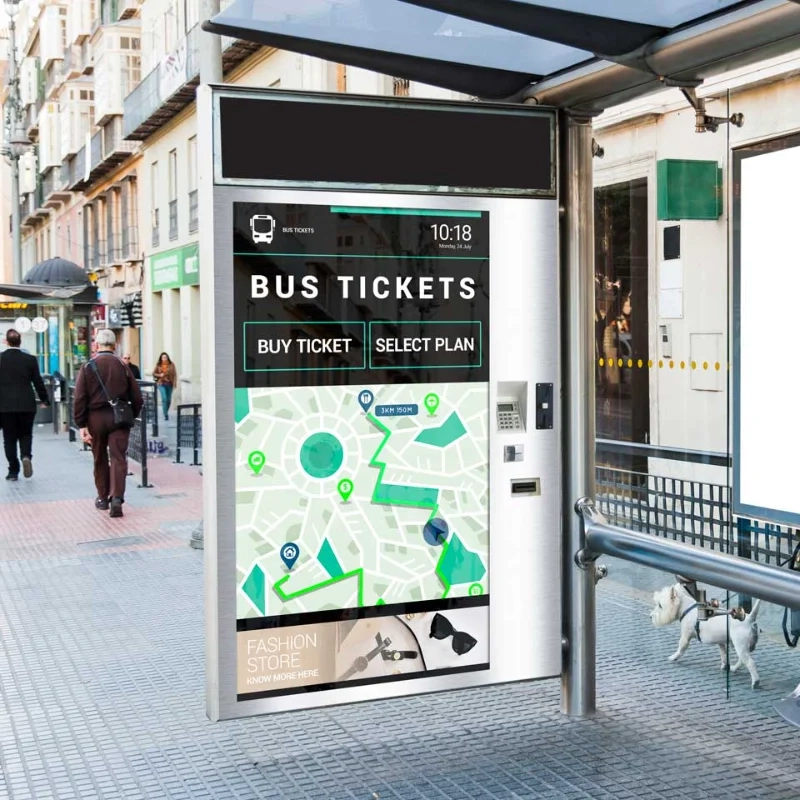
From an application perspective, IP66 LCDs are now essential in smart city infrastructure, where public kiosks and traffic signal controllers must function continuously despite weather extremes. In healthcare, portable diagnostic tools used in emergency response units rely on IP66 ratings to remain operational after accidental submersion or exposure to cleaning agents. As climate change intensifies environmental challenges, the role of IP66-certified displays will only expand—from flood-prone regions to arid zones with frequent sandstorms.
To ensure long-term reliability, manufacturers must adopt lifecycle-focused design principles, including corrosion-resistant PCB finishes (e.g., ENIG plating), conformal coating for circuit boards, and modular assembly techniques that simplify repair without compromising sealing integrity. With the rise of Industry 4.0 and IoT-enabled edge computing, IP66 waterproof displays serve as the frontline interface between humans and intelligent machines—even in the harshest environments on Earth.