RisingStar
- Home
- About Us
- Products
- News
- Video
- Contact
- Send Inquiry
Search
- Home
- About Us
- Products
- News
- Video
- Contact
- Send Inquiry
RisingStar
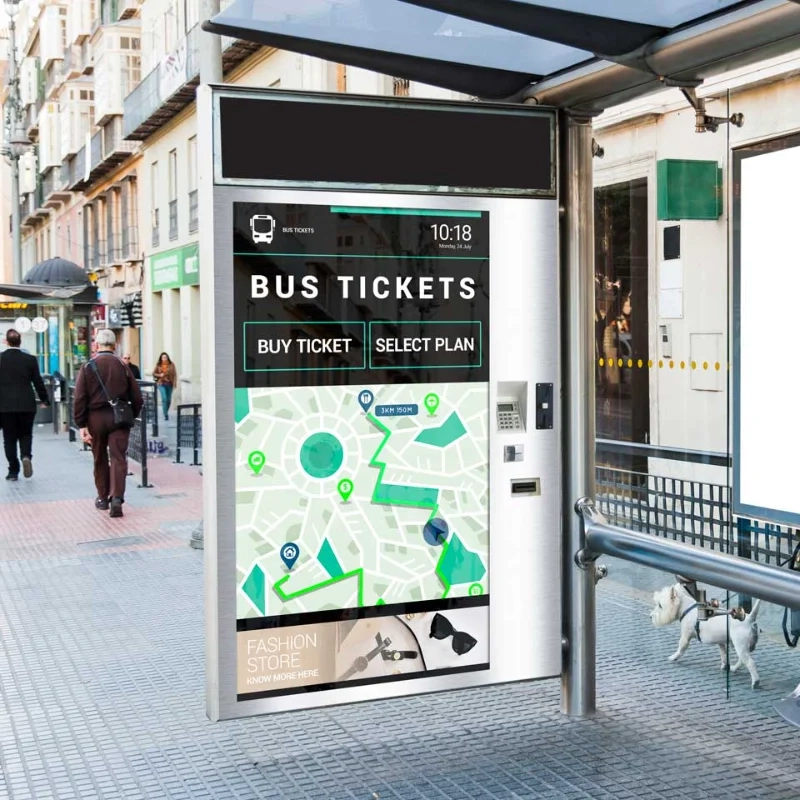
Digital signage outdoor displays have become indispensable tools across industries—from retail and transportation to public safety and advertising—due to their ability to deliver real-time, high-impact visual content even in challenging environmental conditions. These displays are engineered specifically to combat the glare, heat, and light variations of direct sunlight, making them essential for effective communication in open-air settings such as bus stops, airports, shopping malls, stadiums, and government facilities.
One of the defining features of modern outdoor digital signage is brightness. While standard indoor LCDs typically operate at 200–400 nits (candelas per square meter), outdoor displays must achieve at least 5,000 nits to remain visible under full sunlight—a requirement that aligns with industry standards like the IEC 60747-19 for display brightness in adverse environments. Leading manufacturers now produce panels with up to 10,000 nits peak brightness using advanced LED backlighting technologies, such as local dimming and dynamic contrast control, which enhance both visibility and energy efficiency.
Another critical factor in outdoor digital signage is durability. These units are often encased in IP65 or higher-rated enclosures to protect against dust, rain, and extreme temperatures ranging from -30°C to +60°C. Materials like aluminum alloy frames and tempered glass help reduce thermal expansion while maintaining structural integrity. In addition, many systems incorporate fanless designs and passive cooling solutions to prevent mechanical failure in dusty or humid environments—an important consideration for long-term deployment in cities like Dubai, Phoenix, or Singapore.
Content management platforms play a vital role in maximizing ROI. Solutions like BrightSign, Xibo, and Screenly offer cloud-based dashboards that allow remote scheduling, asset updates, and performance monitoring across thousands of devices. For example, during the 2023 Tokyo Olympics, over 1,200 outdoor digital signs were used to provide live updates, multilingual navigation, and emergency alerts—all synchronized via a centralized CMS that ensured consistency and reliability in high-stress scenarios.
Case studies show measurable impacts: A retail chain in Los Angeles increased foot traffic by 27% after installing 30 high-brightness outdoor digital displays at strategic locations near subway stations. Similarly, a study by the University of Michigan found that drivers responded 34% faster to traffic advisories displayed on sunlight-readable screens compared to traditional static signs, highlighting the cognitive advantages of dynamic visuals in outdoor contexts.
Moreover, advancements in AI-driven content personalization are transforming how these displays engage audiences. Facial recognition, motion detection, and time-of-day algorithms now enable adaptive messaging—for instance, promoting cold beverages in summer afternoons or offering discounts during rush hours. This level of interactivity increases dwell time and brand recall, particularly when integrated with IoT sensors and edge computing capabilities.
As cities adopt smart infrastructure initiatives, digital signage outdoor displays are evolving beyond mere information kiosks into intelligent urban interfaces. The integration of 5G connectivity, solar power modules, and modular design allows for scalable deployments that support future-proofing strategies. With the global outdoor digital signage market projected to exceed $18 billion by 2027 (per Statista and MarketsandMarkets reports), investing in sunlight-readable technology is not just an option—it’s a competitive necessity for forward-thinking organizations.