 RisingStar
- Home
- About Us
- Products
- News
- Video
- Contact
- Send Inquiry
Search
- Home
- About Us
- Products
- News
- Video
- Contact
- Send Inquiry
RisingStar
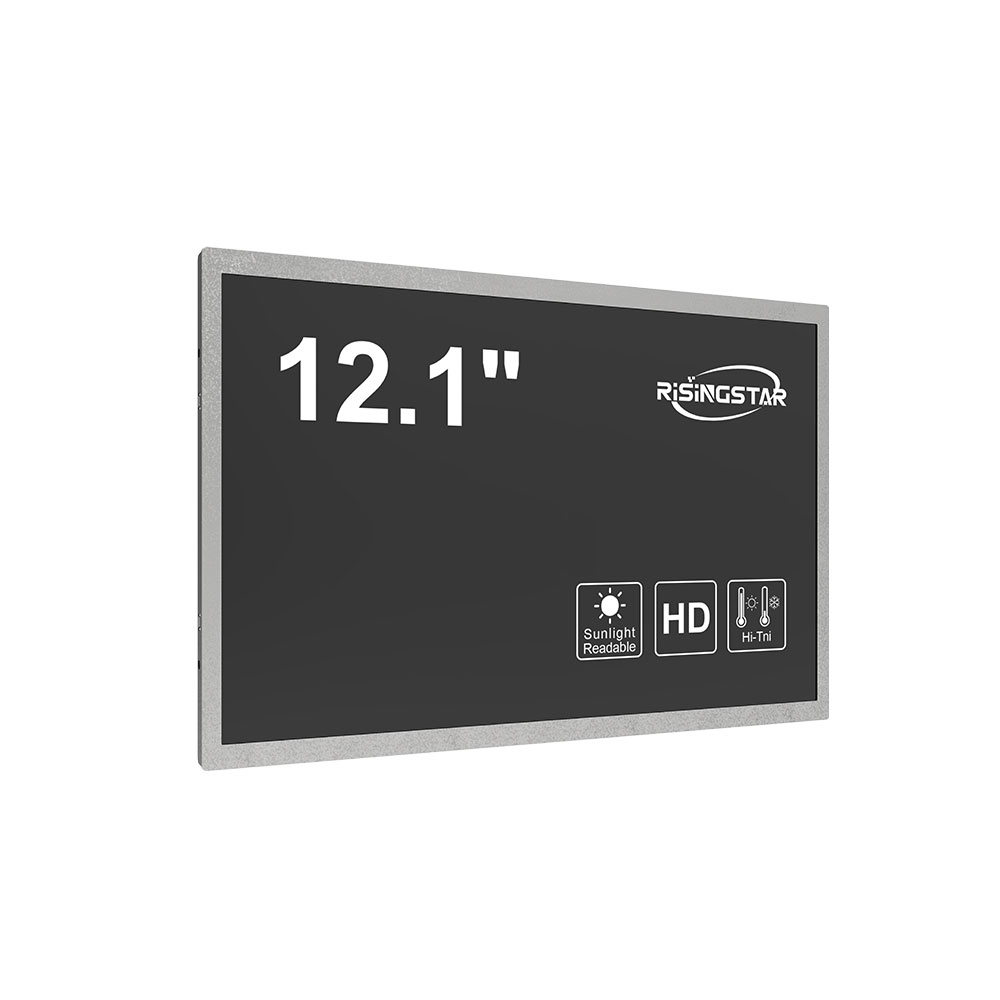
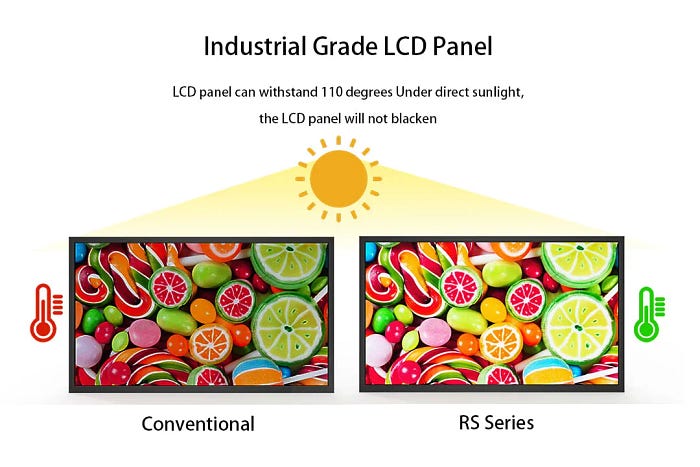
High-brightness sunlight-readable LCD screens are critical components in modern industrial, military, aerospace, and outdoor environments where visibility under direct sunlight is essential. These displays are engineered to maintain clarity, contrast, and color accuracy even under extreme lighting conditions—such as bright daylight, glare, or low-light settings—making them indispensable for applications like vehicle dashboards, command-and-control systems, field medical devices, and construction equipment. With the increasing demand for high-resolution visuals in such environments, manufacturers now offer models supporting both 2K (2560×1440) and 4K (3840×2160) resolution options, delivering unprecedented detail and user experience.
The evolution from standard HD (1280×720) to 2K and 4K has been driven by the need for enhanced situational awareness and data density. For instance, in defense applications, 4K resolution allows operators to discern fine details on maps, satellite imagery, or thermal sensor feeds, which can be crucial during reconnaissance missions. Similarly, in automotive engineering, a 2K display embedded in a ruggedized dashboard ensures that drivers can read navigation routes, vehicle diagnostics, and safety alerts clearly—even when driving at high speeds under full sun. The key to achieving this performance lies not only in pixel density but also in advanced backlighting technologies, anti-glare coatings, and optimized panel architectures.
Modern sunlight-readable LCDs utilize high-luminance LED backlights capable of up to 10,000 nits—over 30 times brighter than typical indoor displays—to combat ambient light interference. Additionally, some models incorporate adaptive brightness control, which dynamically adjusts luminance based on environmental lighting conditions, optimizing power efficiency while maintaining readability. According to industry benchmarks from the Society for Information Display (SID), 4K sunlight-readable panels must meet MIL-STD-810G shock and vibration standards and operate reliably across temperatures ranging from -30°C to +70°C, ensuring robustness in harsh climates.
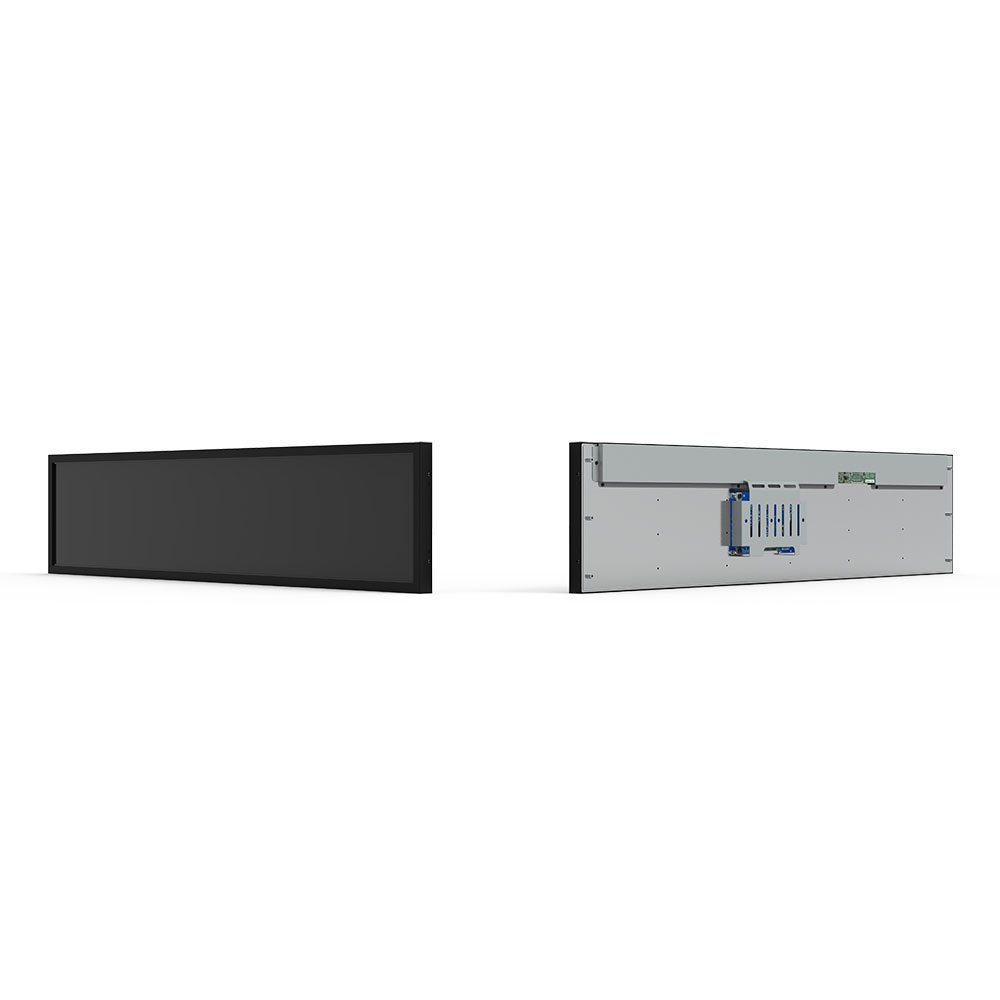
Manufacturers such as LG, BOE, and Sharp have introduced commercial-grade 2K and 4K sunlight-readable LCD modules specifically designed for integration into rugged enclosures. These modules often feature wide viewing angles (>170°), high contrast ratios (up to 5000:1), and support for multiple input interfaces (HDMI, LVDS, MIPI). Case studies from NASA’s Mars rovers and U.S. Navy shipboard systems confirm that 4K resolution significantly improves operator decision-making speed and reduces cognitive load during complex tasks. Furthermore, recent advancements in OLED-based sunlight-readable displays promise higher contrast and faster response times, although cost and lifetime durability remain considerations.
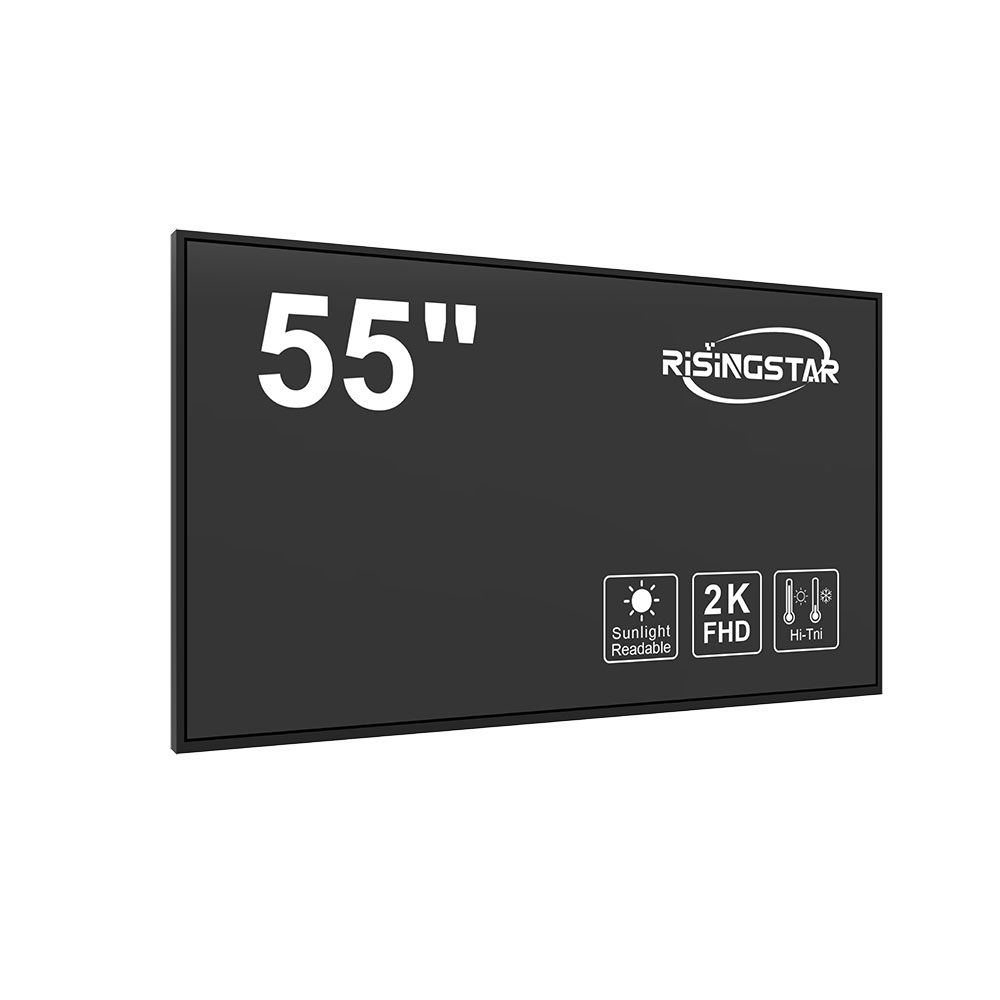
For system integrators, choosing between 2K and 4K depends on application-specific needs: 2K offers a compelling balance of resolution, cost, and power consumption for most mid-tier industrial uses, while 4K is ideal for mission-critical operations requiring ultra-high-definition visual fidelity. As global markets increasingly prioritize digital transformation in outdoor and mobile platforms—from autonomous vehicles to smart infrastructure—the availability of 2K and 4K resolution options in sunlight-readable LCDs represents a major leap forward in human-machine interface design.