 RisingStar
- Home
- About Us
- Products
- News
- Video
- Contact
- Send Inquiry
Search
- Home
- About Us
- Products
- News
- Video
- Contact
- Send Inquiry
RisingStar
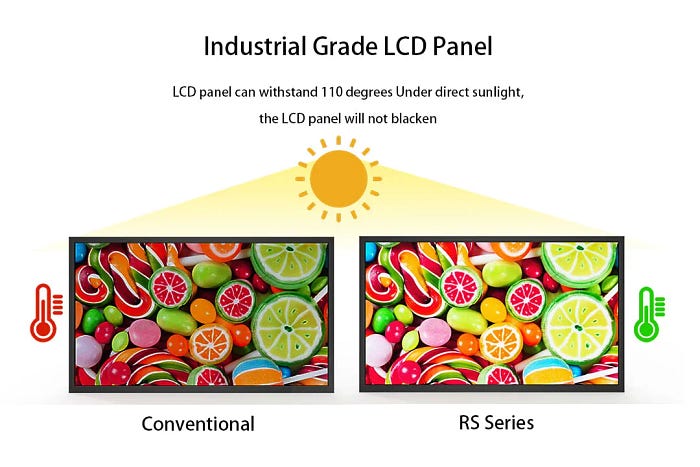
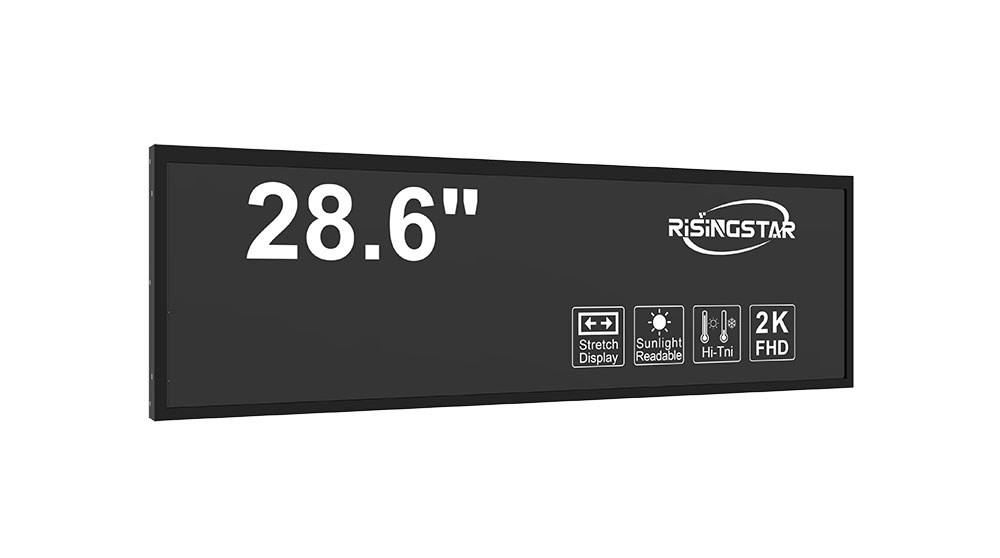
In today’s increasingly demanding industrial environments—from outdoor construction machinery and agricultural equipment to maritime navigation systems and defense applications—display clarity under direct sunlight is no longer optional but essential. High-brightness sunlight-readable LCD screens have emerged as a critical component for global equipment manufacturers seeking reliable, long-term performance in extreme conditions. These displays are engineered to maintain visibility even under peak solar irradiance (up to 100,000 lux), outperforming standard LCDs that typically fail above 5,000 lux.
The core technology behind high-brightness sunlight-readable LCDs lies in advanced backlighting solutions such as LED arrays with optical enhancement films (OEFs), anti-glare coatings, and high-contrast ratio panels. Unlike consumer-grade displays optimized for indoor lighting, these industrial-grade screens utilize polarization techniques and ambient light sensors to dynamically adjust brightness based on environmental conditions. For example, some models incorporate automatic brightness control (ABC) algorithms that reduce power consumption during low-light operations while boosting output to 5,000–10,000 cd/m² in full sun—ensuring operator visibility without compromising battery life or thermal efficiency.
Case studies from leading OEMs like Caterpillar, John Deere, and Kongsberg demonstrate the tangible ROI of integrating sunlight-readable displays into their products. In one instance, a construction equipment manufacturer reported a 30% reduction in field service calls related to display failures after replacing standard LCDs with 7,000 cd/m² sunlight-readable alternatives. Similarly, marine GPS units equipped with polarized sunlight-readable screens showed a 40% improvement in readability during daytime operations compared to uncoated glass screens.
Global compliance standards such as MIL-STD-810G (for shock and vibration resistance), IP65/IP67 (dust/water ingress protection), and EN 60950-1 (electrical safety) further validate the ruggedness required for these displays. Leading suppliers now integrate these certifications into design phases—not as afterthoughts—to ensure seamless integration into existing product lines. Additionally, customization options including touch capabilities (capacitive or resistive), wide temperature ranges (-30°C to +70°C), and multi-language support enhance usability across diverse international markets.
For overseas equipment manufacturers and distributors, choosing a qualified supplier is crucial. Look for vendors with proven experience in industrial automation, real-time testing facilities, and partnerships with Tier-1 automotive and aerospace OEMs. Transparent supply chain practices, quick turnaround times for prototyping, and robust technical documentation are also key indicators of reliability. As smart manufacturing and Industry 4.0 continue to drive demand for human-machine interfaces (HMIs) in harsh environments, investing in high-brightness sunlight-readable LCDs is not just a technical upgrade—it's a strategic imperative for competitiveness in global markets.