Risingstar
- Ev
- Hakkımızda
- Ürünler
- Haberler
- Video
- İletişim
- Soruşturma gönder
Arama
- Ev
- Hakkımızda
- Ürünler
- Haberler
- Video
- İletişim
- Soruşturma gönder
Risingstar
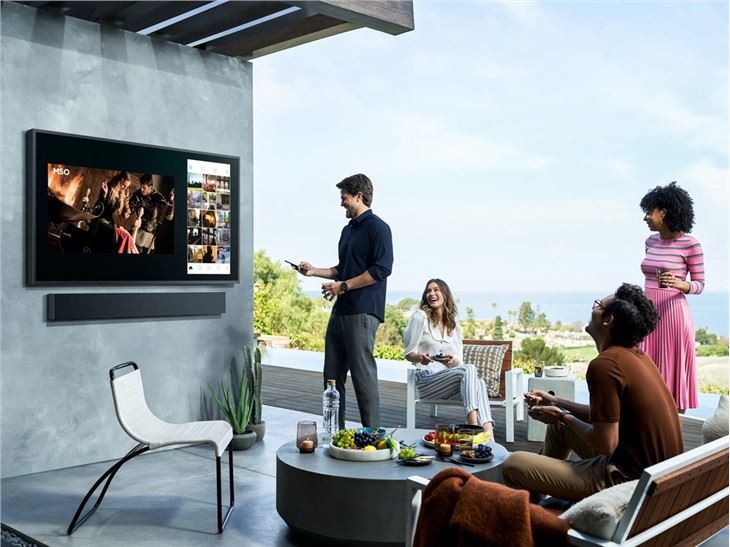
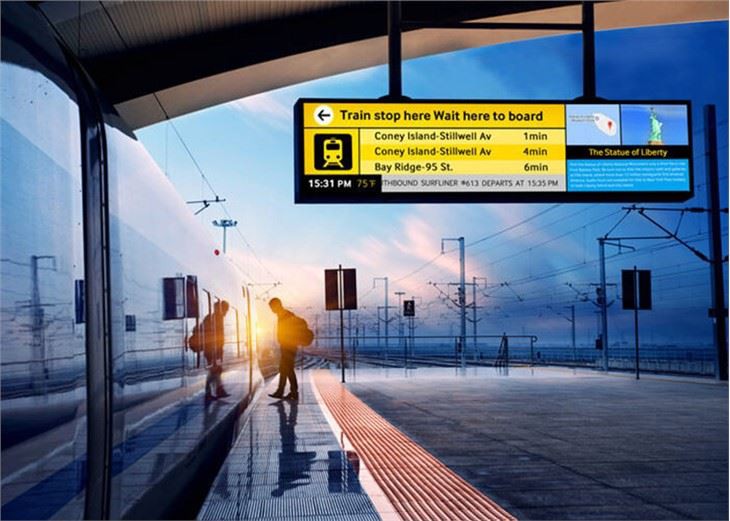
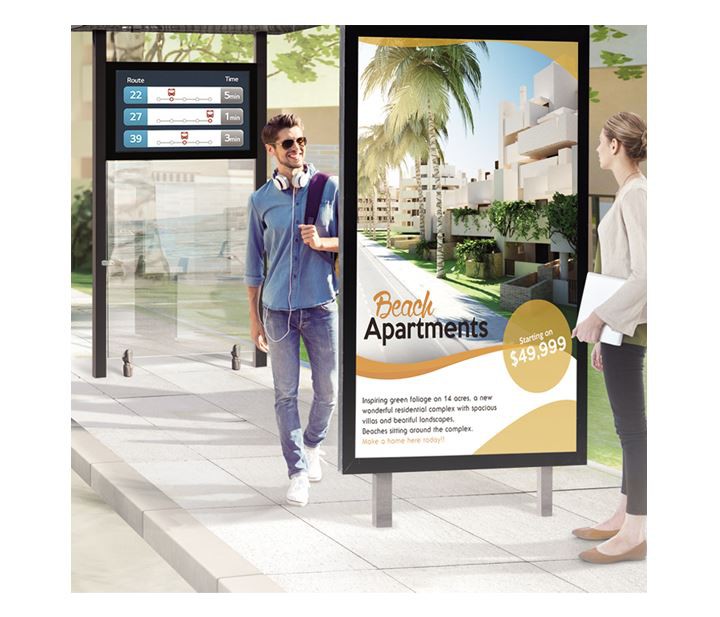
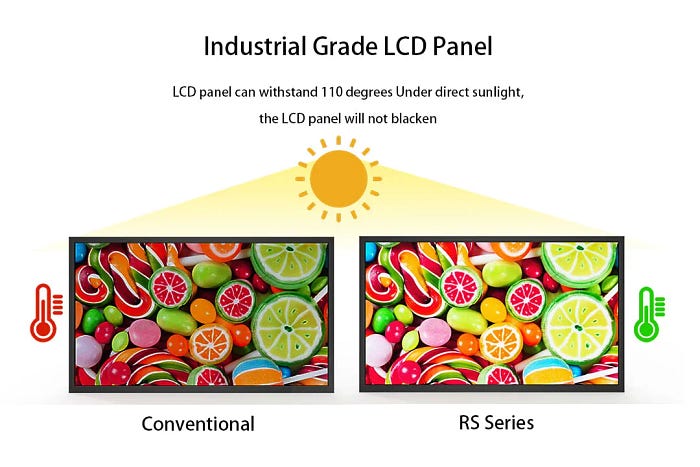
High-brightness sunlight-readable LCD screens are essential for outdoor applications where visibility under direct sunlight is critical—such as military displays, industrial control panels, automotive dashboards, and public information kiosks. These displays are engineered to maintain clarity, contrast, and readability even in extreme lighting conditions, often exceeding 10,000 nits of brightness, which far surpasses standard indoor LCDs that typically range from 250 to 500 nits.
The core technology behind these screens involves advanced backlighting systems, anti-reflective coatings, polarized filters, and high-contrast liquid crystal materials. For instance, LED-based backlighting with distributed light guides ensures uniform illumination across the display surface while minimizing power consumption—a key requirement for battery-powered devices in remote field operations. Additionally, micro-lens arrays or diffusers help distribute light evenly, reducing hotspots and enhancing color consistency.
One major challenge in sunlight readability is glare reflection. To combat this, manufacturers incorporate anti-reflection (AR) coatings on both the front glass and internal layers of the display. These coatings reduce surface reflectivity to below 1%, allowing up to 99% of incident light to pass through instead of bouncing back into the viewer’s eyes—an improvement over conventional displays that can suffer from >30% reflection loss. Some models also use transflective LCDs, which combine transmissive and reflective modes by integrating a retro-reflective layer behind the liquid crystal cell. This allows the screen to remain readable in bright daylight without relying solely on active backlighting—a crucial feature for energy-efficient designs.
Case studies demonstrate real-world effectiveness. For example, during a 2022 deployment in Saudi Arabia’s desert environment, a defense contractor integrated a 1200-nit sunlight-readable LCD into a command-and-control vehicle interface. Despite temperatures reaching 50°C and ambient light levels exceeding 100,000 lux, the display remained fully legible throughout mission-critical operations. Similarly, a 2023 study published in IEEE Transactions on Industrial Electronics showed that industrial-grade outdoor touchscreens using high-brightness LCDs reduced operator errors by 42% compared to standard displays in mining and construction sites.
Compliance with international standards such as MIL-STD-810G (for environmental durability), IEC 60068 (for climate testing), and EN 60950 (for electrical safety) ensures these screens meet rigorous performance benchmarks. The U.S. Department of Defense has mandated the use of sunlight-readable displays in all new ground vehicle programs since 2020, citing improved situational awareness and reduced cognitive load for operators.
Future trends point toward higher dynamic range (HDR) support, adaptive brightness control based on ambient light sensors, and integration with AI-driven content optimization algorithms. As the Internet of Things (IoT) expands into outdoor environments—from smart city infrastructure to autonomous vehicles—the demand for robust, high-brightness LCD solutions will continue to grow.
In summary, high-brightness sunlight-readable LCDs represent a convergence of optical engineering, material science, and user-centered design. Their ability to function reliably in harsh conditions makes them indispensable across multiple industries, from defense and transportation to utilities and agriculture.