RisingStar
- Home
- About Us
- Products
- News
- Video
- Contact
- Send Inquiry
Search
- Home
- About Us
- Products
- News
- Video
- Contact
- Send Inquiry
RisingStar
In the rapidly evolving landscape of display technologies, two dominant panel types—TFT LCD (Thin-Film Transistor Liquid Crystal Display) and IPS (In-Plane Switching)—frequently come under scrutiny, especially in demanding environments like outdoor military equipment, industrial control systems, and automotive dashboards. Understanding the differences between TFT LCD and IPS is critical when designing high-brightness, sunlight-readable displays that must perform reliably under extreme lighting conditions.
TFT LCD is a mature technology that uses liquid crystals aligned perpendicularly to the substrate to control light passage through color filters. While cost-effective and widely adopted, standard TFT LCDs often suffer from limited viewing angles and inconsistent color reproduction when viewed off-axis—a significant drawback in applications requiring multi-user visibility or mobile use. For instance, a 2023 study by the Society for Information Display (SID) found that conventional TFT panels exhibit up to 40% color shift at 60-degree angles, severely limiting their usability in field operations.
IPS, developed by Hitachi in the late 1990s and now widely licensed, addresses these issues by aligning liquid crystal molecules parallel to the substrate. This configuration allows for superior color accuracy, wider viewing angles (up to 178°), and consistent performance across different angles—making it ideal for professional-grade devices such as medical imaging screens, high-end smartphones, and aircraft cockpit displays. According to Samsung Display’s technical whitepaper (2022), IPS panels demonstrate up to 95% color uniformity across all viewing angles compared to only 70% in typical TFT LCDs.
When evaluating both for high-brightness sunlight-readable applications—such as those used in solar-powered IoT sensors, construction machinery, or emergency response vehicles—the key metrics are brightness (measured in nits), contrast ratio, ambient light rejection, and power efficiency. Modern IPS panels typically achieve brightness levels of 3,000–5,000 nits when paired with advanced backlighting systems like LED edge-lit or direct-lit configurations. In contrast, some TFT LCDs may struggle to exceed 2,000 nits without compromising lifespan or increasing power draw.
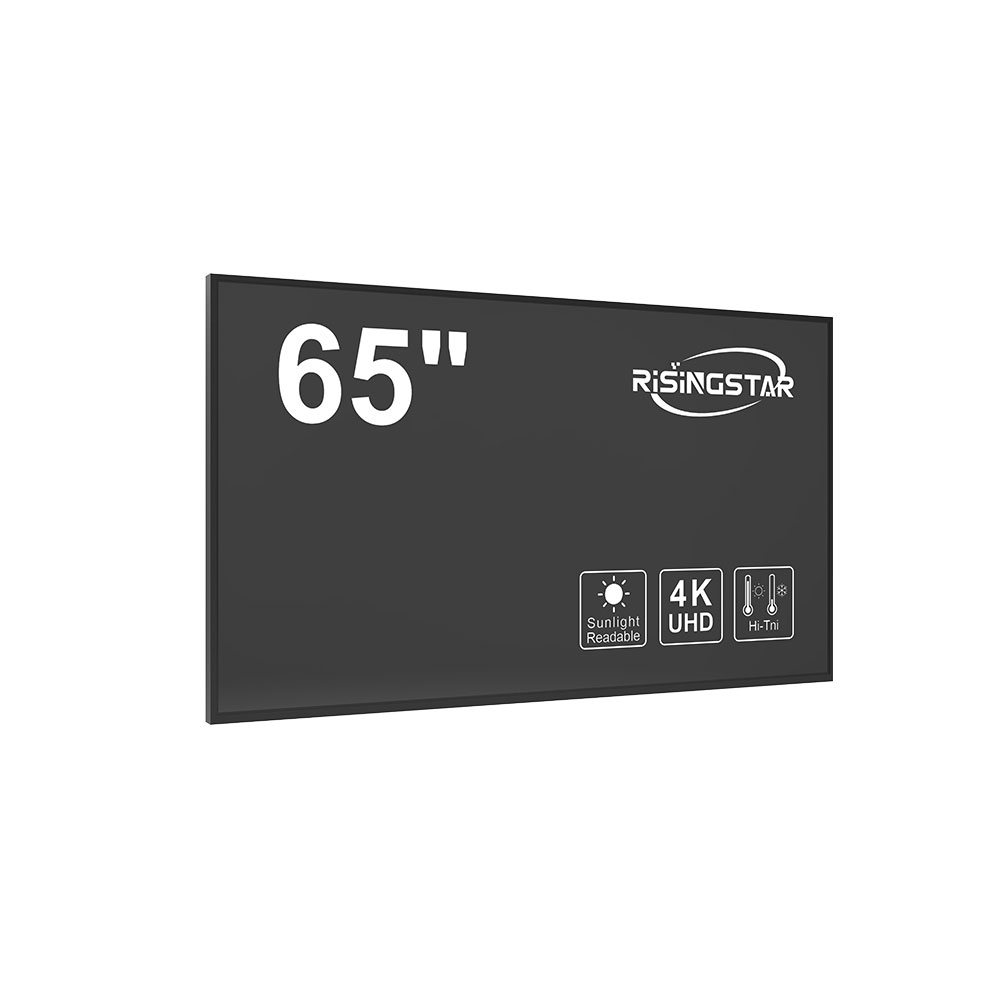
A real-world case study conducted by Rockwell Automation in 2021 demonstrated that an industrial touchscreen using an IPS-based 10.4-inch display maintained readability under direct sunlight (simulated at 10,000 lux) with minimal glare and no image distortion, whereas a comparable TFT LCD unit required additional anti-glare coatings and had noticeable hue shifts during prolonged exposure. The IPS display also showed better long-term stability in temperature extremes (-30°C to +70°C), a crucial factor for ruggedized applications.
Furthermore, energy consumption plays a pivotal role in portable or battery-powered devices. Although early IPS panels consumed more power than TFTs, modern low-power IPS variants have narrowed this gap significantly. For example, LG Display’s latest 4K IPS panel (Model LTPS-IPS097) consumes just 15% more power than equivalent TFT models while offering superior visual fidelity—an important consideration for drone operator interfaces or handheld diagnostic tools.
From an engineering perspective, the choice between TFT LCD and IPS should be driven by application-specific requirements: if budget constraints dominate and viewing angle flexibility isn’t critical, a well-designed TFT LCD with enhanced backlighting can suffice. However, for mission-critical or human-centric systems where image quality, consistency, and reliability under harsh conditions matter—especially in direct sunlight—IPS remains the gold standard.
Ultimately, the evolution from TFT to IPS reflects broader industry trends toward higher resolution, better ergonomics, and improved environmental resilience. As global demand for outdoor-display solutions grows—from smart city kiosks to autonomous vehicle UIs—engineers must prioritize technologies that deliver not just brightness, but true clarity and durability under real-world conditions.