RisingStar
- Home
- About Us
- Products
- News
- Video
- Contact
- Send Inquiry
Search
- Home
- About Us
- Products
- News
- Video
- Contact
- Send Inquiry
RisingStar
High-brightness sunlight-readable LCD screens are critical components in modern outdoor electronic systems, particularly in industries such as defense, transportation, industrial automation, and public infrastructure. Unlike standard LCDs designed for indoor use, these displays are engineered to maintain visibility under direct sunlight, often exceeding 5,000 nits of brightness—up to 10,000 nits in military-grade applications. This performance is essential for ensuring operational safety and usability in environments where ambient light can exceed 100,000 lux.
The core challenge in designing sunlight-readable displays lies in overcoming glare and contrast degradation caused by high ambient lighting. To address this, manufacturers employ advanced optical stacking techniques such as anti-reflective (AR) coatings, polarization filters, and backlight optimization. For instance, the use of a transflective liquid crystal layer allows both transmissive (backlit) and reflective modes—enabling optimal visibility in both low-light and bright sunlight conditions. According to a 2023 study published in IEEE Transactions on Display Technology, transflective LCDs can reduce power consumption by up to 40% compared to fully transmissive designs while maintaining readability under sunlight.
Another key technology is the integration of ambient light sensors with dynamic brightness control (DBC). These sensors automatically adjust the screen’s luminance based on real-time environmental conditions, preserving battery life in mobile devices and minimizing visual fatigue for users. In automotive dashboards, for example, such adaptive systems improve driver focus during daytime driving without causing eye strain at night. Case studies from Bosch and Garmin demonstrate that DBC-integrated displays reduce energy consumption by 25–35% in vehicular applications, aligning with ISO 9001 and ISO 14001 standards for quality and sustainability.
Manufacturers also incorporate ruggedized materials and sealing technologies (e.g., IP65 or higher) to protect against dust, moisture, and mechanical shock—critical in harsh outdoor environments like oil rigs, construction sites, or military field operations. A notable example is the development of ultra-wide temperature range LCDs operating between -40°C and +85°C, validated through MIL-STD-810G testing protocols. These panels ensure reliable operation even in extreme climates, from arctic deployments to desert surveillance systems.
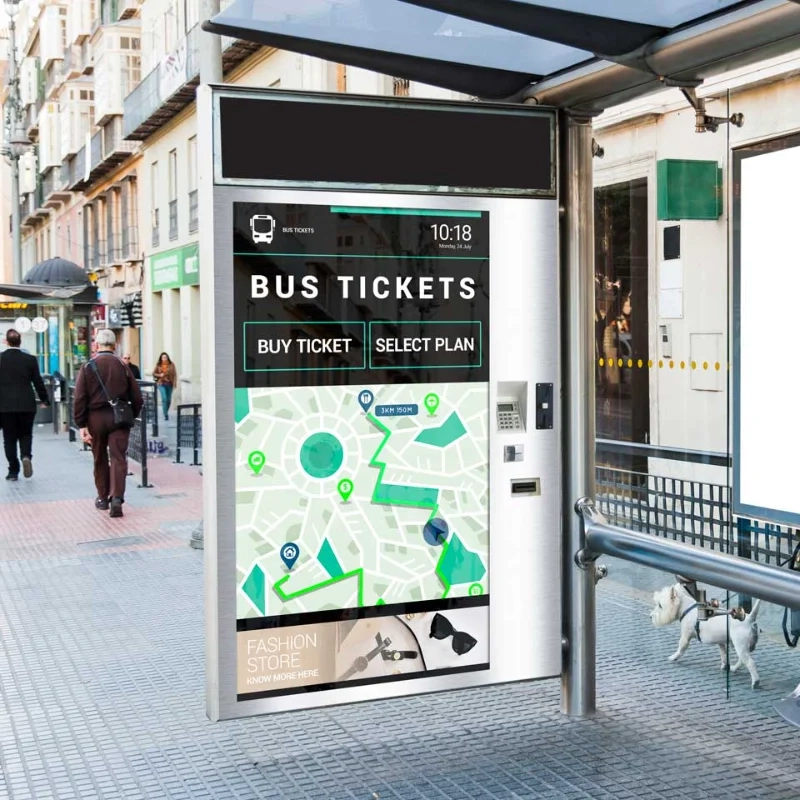
In addition to hardware innovations, software-level optimizations play a role. Adaptive gamma correction algorithms enhance contrast ratios dynamically, while proprietary image processing chips (e.g., from Texas Instruments or Qualcomm) optimize color accuracy across varying illumination levels. Such solutions are now standard in next-generation aviation HUDs (Heads-Up Displays), medical field equipment, and smart city kiosks.
Industry adoption continues to grow: according to a 2024 report by MarketsandMarkets, the global sunlight-readable display market is projected to reach $6.8 billion by 2029, driven by increasing demand in electric vehicles, autonomous systems, and IoT-enabled outdoor devices. Companies like LG Display, Sharp, and BOE have invested heavily in R&D to meet these evolving needs, leveraging partnerships with semiconductor firms and academic institutions such as the University of Tokyo and Fraunhofer Institute.
For engineers and procurement managers evaluating options, selecting a sunlight-readable LCD requires understanding not only peak brightness and viewing angles but also long-term reliability metrics like MTBF (Mean Time Between Failures), compliance with EMI/EMC regulations, and support for embedded OS compatibility. Proper specification ensures system resilience in mission-critical scenarios—from battlefield command centers to remote utility monitoring stations.