RisingStar
- Home
- About Us
- Products
- News
- Video
- Contact
- Send Inquiry
Search
- Home
- About Us
- Products
- News
- Video
- Contact
- Send Inquiry
RisingStar
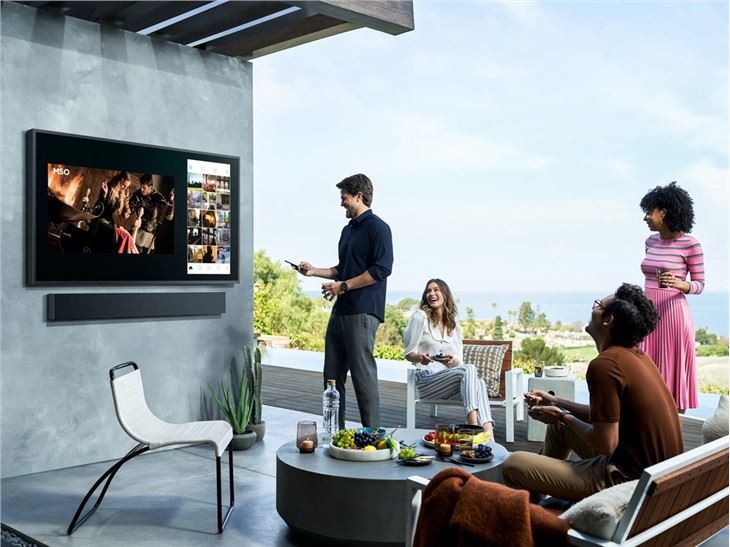
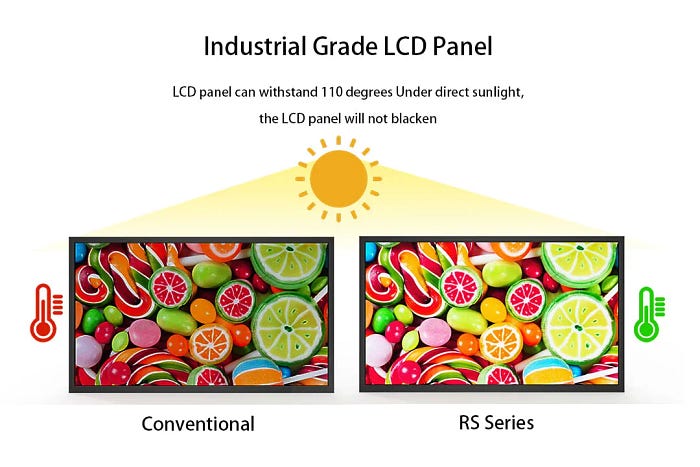
High-brightness sunlight-readable LCD displays are essential in modern outdoor and industrial applications where visibility under direct sunlight is critical. These specialized screens, often rated at 5,000 nits or more, surpass the brightness of standard consumer-grade LCDs (typically 300–500 nits), ensuring clear visibility even in full daylight conditions. Industries such as defense, transportation, agriculture, construction, and medical equipment rely on these displays for mission-critical operations.
The core technology behind sunlight-readable LCDs includes high-luminance LED backlighting, anti-reflective coatings, and optimized panel design. For example, Transmissive Liquid Crystal Displays (LCDs) with edge-lit or direct-lit LED backlights provide uniform illumination across the screen surface while consuming minimal power. In contrast, reflective and transflective modes enhance readability by leveraging ambient light—ideal for battery-powered devices like handheld GPS units or ruggedized tablets used in field service work.
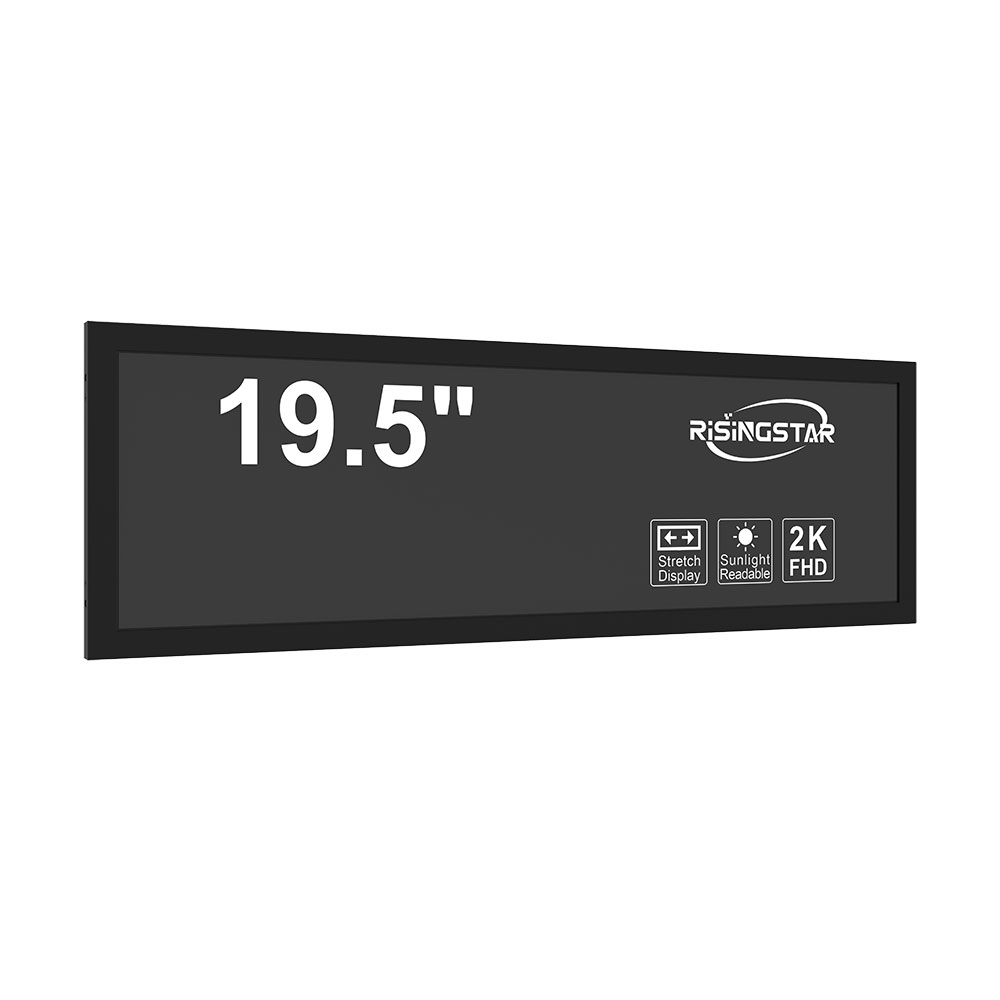
According to industry standards such as MIL-STD-810G and IEC 60068, these displays must withstand extreme temperatures (-30°C to +70°C), shock, vibration, humidity, and dust exposure. Companies like LG Display, Sharp, and AU Optronics have developed proprietary technologies such as “Sunlight Readable” (LG) and “TFT-LCD High Brightness” (Sharp) that incorporate dynamic contrast adjustment and intelligent brightness control algorithms. These features adapt the display output based on ambient light sensors, reducing energy consumption without compromising legibility.
Real-world case studies validate their effectiveness. For instance, the U.S. Army’s Joint Tactical Radio System (JTRS) uses 7-inch sunlight-readable LCDs in its field radios, enabling soldiers to read data in open desert environments during midday sun. Similarly, agricultural drones equipped with 1280x800 resolution high-brightness panels allow farmers to monitor crop health in real-time under intense solar radiation—a feature now common in AgTech solutions from companies like DJI and Precisionhawk.
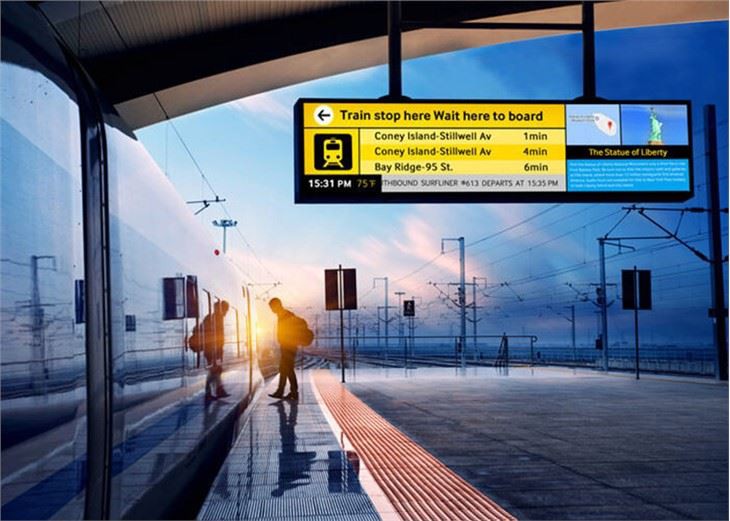
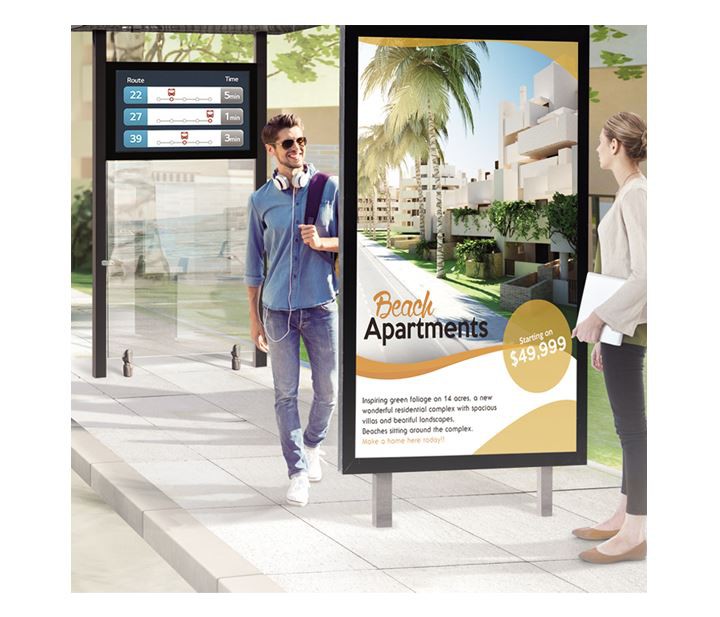
Furthermore, the rise of IoT-enabled devices has increased demand for ruggedized displays in smart city infrastructure, such as traffic signal controllers and public kiosks. These systems require not only high brightness but also long-term reliability and low maintenance. Recent studies by the International Electrotechnical Commission (IEC) confirm that properly engineered sunlight-readable displays achieve over 100,000 hours of operational life under continuous outdoor use, significantly outperforming standard displays exposed to similar conditions.
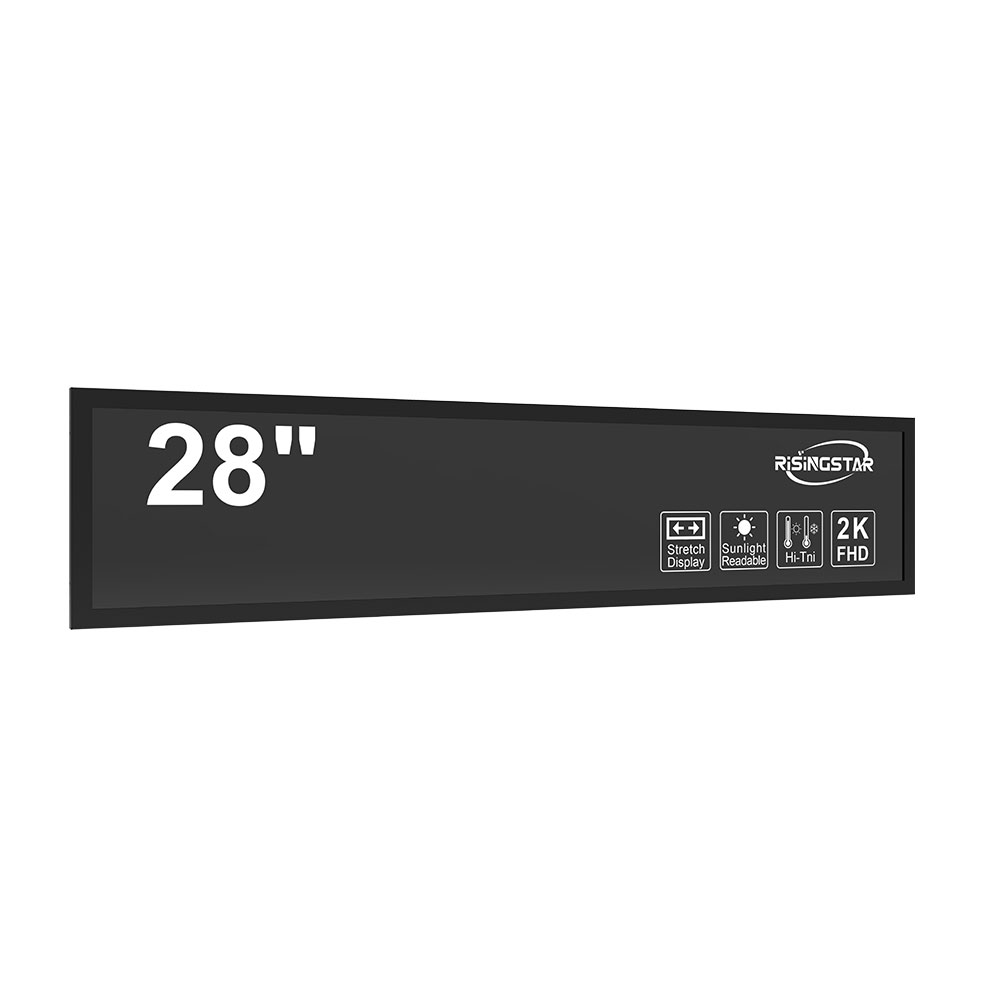
To ensure optimal performance, manufacturers must integrate proper thermal management, use UV-resistant materials, and employ advanced polarizer layers to minimize glare. As global markets shift toward sustainable and durable electronics, high-brightness sunlight-readable LCDs represent a convergence of engineering excellence, environmental resilience, and user-centric design—an indispensable component of next-generation outdoor technology.