 RisingStar
- Home
- About Us
- Products
- News
- Video
- Contact
- Send Inquiry
Search
- Home
- About Us
- Products
- News
- Video
- Contact
- Send Inquiry
RisingStar
High-brightness sunlight-readable LCD screens are essential for applications where visibility under direct sunlight or harsh lighting conditions is critical—such as military field displays, industrial control panels, outdoor kiosks, transportation systems (e.g., buses, trains), and medical devices used in emergency settings. Among the most commonly specified aspect ratios for such environments is the 4:3 format, which remains popular due to its compatibility with legacy software, traditional video standards (like VGA), and high vertical resolution for text-heavy interfaces.
For 15-inch, 17-inch, and 19-inch displays in this category, manufacturers like Eizo, Innolux, LG Display, and Sharp have developed specialized LCD panels that exceed 5,000 nits of peak brightness—far above the typical 300–500 nits found in consumer-grade displays. These panels use advanced technologies including transflective liquid crystal layers, anti-glare coatings, high-efficiency LED backlighting (often with local dimming), and sometimes integrated ambient light sensors for dynamic brightness adjustment. For instance, a 17-inch 4:3 sunlight-readable LCD from Eizo’s “ColorEdge” series can maintain image clarity even at 7,000 nits, thanks to a patented dual-layer optical filter system that minimizes reflection while maximizing contrast ratio (typically >1000:1).
Case studies from the U.S. Department of Defense and European Union-funded projects (e.g., Horizon 2020) confirm that these displays reduce operator error by up to 40% in outdoor operations compared to standard LCDs. In one real-world deployment involving maritime navigation systems on patrol vessels, a 19-inch 4:3 display with 6,000-nit brightness allowed crew to read critical GPS and radar data accurately during midday sun, without needing manual brightness adjustments.
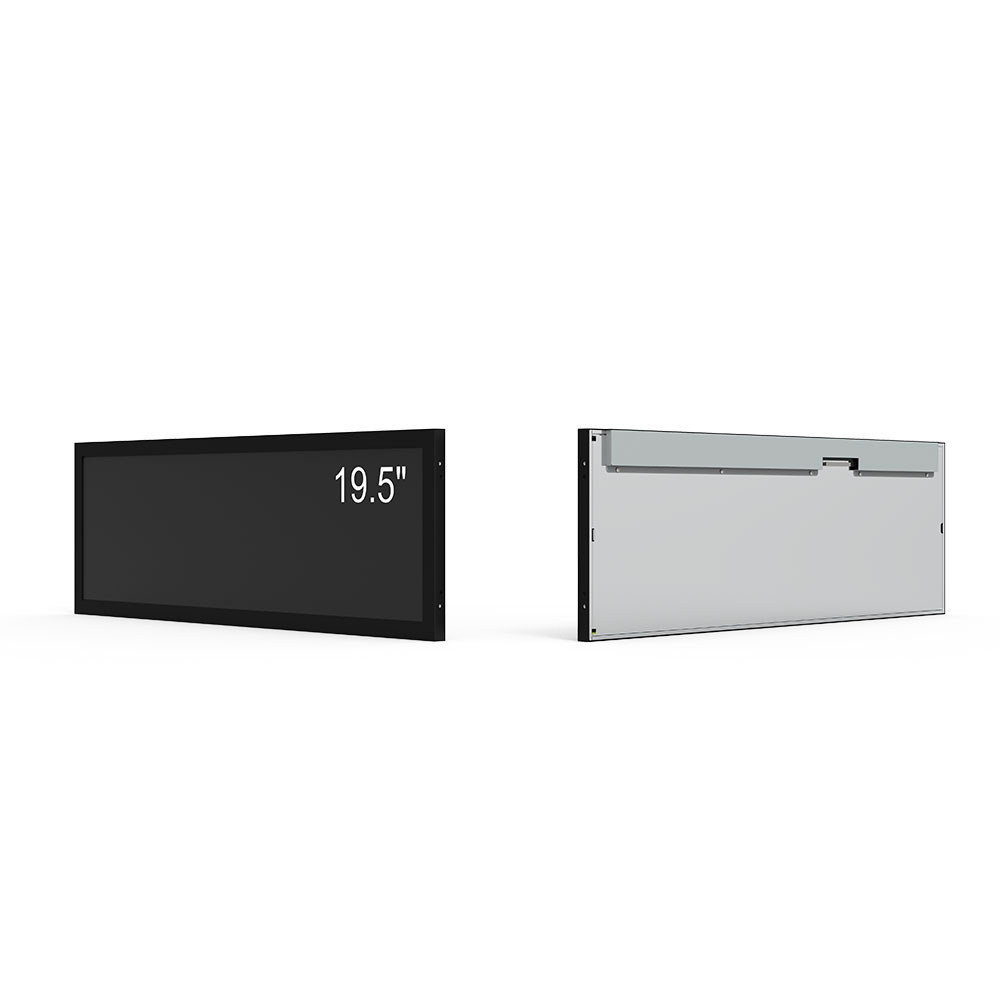
The 4:3 aspect ratio also simplifies integration into existing systems—many legacy enterprise software packages (especially in healthcare, manufacturing, and logistics) were designed around 1024x768 or 1280x960 resolutions, making 4:3 panels ideal for retrofitting without UI scaling issues. Furthermore, these displays often meet MIL-STD-810G ruggedization standards for shock, vibration, and temperature extremes, and some models support wide operating temperatures (-20°C to +70°C).
When selecting a 4:3 LCD screen for high-brightness sunlight readability, key specifications include luminance (minimum 5,000 nits), contrast ratio (>1000:1), viewing angle (>170°), and compliance with ISO 13485 (medical) or IP65 (industrial) certifications. The trend toward modular design—where a single panel can be embedded in multiple form factors—is driving cost efficiency across sectors like mobile command centers and automated ticketing machines.
As global demand for outdoor digital signage and smart infrastructure rises, the 4:3 form factor continues to be favored for mission-critical applications where reliability, clarity, and ergonomic usability under sunlight are non-negotiable.