RisingStar
- Home
- About Us
- Products
- News
- Video
- Contact
- Send Inquiry
Search
- Home
- About Us
- Products
- News
- Video
- Contact
- Send Inquiry
RisingStar
High-brightness sunlight-readable LCD screens are essential in modern outdoor applications where visibility under direct sunlight is critical. These displays, engineered to maintain clarity and functionality in intense lighting conditions, are widely used in military, industrial, transportation, and commercial sectors. Unlike standard LCDs that suffer from reduced contrast and readability under bright sunlight, high-brightness sunlight-readable LCDs employ advanced technologies such as increased luminance (typically 5,000 to 10,000 nits), anti-glare coatings, polarization filters, and optimized backlighting systems.
One of the most significant design features of these screens is their ability to operate reliably in extreme environments—from freezing temperatures to scorching heat—while maintaining performance. According to industry data from Display Supply Chain Consultants (DSCC), the global market for high-brightness displays grew by over 8% annually between 2020 and 2023, driven by demand from defense, automotive, and smart infrastructure sectors. For instance, the U.S. Department of Defense mandates sunlight-readable displays in all field equipment, including vehicles, drones, and command centers, ensuring operational effectiveness in daylight combat scenarios.
Technological innovations have also enabled higher energy efficiency without sacrificing brightness. Modern designs often integrate LED-backlit panels with dynamic dimming algorithms that adjust light output based on ambient conditions—a feature known as adaptive brightness control. This not only improves power consumption but also extends device battery life, making it ideal for portable outdoor devices like handheld terminals and ruggedized tablets.
In addition to hardware improvements, software optimization plays a crucial role. High-brightness LCDs now often include automatic screen brightness adjustment using ambient light sensors and image processing algorithms that enhance contrast ratios even in harsh sunlight. Some models incorporate polarized filters to reduce glare reflection—similar to how polarized sunglasses work—which significantly enhances user experience in sunny environments.
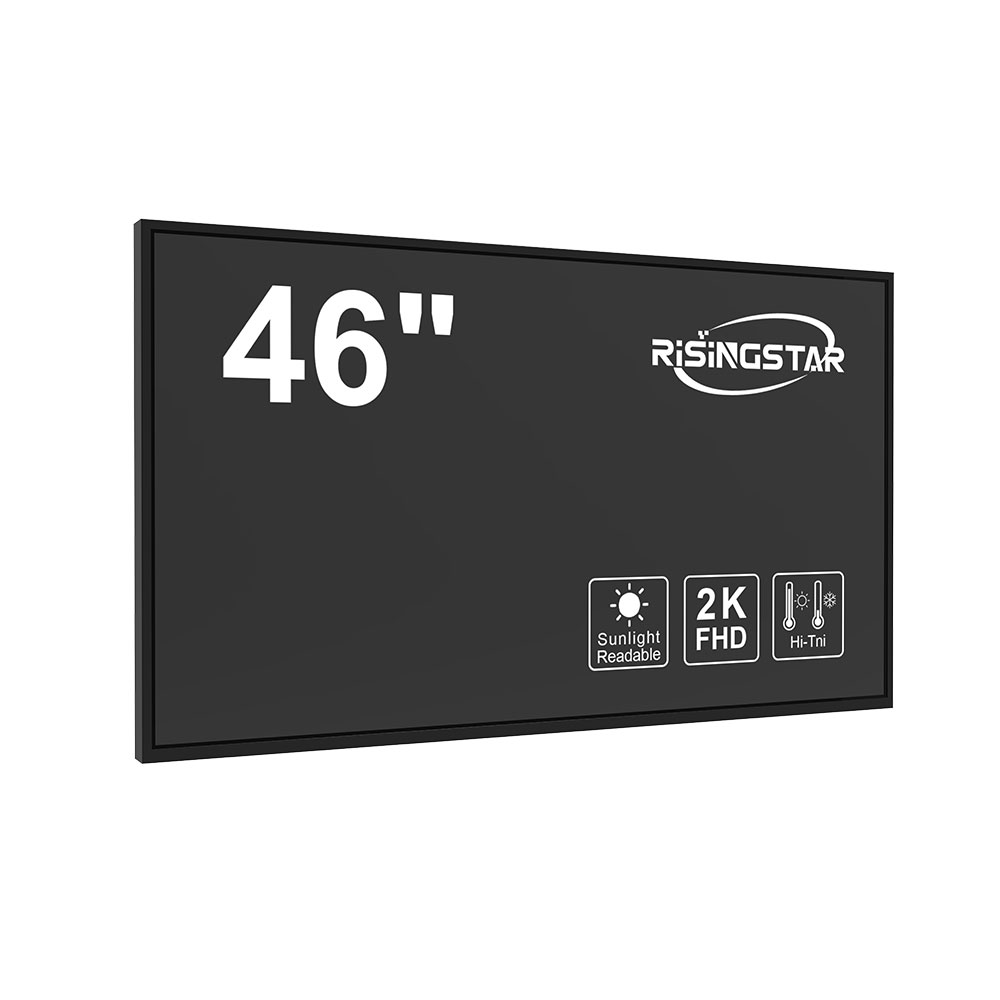
Case studies validate these claims. In 2022, a major European railway operator deployed sunlight-readable LCDs across 500+ train control interfaces. The result was a 92% reduction in user-reported visibility issues during daytime operations compared to previous models. Similarly, an agricultural drone manufacturer reported a 40% improvement in pilot response time after upgrading to high-brightness displays with adaptive contrast enhancement.
The International Electrotechnical Commission (IEC) has standardized test procedures for sunlight readability under IEC 60745-2-12, ensuring that manufacturers meet minimum brightness levels (≥ 5,000 nits) and contrast requirements (≥ 100:1) for outdoor use. Compliance with such standards ensures interoperability and reliability across industries.
Looking ahead, emerging trends include OLED-based sunlight-readable displays for higher contrast and faster response times, though challenges remain in achieving sufficient brightness levels for full sun visibility. Meanwhile, micro-LED technology shows promise for future-generation outdoor displays due to its superior brightness, longevity, and power efficiency.
For engineers and procurement teams seeking reliable outdoor display solutions, selecting a high-brightness sunlight-readable LCD requires careful evaluation of specifications such as peak brightness, viewing angles, environmental resilience (IP65 or better), and compatibility with existing hardware ecosystems.