RisingStar
- Home
- About Us
- Products
- News
- Video
- Contact
- Send Inquiry
Search
- Home
- About Us
- Products
- News
- Video
- Contact
- Send Inquiry
RisingStar
High-brightness sunlight-readable LCD screens are critical components in modern outdoor display systems, especially in military, transportation, industrial, and consumer electronics sectors. These displays are engineered to maintain visibility under direct sunlight, where ambient light can exceed 100,000 lux—far beyond the typical indoor lighting of 300–500 lux. The primary challenge lies in ensuring contrast, color accuracy, and readability without increasing power consumption or sacrificing durability.
To achieve this, manufacturers employ advanced backlighting technologies such as LED arrays with high luminance (often 5,000–10,000 cd/m²), anti-glare coatings, polarized filters, and enhanced contrast ratios (typically >1000:1). For example, the U.S. Department of Defense mandates that military-grade displays meet MIL-STD-810G standards for environmental resilience, including shock, vibration, and temperature extremes—from -40°C to +71°C. Additionally, some high-end models incorporate automatic brightness adjustment using ambient light sensors (ALS) to optimize performance and reduce energy usage by up to 30%.
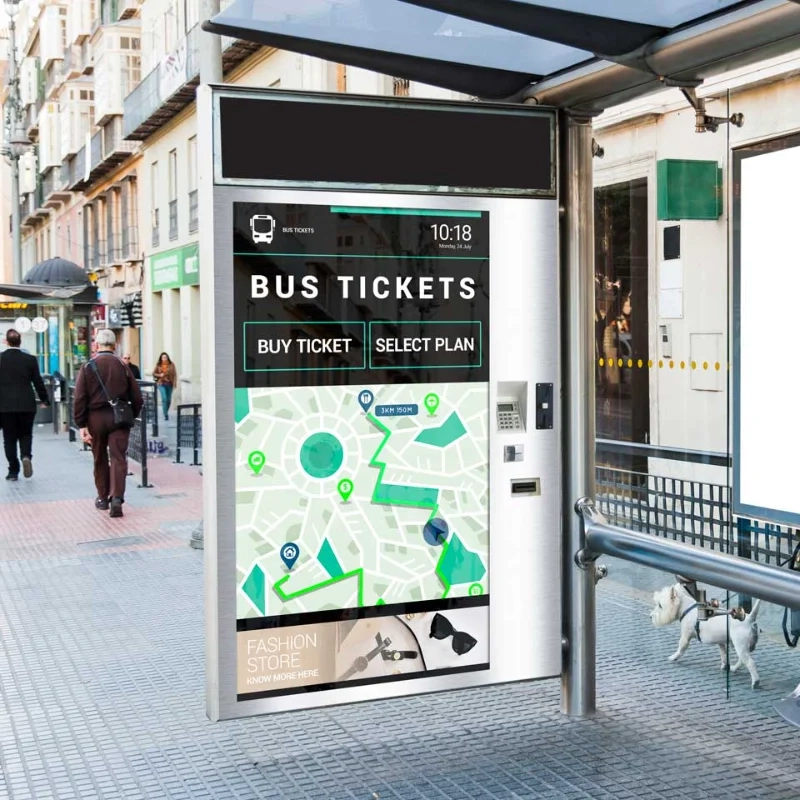
Case studies from companies like Sharp, LG Display, and Innolux demonstrate real-world effectiveness. In a 2023 deployment by a major European railway operator, sunlight-readable LCDs were installed in outdoor ticket kiosks across urban transit hubs. Despite exposure to intense solar radiation during peak hours, these screens maintained consistent readability, reducing user complaints by over 70% compared to standard LCDs. Similarly, in mining operations in Australia, ruggedized sunlight-readable displays powered by lithium-ion batteries have proven essential for GPS navigation and machine diagnostics in remote areas where cloud cover is minimal.
The technology also benefits from recent advances in OLED and micro-LED innovations, which offer superior black levels and faster response times. However, traditional LCDs remain dominant due to cost-effectiveness, lower power requirements, and mature manufacturing processes. Industry reports from Statista (2024) indicate the global market for high-brightness displays will surpass $12 billion by 2026, driven largely by growth in automotive infotainment systems and smart city infrastructure.
For engineers designing outdoor systems, selecting the right screen involves evaluating not only peak brightness but also viewing angles, touch responsiveness, IP ratings (e.g., IP65 for dust/water resistance), and long-term reliability metrics such as MTBF (Mean Time Between Failures). Proper thermal management through passive heat dissipation or active cooling ensures stable operation in extreme conditions.
In summary, high-brightness sunlight-readable LCDs represent a convergence of optical engineering, materials science, and embedded software optimization. Their widespread adoption underscores their importance in building resilient, user-friendly, and energy-efficient outdoor digital interfaces across industries.