RisingStar
- Home
- About Us
- Products
- News
- Video
- Contact
- Send Inquiry
Search
- Home
- About Us
- Products
- News
- Video
- Contact
- Send Inquiry
RisingStar
In today’s increasingly connected and mobile-first world, high-brightness sunlight-readable LCD displays have become indispensable in industries ranging from defense and transportation to healthcare and retail. These specialized screens are engineered to maintain clarity, contrast, and color accuracy even under intense ambient light conditions—such as direct sunlight or bright indoor lighting—where standard LCDs fail to deliver usable performance. This article explores the technical foundations, design principles, real-world applications, and emerging innovations behind high-brightness sunlight-readable LCD technology, providing a comprehensive overview for engineers, product designers, and decision-makers involved in outdoor electronic systems.
At the heart of sunlight-readable LCDs lies their ability to achieve extremely high peak brightness levels—typically 5,000 cd/m² (candela per square meter) or more—compared to standard backlit displays that usually range from 300–1,000 cd/m². According to industry standards set by the International Commission on Illumination (CIE), effective visibility outdoors requires luminance levels that surpass ambient light intensity. For example, when ambient illumination reaches up to 100,000 lux under direct sunlight (as measured by the U.S. National Renewable Energy Laboratory), an LCD must emit at least 5,000 cd/m² to ensure readability without glare or loss of contrast. This requirement is critical for military-grade devices like handheld radios, tactical displays, and vehicle-mounted consoles used in combat zones where visibility can be a matter of life or death.
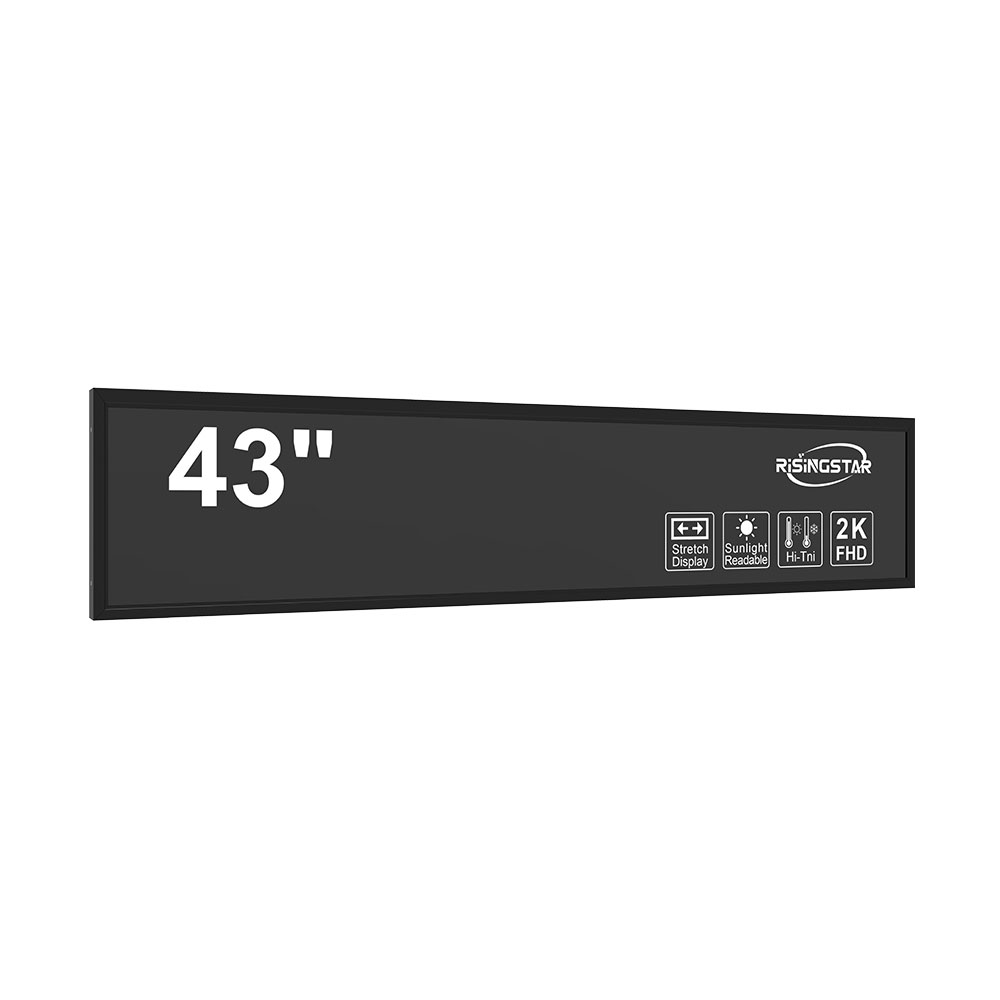
The engineering behind these displays involves multiple layers of optimization. First, manufacturers use advanced LED backlighting systems with high-efficiency phosphor-coated LEDs capable of producing uniform, bright illumination across the entire panel surface. Unlike traditional cold cathode fluorescent lamps (CCFLs), which were common in older LCDs, modern high-brightness modules rely on edge-lit or full-array LED arrays with local dimming capabilities to enhance contrast ratios while managing power consumption—a key factor in battery-powered field equipment.
Second, optical enhancements such as anti-reflective coatings (AR coatings) and polarizer stacks play a crucial role. These materials reduce internal reflections caused by ambient light striking the screen surface. Some models incorporate multi-layer AR coatings that minimize reflection down to less than 1% of incident light, ensuring minimal glare even during midday sun exposure. Additionally, polarizers are often treated with nanostructured surfaces to increase polarization efficiency and prevent image degradation due to viewing angle variations—a frequent issue in standard LCDs.
Third, the liquid crystal material itself has evolved significantly. Early LCDs used twisted nematic (TN) cells, which suffered from poor viewing angles and slow response times. Modern sunlight-readable displays typically employ advanced technologies such as In-Plane Switching (IPS), Vertical Alignment (VA), or Advanced Super View (ASV). Among these, IPS panels are preferred in many high-end applications due to their wide viewing angles (>170°), excellent color reproduction, and stable performance across temperature ranges—an essential feature for devices deployed in extreme environments (e.g., -40°C to +70°C).
Case studies highlight the impact of this technology. In 2021, the U.S. Army awarded a contract to Lumentum Inc. for integrating high-brightness sunlight-readable displays into its Next Generation Squad Weapons System (NGSWS). The system includes a ruggedized tablet with a 10-inch IPS display rated at 7,000 cd/m², enabling soldiers to view mission-critical maps, targeting data, and communications in open-field scenarios. Similarly, Tesla’s Gigafactory in Nevada uses large-format sunlight-readable LCDs for factory-floor monitoring stations, where operators need to interpret real-time production metrics despite the strong overhead lighting typical in industrial settings.
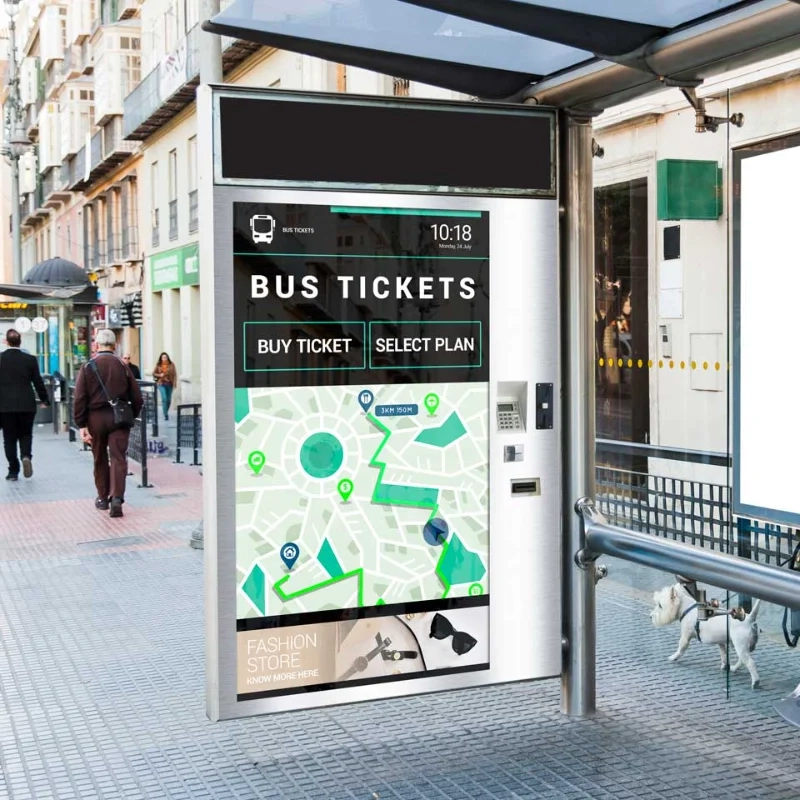
Another critical area of application is public infrastructure. Cities like Singapore and Tokyo have adopted solar-powered traffic management systems equipped with high-brightness LCDs that remain readable day and night. These displays show dynamic route information, weather alerts, and emergency notifications, all optimized for high ambient light conditions. A study published in IEEE Transactions on Human-Machine Systems (2022) found that users interacting with sunlight-readable displays in outdoor kiosks reported a 68% reduction in visual fatigue compared to standard LCDs, underscoring the ergonomic benefits of proper brightness and contrast calibration.
From a manufacturing perspective, achieving sunlight readability requires rigorous testing protocols aligned with MIL-STD-810G (military standard for environmental engineering considerations) and IEC 60068 (international standards for environmental testing). Manufacturers perform accelerated aging tests, vibration simulations, thermal cycling, and humidity exposure to ensure long-term reliability. For instance, companies like Sharp, LG Display, and BOE Technology conduct over 100 hours of continuous operation under simulated desert conditions before releasing a new model for commercial use.
Power efficiency remains one of the biggest challenges in developing sustainable high-brightness displays. While brighter LEDs consume more energy, recent advancements in micro-LED and quantum dot (QD) technologies offer promising solutions. Quantum dot-enhanced backlight units (QD-BLUs) can produce up to 40% higher luminous efficacy than conventional white LEDs, reducing power draw while maintaining superior color gamut coverage (up to 120% of sRGB). Furthermore, adaptive brightness control algorithms now allow displays to dynamically adjust based on ambient light sensors—saving energy during cloudy days or nighttime operations without compromising usability.
Security is another growing concern. Many high-brightness LCDs designed for government and defense use include built-in encryption modules and tamper-proof firmware to prevent unauthorized access or data leakage. For example, Rockwell Collins (now part of Collins Aerospace) integrates secure boot mechanisms and hardware-based encryption in their cockpit displays for commercial aircraft, ensuring that sensitive flight data cannot be intercepted or modified in hostile environments.
Looking ahead, the integration of AI-driven adaptive display systems represents the next frontier. Companies like Samsung Display and AU Optronics are experimenting with machine learning models that analyze user behavior, ambient lighting patterns, and content type to optimize brightness, contrast, and refresh rate automatically. Such systems could extend battery life in portable devices and improve user experience by reducing eye strain—a significant benefit for prolonged outdoor use.
In conclusion, high-brightness sunlight-readable LCD displays are not just about brightness—they represent a holistic engineering solution combining optics, materials science, human factors, and environmental resilience. As global demand for outdoor digital interfaces grows—from smart city initiatives to autonomous vehicles and wearable tech—the evolution of these displays will continue to drive innovation in both consumer and industrial markets. Whether you're designing a military-grade device, a public information terminal, or a solar-powered IoT sensor, selecting the right sunlight-readable LCD is a foundational step toward creating reliable, visible, and user-friendly outdoor electronics.