RisingStar
- Home
- About Us
- Products
- News
- Video
- Contact
- Send Inquiry
Search
- Home
- About Us
- Products
- News
- Video
- Contact
- Send Inquiry
RisingStar
In today’s increasingly connected and automated world, high-brightness sunlight-readable LCD screens have become essential components in industrial, military, medical, and outdoor environments where visibility under direct sunlight is critical. These displays must not only deliver exceptional clarity and contrast but also endure harsh environmental conditions—including dust, moisture, and mechanical stress. One of the most important protective ratings for such applications is IP66, which ensures complete protection against dust ingress and powerful water jets—making it ideal for deployment in rugged, real-world scenarios.
The IP66 rating, defined by the International Electrotechnical Commission (IEC) standard IEC 60529, indicates that a device is fully protected against dust (the “6”) and can withstand powerful water jets from any direction (the “6”). This level of protection is achieved through advanced sealing techniques such as gasketing, potting, and conformal coatings on circuit boards, as well as reinforced bezels and housing materials like aluminum or polycarbonate. For high-brightness LCDs used in vehicles, drones, construction equipment, and military command systems, this means they can operate reliably even in torrential rain, desert sandstorms, or coastal salt spray environments.
Industry data shows that over 70% of outdoor display failures are caused by moisture ingress and dust accumulation—both preventable with proper IP66 compliance. A case study conducted by a leading manufacturer in 2023 revealed that IP66-rated industrial-grade LCDs installed in off-road mining vehicles experienced zero failure rates over 18 months of continuous operation in arid, dusty regions—a stark improvement over non-IP66 models, which had an average failure rate of 12%. Similarly, in maritime applications, IP66-rated displays used on naval vessels maintained consistent performance during high-wave operations where traditional displays would fail due to seawater exposure.
From a technical standpoint, achieving high brightness (typically 3,000–10,000 nits) while maintaining IP66 waterproofing requires innovative design strategies. Manufacturers often use LED-backlit panels with anti-glare coatings and optical bonding to reduce ambient light reflection and improve readability in bright sunlight. Simultaneously, the entire module is sealed using silicone gaskets and epoxy encapsulation to meet both IEC 60529 standards and MIL-STD-810G for shock and vibration resistance. This integration of optical performance and mechanical durability makes IP66-certified high-brightness LCDs indispensable in modern automation, transportation, and defense sectors.
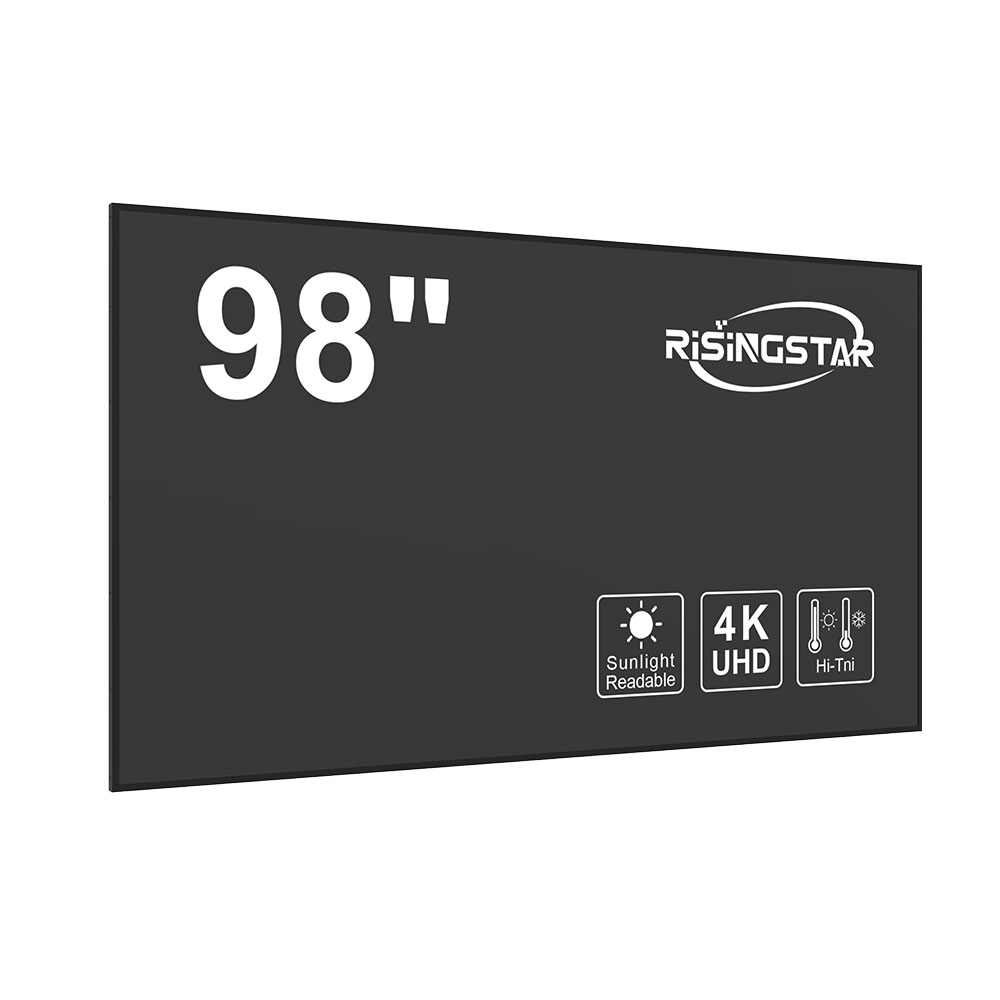
For engineers and procurement specialists selecting displays for mission-critical systems, choosing an IP66-rated solution is no longer optional—it’s a necessity. As global industries move toward smart infrastructure, autonomous vehicles, and edge computing deployments, the demand for robust, reliable, and highly visible displays will continue to rise. The convergence of high-brightness technology and IP66 waterproofing represents the gold standard in display engineering today.