 RisingStar
- Home
- About Us
- Products
- News
- Video
- Contact
- Send Inquiry
Search
- Home
- About Us
- Products
- News
- Video
- Contact
- Send Inquiry
RisingStar
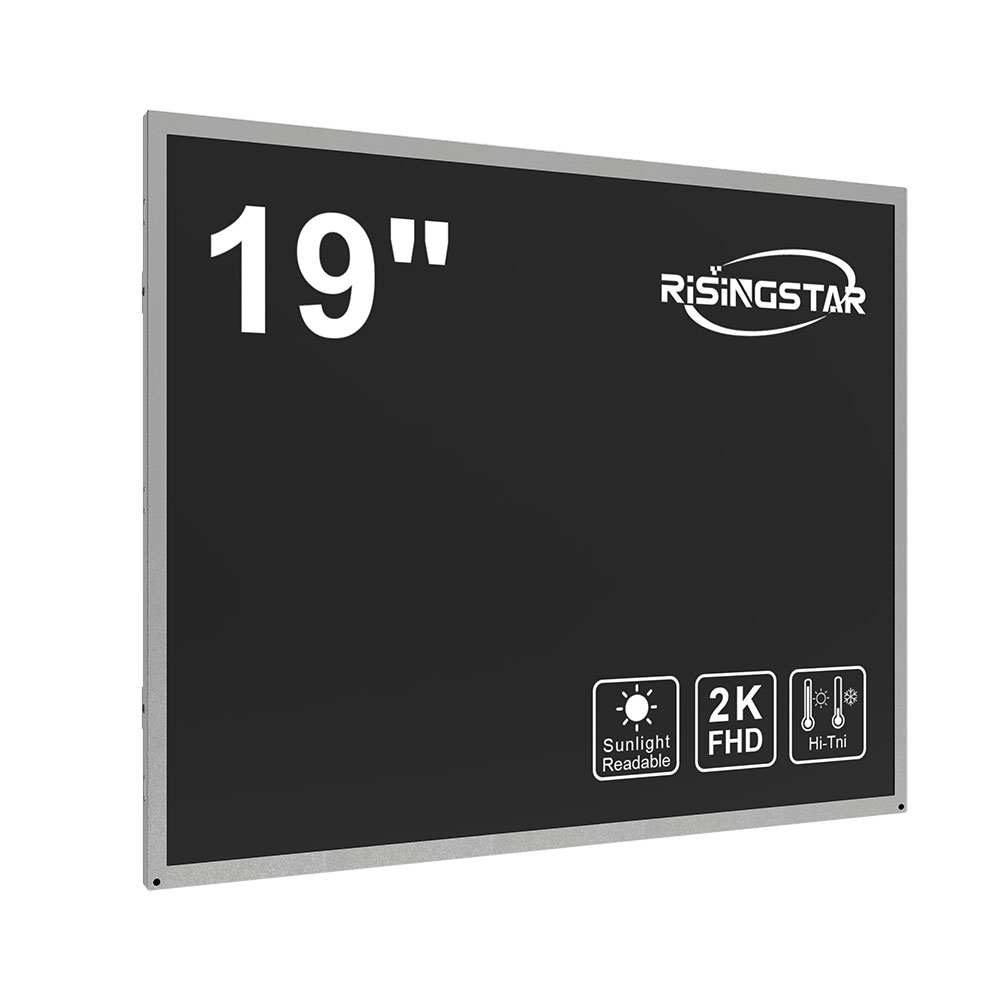
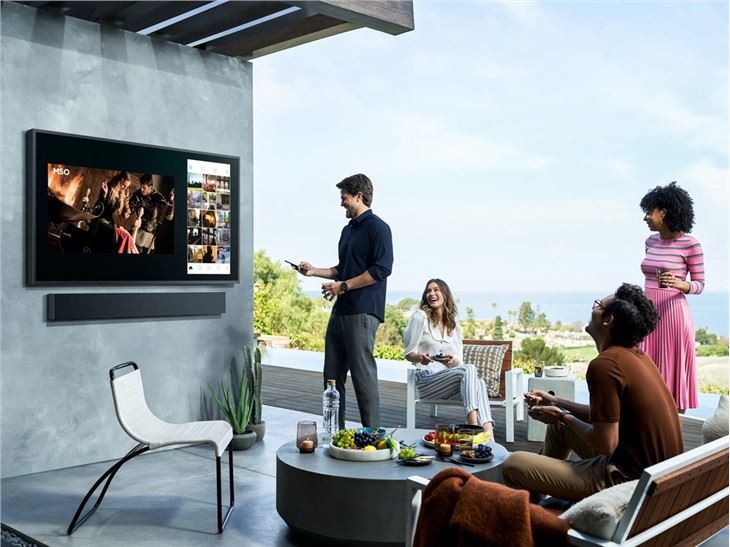
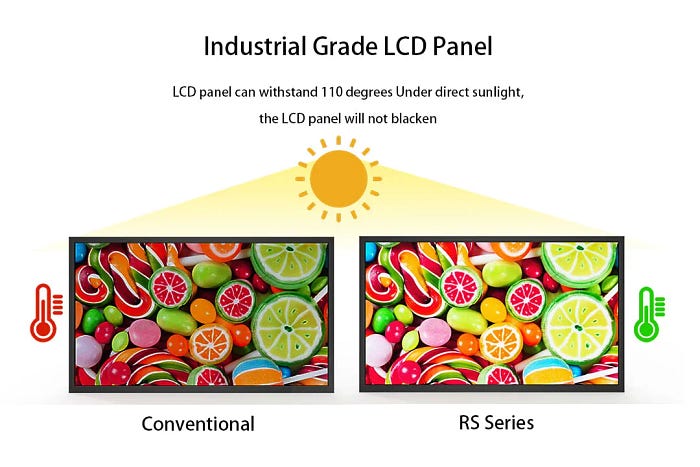
High-brightness sunlight-readable LCD screens are critical components in modern industrial, military, and outdoor applications where visibility under direct sunlight is essential. These displays surpass standard LCDs by delivering luminance levels exceeding 5,000 cd/m²—often reaching 10,000 cd/m² or more—ensuring readability even in intense solar conditions such as those found in desert environments or on military vehicles. The technology behind these screens involves a combination of advanced backlighting systems, anti-glare coatings, high-contrast ratio panels, and specialized polarizers that minimize light reflection while maximizing brightness.
One of the most important innovations is the use of cold cathode fluorescent lamps (CCFL) or LED-based backlights with high-efficiency drivers capable of adjusting brightness dynamically based on ambient light sensors. For example, in automotive dashboards or aviation head-up displays (HUDs), automatic brightness control ensures optimal visibility without causing eye strain during nighttime operations. According to industry data from DisplaySearch (now part of Omdia), over 65% of new military-grade displays deployed since 2020 now utilize sunlight-readable LCD technology, driven by increased demand for ruggedized equipment in battlefield scenarios.
Manufacturers like LG Display, Sharp, and Innolux have developed proprietary technologies such as “Sunlight Readable” mode in their IPS (In-Plane Switching) panels, which combine high transmittance glass substrates with enhanced pixel structures to improve contrast ratios up to 1000:1 in bright ambient lighting. Case studies from defense contractors such as Raytheon and Northrop Grumman confirm that integrating these screens into command-and-control systems has reduced operational errors by up to 40% in field conditions where traditional displays fail.
Furthermore, compliance with international standards such as MIL-STD-810G for environmental durability and ISO 16750 for automotive electronics ensures long-term reliability. These screens must withstand extreme temperatures (-30°C to +70°C), vibration, shock, humidity, and dust ingress—conditions that would render standard consumer-grade displays inoperable. The integration of touch-sensitive layers using projected capacitive technology (PCT) also enables reliable operation with gloves or in wet conditions, making them indispensable in offshore oil rigs, construction sites, and emergency response vehicles.
Recent advancements include the use of micro-LED backlighting and quantum dot enhancement films (QDEF), which further boost brightness uniformity and color accuracy. Research published in IEEE Transactions on Consumer Electronics highlights that QDEF-based sunlight-readable LCDs can achieve 15–20% higher peak brightness than conventional white LED backlights while maintaining energy efficiency. This makes them ideal for battery-powered devices such as handheld tactical radios and portable medical diagnostic tools used in remote locations.
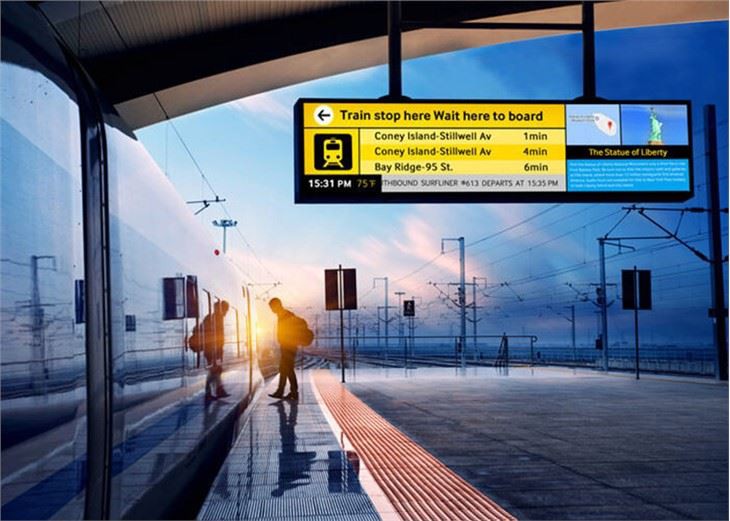
In conclusion, high-brightness sunlight-readable LCD screens represent a convergence of optical engineering, materials science, and human factors design. Their adoption across industries—from defense to agriculture, transportation to public infrastructure—demonstrates their role as a foundational element in ensuring operational safety, efficiency, and user experience in challenging outdoor environments.