RisingStar
- Home
- About Us
- Products
- News
- Video
- Contact
- Send Inquiry
Search
- Home
- About Us
- Products
- News
- Video
- Contact
- Send Inquiry
RisingStar
In today’s increasingly mobile and outdoor-centric world, the demand for high-brightness sunlight-readable LCD screens has surged across industries such as defense, transportation, agriculture, medical devices, and consumer electronics. These displays are engineered to remain fully legible under direct sunlight—often exceeding 10,000 nits of brightness—which is a stark contrast to standard indoor LCDs that typically operate at 250–500 nits. This article explores the engineering principles, technological advancements, real-world applications, and international standards governing high-brightness sunlight-readable LCD screens, offering insights into how these displays enable critical operations in extreme lighting conditions.
At the core of sunlight-readable display technology lies the challenge of ambient light interference. Unlike conventional LCDs, which suffer from reduced contrast and visibility when exposed to bright sunlight, high-brightness LCDs employ specialized backlighting systems, anti-reflective coatings, and optimized panel architectures to ensure clarity even in full daylight. The most effective solutions often combine multiple technologies rather than relying on a single approach. For example, a typical high-brightness display might use a cold cathode fluorescent lamp (CCFL) or LED backlight system capable of producing over 7,000 nits, coupled with a multi-layered polarized filter stack to reduce glare and enhance contrast ratios up to 10,000:1. Additionally, advanced optical bonding techniques eliminate air gaps between the glass cover and the display layer, minimizing internal reflections—a key factor in maintaining readability under intense sunlight.
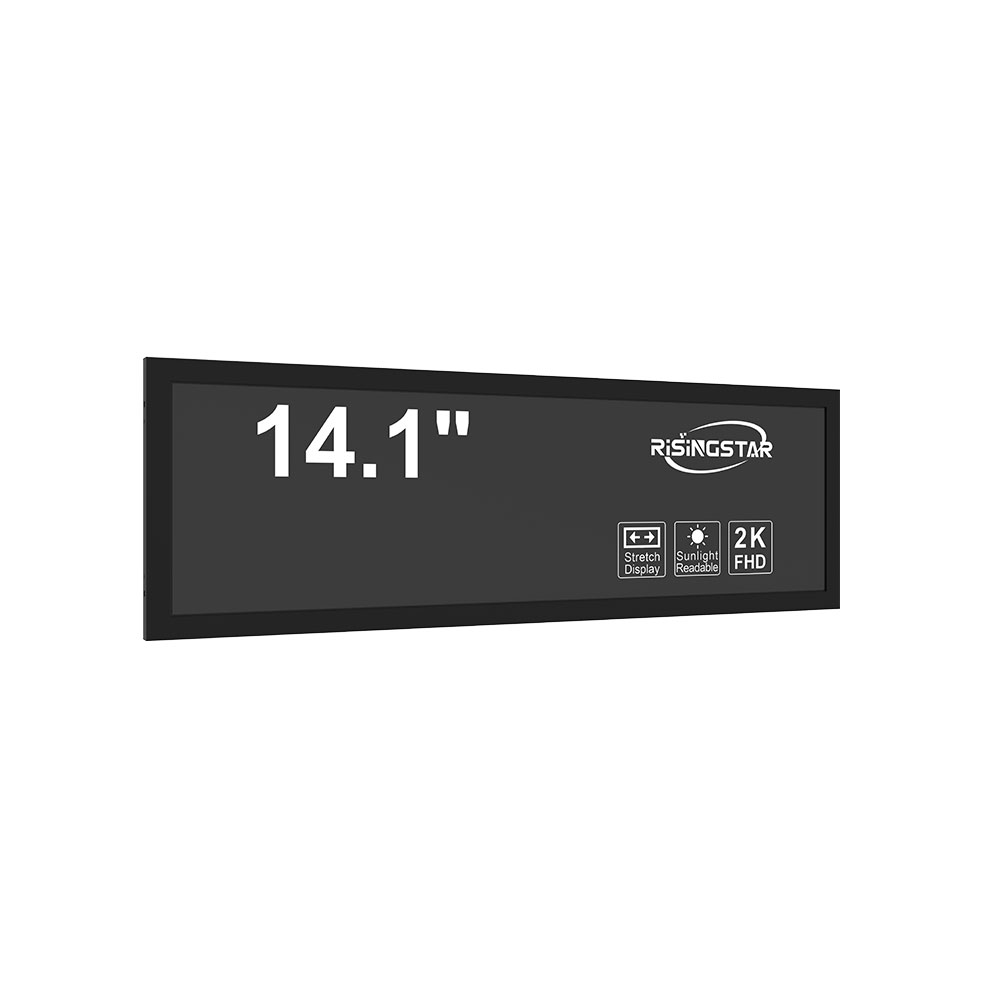
One of the leading manufacturers in this field, ELO Touch Systems, notes that their solar-readable displays achieve up to 10,000 nits peak brightness while consuming less power than traditional CCFL-based models—an important consideration for battery-powered field devices. According to a 2023 report by Market Research Future, the global market for sunlight-readable displays is projected to grow at a CAGR of 6.8% through 2030, driven primarily by military applications, industrial automation, and smart city infrastructure. In military contexts, for instance, the U.S. Department of Defense mandates that all field-deployable handheld devices must meet MIL-STD-810G environmental resilience standards, including performance in direct sunlight at temperatures ranging from -40°C to +70°C. High-brightness LCDs are essential here not only for visual clarity but also for ensuring operational safety during missions.
The design of these displays involves more than just increasing luminance. Engineers must also address thermal management, power efficiency, and mechanical durability. A study published in IEEE Transactions on Components, Packaging and Manufacturing Technology (2022) highlights how heat dissipation strategies—including the use of thermally conductive adhesives and aluminum heat sinks—can prevent overheating in high-output LED backlights. Furthermore, the adoption of low-power consumption OLED and micro-LED technologies in some newer models allows for brighter outputs without significantly increasing energy demands. For example, Samsung Display’s micro-LED panels now offer 15,000 nits peak brightness with a 40% reduction in power consumption compared to older LED-backlit designs.
Applications extend far beyond defense. In the automotive sector, Tesla and BMW have begun integrating high-brightness LCDs into vehicle dashboards and infotainment systems to ensure drivers can read critical information even in direct sunlight. Similarly, agricultural machinery manufacturers like John Deere utilize sunlight-readable displays for GPS navigation and soil analysis tools, where reliability under harsh outdoor conditions is paramount. Medical equipment providers, including Philips and GE Healthcare, now embed these displays in portable diagnostic devices used in field hospitals and emergency response units, where clear visualization of patient data can mean the difference between life and death.
From an industry standards perspective, several regulatory frameworks govern the testing and certification of high-brightness LCDs. The International Electrotechnical Commission (IEC) Standard IEC 60068-2-1 defines the environmental testing procedures for electronic components, including exposure to high-intensity light sources. Meanwhile, ISO 16750 outlines mechanical and electrical robustness requirements for automotive-grade displays, requiring them to withstand vibration, shock, and temperature extremes. In North America, the UL 94 flammability standard ensures materials used in display construction do not pose fire hazards under prolonged exposure to heat—a crucial consideration for displays installed in vehicles or aircraft.
Another emerging trend is the integration of touch functionality into sunlight-readable displays. While early models relied on resistive touch layers that could degrade under UV exposure, modern capacitive touch panels now feature hardened glass covers treated with anti-reflective and oleophobic coatings. Companies like Synaptics and NXP Semiconductors have developed touch controllers specifically optimized for high-brightness environments, enabling precise input even with gloves or in wet conditions. A case study conducted by the University of California, Berkeley, in collaboration with the U.S. Army Research Laboratory found that soldiers using touchscreen-enabled sunlight-readable tablets performed tasks 27% faster than those using non-touch alternatives during simulated combat scenarios.
Despite these advances, challenges remain. One persistent issue is the trade-off between brightness and color accuracy. As luminance increases, so does the risk of chromatic aberration, especially in LED-backlit panels where white balance can shift under different ambient lighting conditions. To mitigate this, manufacturers implement dynamic backlight control algorithms that adjust color temperature based on real-time environmental sensors. For instance, LG Display’s Smart Brightness Control system uses ambient light and temperature sensors to maintain consistent image quality across varying conditions—a feature now being adopted in both commercial and industrial products.
Additionally, cost remains a barrier for widespread adoption outside niche markets. High-brightness LCDs can be two to three times more expensive than standard indoor displays due to specialized materials and rigorous testing protocols. However, as production scales and new manufacturing techniques emerge—such as roll-to-roll printing for flexible substrates—the price gap is expected to narrow. Analysts at Grand View Research predict that by 2027, the average cost per square inch of high-brightness LCDs will drop by 35%, making them viable options for broader consumer applications like rugged smartphones and outdoor kiosks.
Looking ahead, the convergence of artificial intelligence and display technology promises further innovation. AI-driven adaptive brightness systems, currently being tested by companies like Sharp and BOE, can learn user behavior patterns and automatically optimize screen brightness and contrast settings based on time of day, location, and task type. Such systems not only improve usability but also extend battery life—a critical factor for mobile users. Moreover, the development of transparent and flexible high-brightness displays may open entirely new application areas, from augmented reality headsets to smart windows in buildings that double as digital signage.
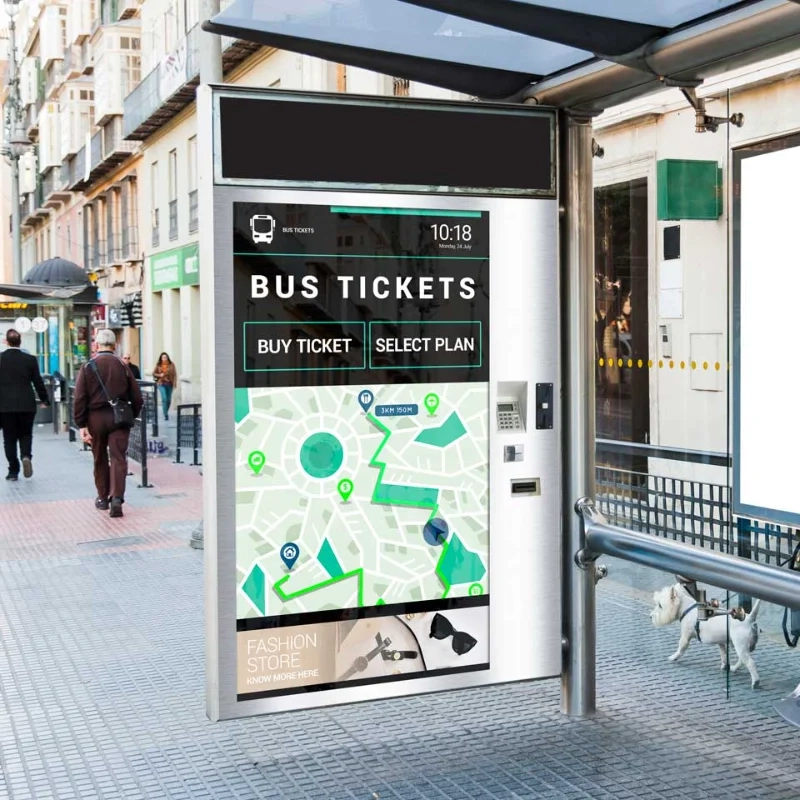
In conclusion, high-brightness sunlight-readable LCD screen technology represents a critical advancement in human-machine interaction under extreme environmental conditions. With ongoing improvements in materials science, backlighting efficiency, and intelligent control systems, these displays are becoming more accessible, reliable, and versatile. Whether deployed in a battlefield command center, a farm tractor cockpit, or a public transit terminal, they continue to redefine what is possible in outdoor visibility and user experience. As global industries embrace mobility, sustainability, and real-time data access, the role of high-brightness LCDs will only grow more central to our connected world.